Master the Crypto Arena with Kava, eCash, and Bitcoin Spark’s Pioneering Solutions
Summary
The post Master the Crypto Arena with Kava, eCash, and Bitcoin Spark’s Pioneering Solutions appeared first on Coinpedia Fintech News The inauguration of Bitcoin brought about an effective solution to the monopoly created by the banking environment globally through the provision of a decentralized digital currency. Although Bitcoin’s main intention was to offer an antithesis to fractional reserve banking, the network inspired the inauguration of numerous projects such as Kava, eCash, and Bitcoin Spark that are pioneering Web3 solutions for blockchain enthusiasts today. What is Kava? Kava is a digital asset that serves as the native cryptocurrency of a decentralized Web3 protocol called Kava.io. Kava is a Web3 lending and borrowing platform that uses a number of digital assets as collateral. Contrary to most DeFi protocols that are built on the Ethereum mainnet, Kava is built on Cosmos, a more scalable blockchain than Ethereum. Through the Cosmos network, Kava mints USDX, a stablecoin that has its peg price coinciding with that of the U.S. dollar. Participants then borrow the minted USDX. Those who offer liquidity to the platform earn interest paid in KAVA, the platform’s utility token. What is eCash? eCash (XEC) is a Bitcoin and Bitcoin Cash fork designed to be utilized as “electronic cash.” The project was reverted from Bitcoin Cash ABC (BCHA) in 2021 with its basic unit called Bits. The crypto platform integrates a proof-of-stake consensus mechanism called Avalanche (not the popular smart contracting platform called Avalanche). Upon rebranding, eCash increased its transaction speeds from 100 TPS to 5 million TPS. However, the project has not managed to remain competitive enough for Bitcoin users, paving the way for Bitcoin Spark. Is Bitcoin Spark a good investment? Bitcoin Spark is a newcomer in the DeFi industry with the aim of becoming the top Bitcoin alternative. The platform is hosting an initial coin offering event on the Ethereum network, aiming to distribute 4 million tokens at the end of the ICO to enterprising investors. Since the ICO began (a few weeks ago), Bitcoin Spark has raised more than 2 million dollars as whales and institutional investors flock in on the presale. The ICO event is currently in the seventh phase, and each BTCS token is available for purchase at $3. Moreover, the team is giving a bonus of 7% bonus on all orders completed before the commencement of phase 8. The platform has already been audited as a form of spearheading transparency and accountability. Bitcoin Spark’s main attractive feature is its improved ecosystem. It will allow miners and stakers to earn BTCS tokens while simultaneously validating the network under the proof-of-process consensus mechanism. The proof-of-process consensus is a modernized and improved network validation method that interjects proof-of-work and proof-of-stake merits. Alongside the two network validation methods, Bitcoin Spark developers have incorporated safety algorithms to automate the distribution of rewards to miners and stakers without causing an imbalance in the network. Bitcoin spark mining app However, miners and stakers will earn different amounts of rewards. In fact, the algorithms will favor more “work done” in the network through mining activities rather than the actual stake size of BTCS in the staking pools. This means that while staking will still be profitable in the network. Miners will earn more BTCS and thus do more work in maintaining the network. When the term mining is mentioned in the crypto realm. It is often characterized by intensive mining equipment, high demand for energy, and mining facilities in a desert somewhere. However, mining in the Bitcoin Spark ecosystem will be different. Instead of purchasing sophisticated and modern mining equipment, miners will use their locally available electronic gadgets with RAM and CPU installed. These include mobile phones, tablets, iPads, and laptops. Mining Bitcoin Spark involves solving less complicated math and thus requires less energy. Due to the reduced mining energy, the mining process will be simpler, cheaper, faster, and more secure. The miners will receive BTCS tokens as mining rewards from algorithmic calculations heavily inclined in their processing power contributions and network validation process. The mining will take place in software applications, including a mobile app that is under development. Learn more about Bitcoin Spark on: Website: https://bitcoinspark.org/ Buy BTCS: https://network.bitcoinspark.org/register
The Clearing House’s RTP network and The Fed's FedNow network are prepared to tackle interoperability eventually — but for now, its value remains minimal.
FedNow, RTP interoperability is inevitable — down the line
Digital Currencies
Summary
The Clearing House’s RTP network and The Fed's FedNow network are prepared to tackle interoperability eventually — but for now, its value remains minimal.
The post Solana Struggles Amid Intense Bearish Pressure at Resistance Lines: What’s Next for SOL Price appeared first on Coinpedia Fintech News Solana pri…
Solana Struggles Amid Intense Bearish Pressure at Resistance Lines: What’s Next for SOL Price
Blockchain · Digital Currencies
Summary
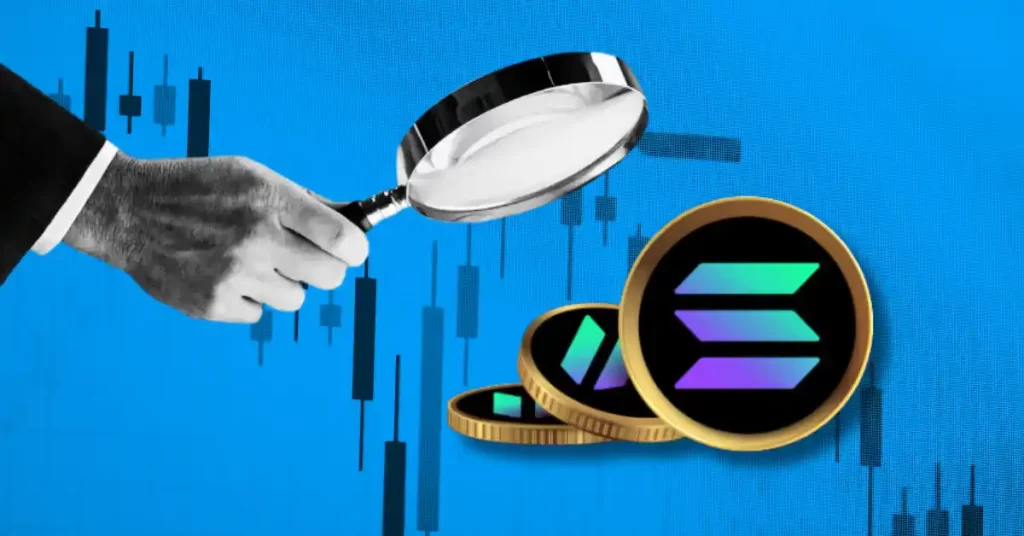
The post Solana Struggles Amid Intense Bearish Pressure at Resistance Lines: What’s Next for SOL Price appeared first on Coinpedia Fintech News Solana price has been declining steeply following the SEC’s approval of spot Ethereum ETFs. For example, the SOL/ETH pair, which is closely monitored, has dropped by 16.8% since May 17 following the U.S. Securities and Exchange Commission’s (SEC) request for Ether ETF applicants to revise their 19b-4 filings. Additionally, there’s a decline in activity in the SOL ecosystem, suggesting further bearish pressure on the edge. Analysts Expect SOL ETF By 2025 Solana might be losing its momentum to Ethereum following SEC’s approval of spot ETH ETF. However, analysts believe that Solana is not far from having its own ETF. Geoffrey Kendrick, an analyst at Standard Chartered, predicts that SOL and XRP ETFs could receive approval by 2025. Kendrick suggests that the recent approval of the ETH ETF implies that Ether and altcoins may not be classified as securities. Analysts from The Birb Nest have observed that discussions around a Solana ETF are surging on crypto Twitter and in media circles, indicating that it’s likely to happen. The total value locked (TVL) within the Solana ecosystem experienced a notable decline in May. As of May 23, there were 27.48 million SOL locked, down from the monthly peak of 29.4 million SOL. This decline in Solana’s TVL was particularly sharp after May 20, following reports on the potential approval of spot Ether ETFs. On that date, the TVL was recorded at 28.3 million SOL, suggesting that the news about the Ether ETFs might have triggered the withdrawals from the Solana ecosystem. Since the Ethereum ETF approval on May 20, Solana node validators started rapidly withdrawing funds. Initially holding 368.8 million SOL in staking contracts, they withdrew 3.5 million SOL by May 24, reducing the active staking to 365.3 million SOL. Also read: Analyzing the Effect of Approval of Ethereum ETF on Solana: Market Trends and Price Prediction With Solana’s current price at $167, these unstaked SOL are valued at approximately $580 million. Such significant withdrawals from a Proof-of-Stake (PoS) network generally lead to short-term price declines. What’s Next For SOL Price? Solana price failed to break above $190 as sellers strongly defended a surge above that level, resulting in a steep decline below immediate Fib channels. SOL price dropped below its EMA trend lines too; however, buyers defended further drops below $160. As of writing, SOL price trades at $166, declining over 4% in the last 24 hours. SOL price is struggling to surpass the EMA20 trend line, indicating continued bearish pressure at higher levels. The declining EMA trend lines and the RSI level heading toward the oversold region suggest a rising dominance in bearish positions. Should buyers push past the descending resistance line, the SOL/USDT pair might aim to retest the significant resistance at $192. A break above this level might send the SOL price toward $210.
The Securities and Exchange Commission (SEC) is poised to green-light Ethereum (Ether) ETFs after years of pushback. As of this writing, it was not clear …
Digital Currencies · Banking Infrastructure · Blockchain
Summary
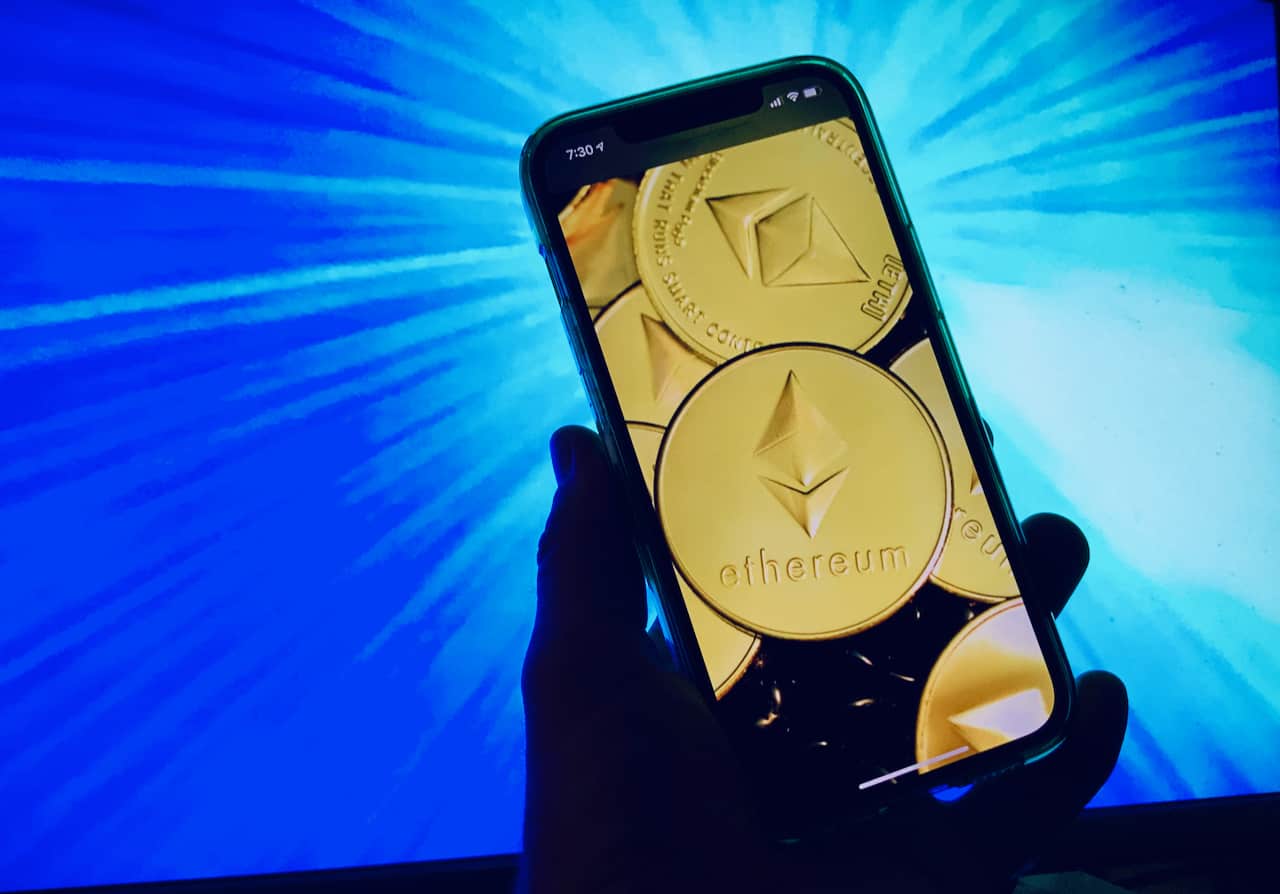
The Securities and Exchange Commission (SEC) is poised to green-light Ethereum (Ether) ETFs after years of pushback. As of this writing, it was not clear as
Services: Binance, YouHodler, Digital Asset, Lolli, Ethereum, Coinbase, Bitcoin