UK Relies on Quickly Ageing Authentication Tech: Firms Must Adopt New Systems Reveals Ping Identity
Summary
Artificial intelligence’s (AI) emergence in the fintech scene has been a blessing and a curse. While it has helped streamline organisations’ services, it has also been used by bad actors and resulted in many, especially in the UK, questioning their risk management tools. Looking to uncover how different regions of the world are responding to the threat of misused AI, Ping Identity, a provider of seamless and secure digital experiences, conducted a survey of 700 IT decision-makers across the UK, US, France, Germany, Australia and Singapore. The survey found that 62 per cent of UK respondents are not very confident their organisation has the identity management tools to defend against bad actors’ use of AI. This was the lowest rate of confidence felt globally compared to 48 per cent of U.S. respondents saying the same. The urgency to manage AI-related identity risks, including deepfakes, is low in the UK with around one third (35 per cent) already having a strategy in place to manage threats of this nature. This is compared to 55 per cent of French respondents and 42 per cent of German respondents. With failure to adequately prepare leaving organisations exposed to identity cybercrime and reputational, financial, and regulatory repercussions, it’s positive that 58 per cent of UK executives are planning to increase their investments to keep up with new threats over the next 12 months. Patrick Harding, chief product architect at Ping Identity “To stand a chance against advancing identity fraud tactics, businesses must leverage more advanced technologies,” said Patrick Harding, chief product architect at Ping Identity. “Only 45 per cent of global organisations have implemented multi-factor authentication (MFA). Consequently, the majority have left themselves critically exposed to cybercriminals leveraging sophisticated AI tactics.” An untapped opportunity Ping Identity’s research also found that decentralised Identity (DCI) is an untapped opportunity globally, but better education is needed in the UK to improve adoption. In fact, 95 per cent of global businesses (and 82 per cent in the UK) think decentralised identities would be valuable to their customers and employees – citing benefits like greater integration, quicker/faster identity verification and increased user control – but nearly half (46 per cent) of UK respondents would require improved training and education on it to encourage adoption more widely. “Fraud is on the rise, and it’s getting worse with AI. Smart leaders know they need to level up yet so many organisations don’t have the right guardrails in place to mitigate or prevent these kinds of threats. The longer they go without, the more they put themselves in harm’s way. Acting against tomorrow’s attacks means planning – and getting started – now,” added Jamie Smith, decentralised identity expert. Other notable findings for UK decision-makers Organisations have protections against identity fraud, but the UK relies on multi-factor authentication in place of more advanced technologies. In fact, 59 per cent of UK respondents admit they have 2FA or MFA in place to protect employees and customers against fraud while half use biometrics to protect employees and customers against fraud. Nonetheless, 40 per cent of UK organisations still have one-time passcode authentication in place. Alarmingly, nearly a third (32 per cent) still use knowledge-based authentication, i.e, childhood pets, mother’s maiden name. Looking to the future, the top business priorities for decision-makers in the UK are: providing a good user experience (47 per cent) protecting sensitive data (43 per cent) reducing financial/reputational loss (42 per cent) With that, 43 per cent of UK respondents admit they struggle to balance security needs with the need to ensure users are not overburdened or experiencing friction in the user experience. What’s more, over a third (37 per cent) of UK respondents admit to lacking the in-house skills needed to implement ID verification measures and therefore make the logging-in process more seamless. The post UK Relies on Quickly Ageing Authentication Tech: Firms Must Adopt New Systems Reveals Ping Identity appeared first on The Fintech Times.
The post Analyzing the Effect of Approval of Ethereum ETF on Solana: Market Trends and Price Prediction appeared first on Coinpedia Fintech News The news …
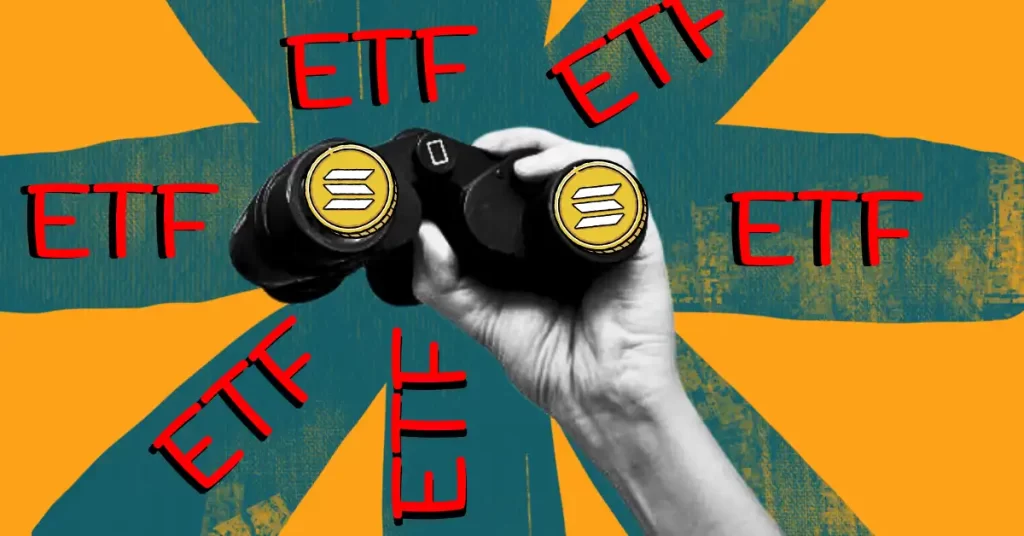
Analyzing the Effect of Approval of Ethereum ETF on Solana: Market Trends and Price Prediction
Blockchain · Digital Currencies
Summary
The post Analyzing the Effect of Approval of Ethereum ETF on Solana: Market Trends and Price Prediction appeared first on Coinpedia Fintech News The news of the approval of Ethereum ETFs by the U.S. Securities and Exchange Commission has influenced the cryptocurrency market immensely, particularly affecting Solana. Within this regulatory change, market experts indicate the rapidly changing dynamics and what it means for Solana investors. Solana’s Potential for an ETF With the approval of the Ethereum ETF by the US SEC, the question of whether Solana might also have an ETF emerges. Borovik, an observer on social platform X, indicated that the same similarities exist between Ethereum and Solana, to imply possibly a future route for the ETF of Solana. Ethereum getting a spot ETF literally means that Solana can get one also– both held an ICO– They both do the same thing– they are both used in the same wayI bet Solana gets an ETF during Trumps term— borovik (@3orovik) May 23, 2024 Anthony Scaramucci, the cofounder of SkyBridge Capital, shares a similar view that a SOL ETF will be announced in the future, citing the importance of Solana in the crypto space. Regulatory Hurdles and Market Response While some experts are optimistic about the possibility of a SOL ETF, regulatory difficulties will have to be overcome. Solana, being an altcoin, is under the radar of the SEC as it is considered an unregistered security. While the SEC has allowed Bitcoin and Ethereum to be considered commodities, Solana has no such recognition. Its recent approval of the spot ETF of Ethereum would underscore this regulatory complexity and subsequently Solana’s short-term price movement. Solana’s Price Volatility Amid Market Dynamics Following the Ethereum ETF approval, Solana has seen significant price movements. Its price dipped to a 7-day low following Ethereum’s market dominance and as the market became cautious. Observers note that there exists a connection between regulatory acceptance of Ethereum and price volatility in Solana, which indicates that major cryptocurrencies are in a correlated response to regulatory shifts. Recent staking trends have been reflective of a more cautious approach from Solana investors and node validators. As Ethereum ETFs continue to attract the attention of institutions, Solana stakeholders pulled out substantial amounts of SOL from staking contracts, possibly fearful of market uncertainties. This amount of unstaking reflects investors’ fears over the bearish impact it could have on the price trajectory of Solana. Price Forecast and Market Outlook In spite of Solana’s bounce above key support levels, sentiment in the futures markets remains bearish. Short traders dominate the scene, betting that SOL price would fail to break past key resistance levels. With significant leverage SHORT positions in play, Solana will find it hard to sustain a price uptrend in the near term. Key resistance areas and psychological support levels are telling insights into Solana’s short-term price movements amidst evolving market dynamics.
HSBC today announced the inauguration of its new U.S. headquarters at The Spiral, a renowned office building in New York City’s Hudson Yards neighborhood,…
HSBC today announced the inauguration of its new U.S. headquarters at The Spiral, a renowned office building in New York City’s Hudson Yards neighborhood, marking its largest U.S. relocation to date.
On the latest episode of Hashing It Out, Avail’s co-founder explains the need to unify multiple networks in the Web3 space, not just ideologically but thr…
Hashing It Out: Navigating the next wave of Web3 with Avail’s Anurag Arjun
Digital Currencies
Summary
On the latest episode of Hashing It Out, Avail’s co-founder explains the need to unify multiple networks in the Web3 space, not just ideologically but through innovation.