The post Ethereum’s Regulation Shift: Decrypting SEC’s Hinman Speech appeared first on Coinpedia Fintech News In the realm of digital currencies and blockchain technology, the concept of regulatory clarity has long been a subject of debate. One pivotal moment that sparked discussions about the regulatory status of Ethereum, a leading cryptocurrency, came from a significant speech by William Hinman, a prominent figure at the U.S. Securities and Exchange Commission (SEC). Hinman’s Groundbreaking Assertion "The securities laws exist so that there is no information asymmetry. Hinman said in his speech that this is no longer the case with Ethereum. And the fact that the SEC posted Hinman's speech on its website shows that the SEC views networks as decentralized as Ethereum in June… pic.twitter.com/bbPbR37NlJ— Mr. Huber (@Leerzeit) August 28, 2023 In a landmark speech hosted on the official website of the SEC, William Hinman presented a perspective that reverberated throughout the cryptocurrency community. He declared that Ethereum had outgrown its classification as a security, a statement that marked a notable departure from traditional regulatory norms. This pronouncement held particular weight due to Ethereum’s decentralized nature, challenging conventional notions of how securities laws apply. Shift in Regulatory Paradigm The SEC’s decision to publicize Hinman’s speech underscored a broader shift in regulatory attitude. It signaled the SEC’s willingness to acknowledge blockchain networks that had achieved a certain level of decentralization as entities falling outside the ambit of traditional securities regulations. Notably, by June 2018, Ethereum had crossed this threshold of decentralization, according to the SEC’s assessment. Ethereum’s Evolution and Regulatory Compliance Reflecting on Ethereum’s journey from its initial coin offering (ICO) just a year and a half prior, the platform’s growth has been nothing short of remarkable. Overcoming initial skepticism, including allegations of founder-related improprieties, Ethereum has adapted and evolved to meet the stringent investor protection standards set by the SEC. This evolution prompts a fundamental question: How should securities laws adapt to accommodate the distinct features of decentralized networks? The SEC’s evolving stance on decentralized networks, as exemplified by Ethereum, carries implications far beyond a single cryptocurrency. It serves as a potential precedent for how other blockchain platforms might be regulated in the future. This shift also invites a comprehensive reevaluation of the very notion of investor protection within the context of a decentralized landscape. Conclusion The crypto community continues to closely watch the SEC’s evolving approach to Ethereum and similar blockchain networks. William Hinman’s speech marked a turning point, ushering in a new era of regulatory contemplation. As the digital landscape evolves, the question of how to strike a balance between innovation and investor safeguards remains at the forefront, making it imperative for regulators to adapt their frameworks to the intricacies of decentralization.
If Republicans can’t unify behind Scalise or another choice to be speaker, paralysis in the House over crypto legislation and a potential government shutd…
Crypto Bills May Depend on U.S. House GOP Battle Over Scalise Speaker Pick
Criptodivisas
Resumen
If Republicans can’t unify behind Scalise or another choice to be speaker, paralysis in the House over crypto legislation and a potential government shutdown could continue.
Tradeshift Holdings has dismissed its co-founder Christian Lanng due to "serious allegations of sexual assault and harassment" and "gross misconduct on mu…
Danish fintech fires CEO facing sexual assault complaint
Herramientas De Negocio · Criptodivisas
Resumen
Tradeshift Holdings has dismissed its co-founder Christian Lanng due to "serious allegations of sexual assault and harassment" and "gross misconduct on multiple grounds," the company says. Lanng denies the allegations.
With US banks facing a fresh wave of capital restrictions, some are searching for ways to trade out of risky loan portfolios and free up their balance she…
Private credit is eyeing bank capital risk trades, Magnetar's Snyderman says
Inversiones · Criptodivisas
Resumen
With US banks facing a fresh wave of capital restrictions, some are searching for ways to trade out of risky loan portfolios and free up their balance sheets. The solution may very well lie with capital-rich lenders in the booming $1.5 trillion private credit market.
Orum launched Verify, a new product to determine the validity of a bank account before initiating payments. Verify is built on top of FedNow and is able t…
Orum Launches Verify to Determine Validity of Bank Accounts
Infraestructura Financiera · Herramientas De Negocio · Criptodivisas
Resumen
Orum launched Verify, a new product to determine the validity of a bank account before initiating payments. Verify is built on top of FedNow and is able to authenticate 100% of all consumer and business bank accounts held in the U.S. Verify leverages the FedNow payment rail to provide businesses with account information in real time. Real-time payments innovator Orum has launched a new product called Verify to determine whether a bank account is open and valid before initiating payments. Verify is built on top of FedNow and is able to authenticate 100% of all consumer and business bank accounts held in the U.S.– all within 15 seconds. Orum’s Verify seeks to help businesses reduce fraud resulting from invalid credentials and mitigate the friction that consumers with valid bank accounts face when making a transaction. Regardless of the reason for the transaction failures, they are costly. A survey conducted in 2020 showed that 60% of business respondents reported losing customers as a result of failed payments and that failed payments lost the global economy more than $118 billion in fees, labor, and lost business in 2020. “Lost time verifying accounts equals lost revenue and ultimately lost customers,” said Orum Founder and CEO Stephany Kirkpatrick. “This is especially true for business bank accounts, which are notoriously difficult to verify. Businesses need confidence they are debiting or crediting a real account to ensure the payment lands safely in the bank account, but most solutions today are slow or don’t include coverage for all B2B use cases. Verify – built on top of FedNow – has changed this equation, making it now possible to verify any type of bank account instantly.” Today’s launch hinges on FedNow. Orum leverages the payment rail to provide real-time account information to businesses. The company uses a webhook to automatically send the data back to the business in real-time. This eliminates the need for the customer to get involved by confirming microdeposits or entering their bank login credentials. Orum was founded in 2019 to serve as a single solution for accessing RTP, FedNow, Same Day ACH, ACH, and Wires. The company’s payment API orchestrates instant payouts, using AI to predict the availability of funds within an account and pre-authorize transactions. Founded by Stephany Kirkpatrick, Orum has raised over $82 million from investors including Accel, Canapi, Bain Capital Ventures, Inspired Capital, American Express Ventures, and others. Photo by Steve Johnson The post Orum Launches Verify to Determine Validity of Bank Accounts appeared first on Finovate.
The new Federal Trade Commission proposal would require companies to disclose whether any fees are refundable up-front and would ban hidden or misleading …
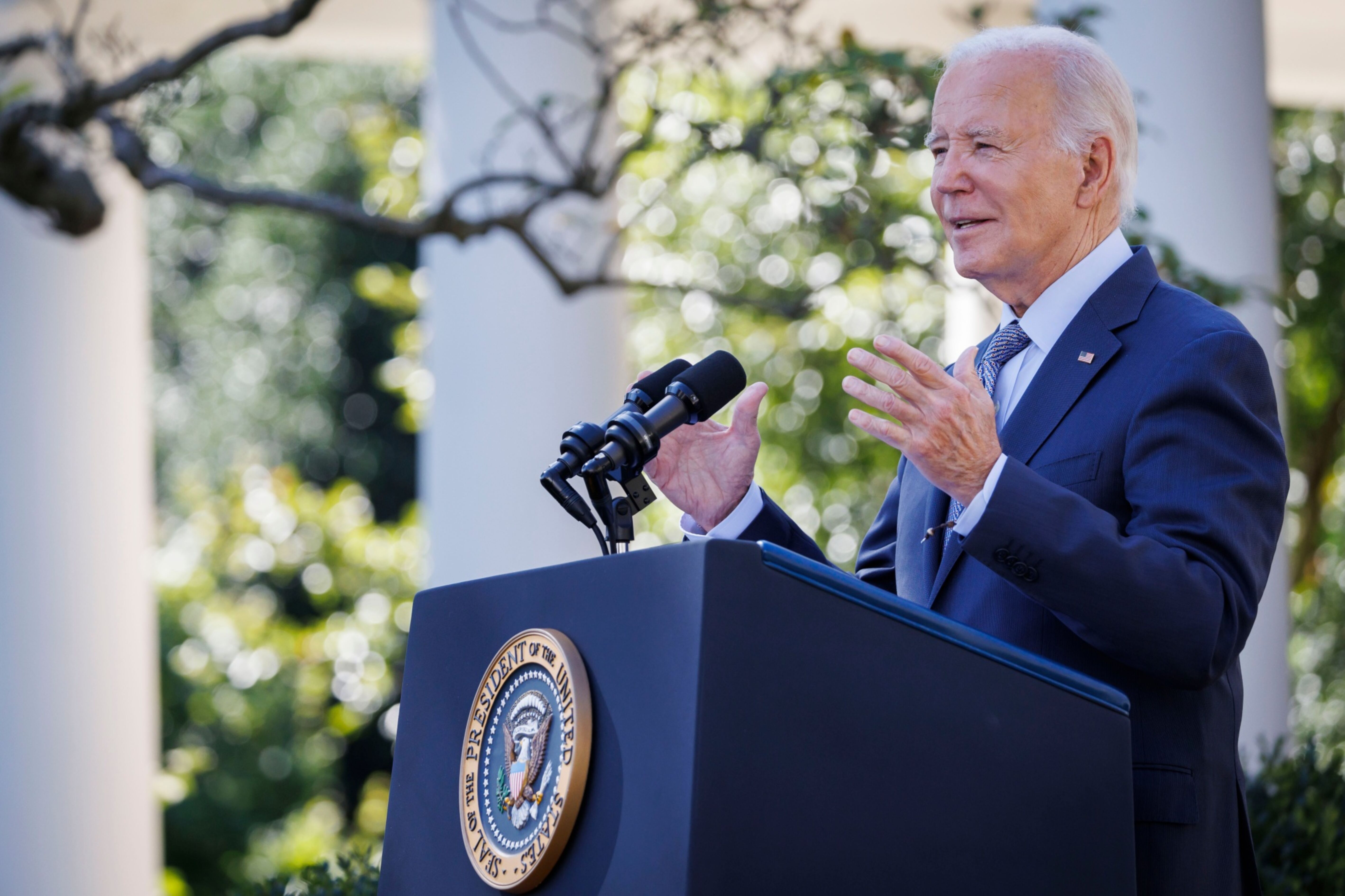
Biden unveils new action on 'junk fees' to counter rising costs
Inversiones · Criptodivisas
Resumen
The new Federal Trade Commission proposal would require companies to disclose whether any fees are refundable up-front and would ban hidden or misleading fees.
Fiserv, Inc.(NYSE: FI), a global leader in payments and financial technology, announces the acquisition of Skytef, primary distributor of Software Express…
Fiserv, Inc.(NYSE: FI), a global leader in payments and financial technology, announces the acquisition of Skytef, primary distributor of Software Express's SiTef ® (Solução Inteligente de Transferência Eletrônica de Fundos), from Fiserv, the leading Electronic Funds Transfer solution in Brazil.