FinTech Australia Prepares to Spotlight Consumer Data Rights at Second Summit
Resumen
FinTech Australia is gearing up to host its second annual Consumer Data Right (CDR) Summit, setting the agenda for the regime ahead of a broader consumer rollout. This year’s Consumer Data Right Summit has plans to showcase local and international experts, policymakers, founders and builders who will take to the stage to discuss the future of the CDR and the most exciting emerging use cases at The Hilton in Sydney on Wednesday 3 July. Launched in Australia in 2020, the CDR currently enables the use of consumer data from their banks and energy service providers in third-party services, with explicit consent from the consumer. Rehan D’Almeida, CEO of FinTech Australia Rehan D’Almeida, CEO of FinTech Australia, said: “After four years of solid policy groundwork, the CDR has reached the threshold of industry adoption that will precede mass consumer adoption. “This is a suite of fintech tools that will have a real effect on cost of living pressures, enabling consumers to use their own financial data to power better decisions on their services providers. It’s also set to supplant the practice of screenscraping and over time replace it with a more regulated regimented means by which fintechs can responsibly access consumer financial data. “Our goal for this summit is to connect key industry players to discuss the rollout to date, and set the tone where we enter a crucial phase where consumer adoption and education will be as crucial as considered policy settings. This includes broadening interest in the CDR to those in superannuation, insurance, telecommunications, as well as other key consumer industries that will be involved in its rollout.” Brenton Charnley, head of open banking at Mastercard Australasia; Dan Jovevski, founder and CEO of WeMoney; Damir Cuca, founder of Basiq; and Jodi Ross, chief risk and compliance officer at Tiimely, are also set to take to the stage. The post FinTech Australia Prepares to Spotlight Consumer Data Rights at Second Summit appeared first on The Fintech Times.
The post Analyzing the Effect of Approval of Ethereum ETF on Solana: Market Trends and Price Prediction appeared first on Coinpedia Fintech News The news …
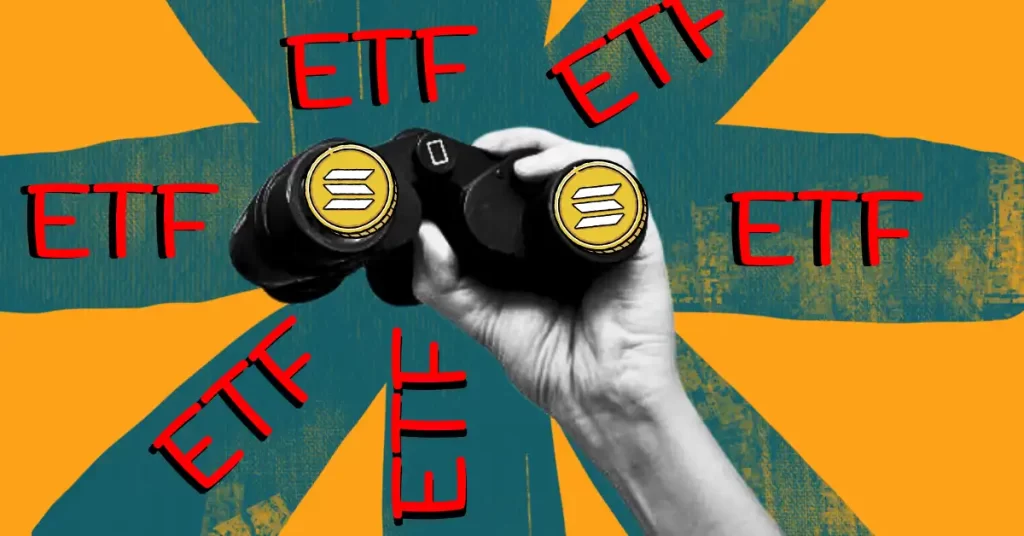
Analyzing the Effect of Approval of Ethereum ETF on Solana: Market Trends and Price Prediction
Blockchain · Criptodivisas
Resumen
The post Analyzing the Effect of Approval of Ethereum ETF on Solana: Market Trends and Price Prediction appeared first on Coinpedia Fintech News The news of the approval of Ethereum ETFs by the U.S. Securities and Exchange Commission has influenced the cryptocurrency market immensely, particularly affecting Solana. Within this regulatory change, market experts indicate the rapidly changing dynamics and what it means for Solana investors. Solana’s Potential for an ETF With the approval of the Ethereum ETF by the US SEC, the question of whether Solana might also have an ETF emerges. Borovik, an observer on social platform X, indicated that the same similarities exist between Ethereum and Solana, to imply possibly a future route for the ETF of Solana. Ethereum getting a spot ETF literally means that Solana can get one also– both held an ICO– They both do the same thing– they are both used in the same wayI bet Solana gets an ETF during Trumps term— borovik (@3orovik) May 23, 2024 Anthony Scaramucci, the cofounder of SkyBridge Capital, shares a similar view that a SOL ETF will be announced in the future, citing the importance of Solana in the crypto space. Regulatory Hurdles and Market Response While some experts are optimistic about the possibility of a SOL ETF, regulatory difficulties will have to be overcome. Solana, being an altcoin, is under the radar of the SEC as it is considered an unregistered security. While the SEC has allowed Bitcoin and Ethereum to be considered commodities, Solana has no such recognition. Its recent approval of the spot ETF of Ethereum would underscore this regulatory complexity and subsequently Solana’s short-term price movement. Solana’s Price Volatility Amid Market Dynamics Following the Ethereum ETF approval, Solana has seen significant price movements. Its price dipped to a 7-day low following Ethereum’s market dominance and as the market became cautious. Observers note that there exists a connection between regulatory acceptance of Ethereum and price volatility in Solana, which indicates that major cryptocurrencies are in a correlated response to regulatory shifts. Recent staking trends have been reflective of a more cautious approach from Solana investors and node validators. As Ethereum ETFs continue to attract the attention of institutions, Solana stakeholders pulled out substantial amounts of SOL from staking contracts, possibly fearful of market uncertainties. This amount of unstaking reflects investors’ fears over the bearish impact it could have on the price trajectory of Solana. Price Forecast and Market Outlook In spite of Solana’s bounce above key support levels, sentiment in the futures markets remains bearish. Short traders dominate the scene, betting that SOL price would fail to break past key resistance levels. With significant leverage SHORT positions in play, Solana will find it hard to sustain a price uptrend in the near term. Key resistance areas and psychological support levels are telling insights into Solana’s short-term price movements amidst evolving market dynamics.
HSBC today announced the inauguration of its new U.S. headquarters at The Spiral, a renowned office building in New York City’s Hudson Yards neighborhood,…
HSBC today announced the inauguration of its new U.S. headquarters at The Spiral, a renowned office building in New York City’s Hudson Yards neighborhood, marking its largest U.S. relocation to date.
On the latest episode of Hashing It Out, Avail’s co-founder explains the need to unify multiple networks in the Web3 space, not just ideologically but thr…
Hashing It Out: Navigating the next wave of Web3 with Avail’s Anurag Arjun
Criptodivisas
Resumen
On the latest episode of Hashing It Out, Avail’s co-founder explains the need to unify multiple networks in the Web3 space, not just ideologically but through innovation.