How Does Cardano Mining Compare To Bitcoin Spark? – A Quick Guide
Resumen
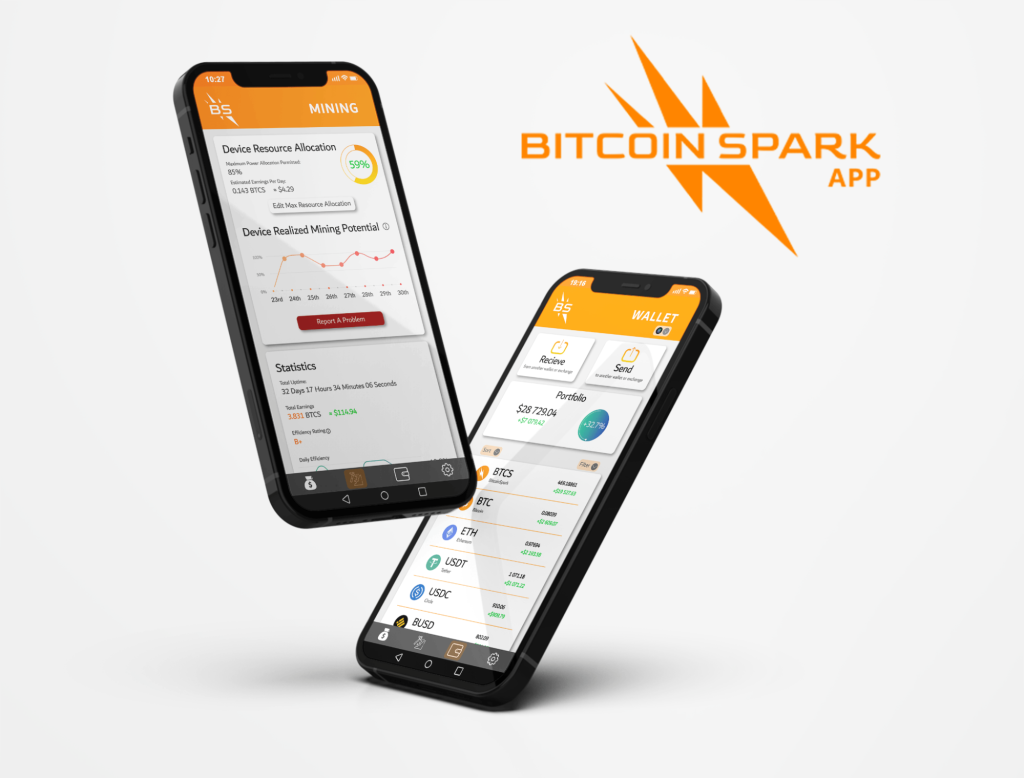
The post How Does Cardano Mining Compare To Bitcoin Spark? – A Quick Guide appeared first on Coinpedia Fintech News Cardano is among the discussed digital currencies that never cease to depart investors’ lips. Charles Hoskinson planned to improve blockchain technology’s interoperability, scalability, and efficiency by inaugurating the project in 2015. Cardano functions as a result of the proof-of-stake Ouroboros validation mechanism. Cardano has had venture capitalists and individual investors put money into the project. Nevertheless, the crypto industry will witness a fully equipped platform with a mechanism that will support the development of the crypto ecosystem. Bitcoin Spark is a new platform attracting global individuals to join the bandwagon. The platform’s proof-process validation mechanism will solve problems embedded within the ledger ecosystem. This article will cover the functionality of Bitcoin Spark. What is Cardano? Charles Hoskinson developed Cardano in 2015 and subsequently launched it in 2017. The digital network uses a proof-of-stake ouroboros consensus mechanism. The native token for the digital currency ADA acts as a governance token in the ecosystem. Individuals can become decentralized autonomous organizations as a result of holding ADA. DAOs can vote in the ecosphere to advocate for changes in the network. How Bitcoin Spark PoP Operates The blockchain ecosystem has had pertinent programs and networks come into the limelight and evolve to become appealing to crypto and non-crypto enthusiasts. The decentralized ecosystem has had immense runs overtaking other technologies in the financial sector. Innovations such as Bitcoin Spark have come to take over the crypto industry. The decentralized network has gained massive traction despite being in the fourth phase of its ongoing presale. Like other audited cryptocurrencies, Bitcoin Spark has been completely and thoroughly checked. Contract Wolf and Vital Block have done an aggressive and comprehensive audit report on the digital network. Roadmaps are also pivotal to emerging virtual currency platforms; therefore, Bitcoin Spark’s roadmap is well-detailed and contains data showcasing progress in each presale phase. Bitcoin Spark has its native currency, BTCS, utilized by community members as a gas token. BTCS’s total supply is pegged at 21 million—a coincidence as Bitcoin has a similar token supply. Validators are get awards with BTCS for participating in the development of the network. BTCS mining rewards The token’s total supply is distributed to launch supply (4.55 million) and mining rewards (16.45 million). From the launch supply, 50,000 will be distributed to team tokens, 4 million to initial coin offering, and 500k to pre-network exchanges and liquidity pools. Like other cryptocurrency programs, the project has a presale phase currently in phase four. Each BTCS goes for $2.25 with a 10% bonus. Those purchasing tokens within phase four will have a 489% profit during the 30th November launch period. Smart contracts are also essential in developing cryptocurrency projects. Therefore, Bitcoin Spark has a smart contract layer that utilizes high-level and low-level compatible languages. Ethereum is a crypto blockchain that primarily allows blockchain developers to utilize Solidity as a programming language. Nevertheless, the new entrant, Bitcoin Spark, enables programmers to utilize EVM-compatible languages, including Vyper, Solidity, or any other high-level languages. Through this mechanism, developers acquire the motivation to develop decentralized applications (dApps). Learn more about Bitcoin Spark on: Website: https://bitcoinspark.org/ Buy BTCS: https://network.bitcoinspark.org/register
Holders play a significant role in the success of a crypto project. They discourage massive selloffs and showcase a bright future for a crypto ecosystem. …
Shiba Inu Holders Invest Heavily In Spectacular New Face Of Blockchain Bitcoin Spark
Criptodivisas · Blockchain
Resumen
Holders play a significant role in the success of a crypto project. They discourage massive selloffs and showcase a bright future for a crypto ecosystem. Much like whales, studying the trend of digital asset holders is essential. If holders increase, a project is more likely to flourish shortly. However, if the holding wallets of a given Web3 platform reduce, the ripple effect affects the overall price, causing a shockwave of bearish trends. Recently, on-chain analysis from blockchain explorers shows long-term Shiba Inu holding wallets are cashing out SHIB tokens and buying BTCS tokens. Why is Shiba Inu down so much? Shiba Inu is a meme token developed as an ERC-20 token on the Ethereum mainnet. Despite an impressive performance in 2022, the platform is docile with the ongoing bearish market sentiments caused by the collapse of a significant crypto empire under Sam Bankman Fried and increased regulatory pressure from financial watchdogs, especially the US Securities and Exchange Commission. Shiba Inu’s lack of utility has also contributed to its poor performance in 2023. Having lost over 90% of its intrinsic value, the downturn has caused Shiba Inu investors to look for an alternative investment vehicle with more lucrative returns. Some of these investors have landed on a crypto gem called Bitcoin Spark. Bitcoin Spark Review: The cryptocurrency of the future By rewriting Bitcoin’s history, Bitcoin Spark sits at the forefront of the most promising crypto project. The platform boasts advanced technology and improved features, making it a lucrative investment deal for enterprising netizens. The project sets the pace for other Bitcoin alternatives with old-generation blockchains by employing a new consensus mechanism to house a stable and secure network for community members. Bitcoin Spark has showcased its dedication to promoting transparency and accountability by undergoing intensive smart contract and KYC approval audits from different and independent auditing organizations. The project stands out due to its proposed mining feature under the proof of process consensus mechanism. Instead of a centralized approach where selected node operators mine the network, Bitcoin Spark has adopted a more improved mining ecosystem powered by a decentralized atmosphere in which everyone participates. Unlike most proof-of-work powered networks, Bitcoin Spark’s proof-of-process eliminates significant entry barriers, allowing anyone to mine BTCS tokens. By accommodating an increased number of node operators, Bitcoin Spark sets the pace as a decentralized mining platform with a reduced risk of a single miner taking over the mining activities of the network and subsequently sabotaging the network. The platform’s developers are working to integrate revenue streams through the Bitcoin Spark functionalities to reinforce mining reward allocation. The algorithms set in place to oversee the allocation process will supplement and reduce the mining rewards so long as the income from the revenue streams continues to flow. Network participants will, therefore, continue to see profitability through the limited BTCS supply. Learn more about Bitcoin Spark on: Website: https://bitcoinspark.org/ Buy BTCS: https://network.bitcoinspark.org/register Disclosure: This is a sponsored press release. Please do your research before buying any cryptocurrency or investing in any projects. Read the full disclosure here. Photo by Joshua Mayo on Unsplash The post Shiba Inu Holders Invest Heavily In Spectacular New Face Of Blockchain Bitcoin Spark appeared first on The Merkle News.
Other notable names included in the Series A round were Flow Traders, QCP Capital, Two Sigma Ventures, Electric Capital, Jump Crypto, QCP Capital, GSR Mar…
Crypto Prime Broker Membrane Labs Raises $20M From Brevan Howard, Point72 and Jane Street
Criptodivisas
Resumen
Other notable names included in the Series A round were Flow Traders, QCP Capital, Two Sigma Ventures, Electric Capital, Jump Crypto, QCP Capital, GSR Markets, Belvedere Trading, and Framework Ventures.
Finally, as we move forward on emerging technologies such as AI and decentralization, let us remember to remain optimistic and seize the opportunities tha…
Navigating decentralized governance in Web3: Balance of transparency and control
Blockchain
Resumen
Finally, as we move forward on emerging technologies such as AI and decentralization, let us remember to remain optimistic and seize the opportunities that lie ahead of us.
Upcoming Finovate webinar, in collaboration with Taktile, on Thu 9 Nov, 11am ET / 4pm GMT In the constantly evolving landscape of open banking, lenders ar…
Unlocking Open Banking Data: A Masterclass in Cash Flow-Based Underwriting
Herramientas De Negocio · Criptodivisas
Resumen
Upcoming Finovate webinar, in collaboration with Taktile, on Thu 9 Nov, 11am ET / 4pm GMT In the constantly evolving landscape of open banking, lenders are presented with a remarkable opportunity to redefine their underwriting processes. By harnessing the power of cash-flow data, lenders can elevate their precision in assessing customer risk and confidently explore untapped markets. As open banking data becomes more accessible worldwide, a central question emerges: How can lenders effectively utilize this data? Join us for a groundbreaking discussion led by industry experts in open banking, where we will delve into the current state of the open banking landscape in credit underwriting (B2C and B2B). Discuss strategies on how to effectively: Tag and categorize cash flow data Extract valuable signals tailored to your use case Combine data from multiple open banking sources Optimize your underwriting infrastructure to better leverage cash flow data Don’t miss this unique opportunity to gain invaluable insights into the future of underwriting and discover how open banking can empower your lending strategies. Register now >> Moderated by Julie Muhn, Senior Research Analyst, Finovate On the panel: Maik Taro Wehmeyer, CEO, Taktile Abhinav Swara, VP and Head of Credit Risk, Bluevine Jonathan Gurwitz, Credit Lead, Plaid In collaboration with Can’t join us live? Register now, and we’ll send you the recording. The post Unlocking Open Banking Data: A Masterclass in Cash Flow-Based Underwriting appeared first on Finovate.
The post Judge Denies Cross-Examination of Key Witnesses in Sam Bankman-Fried Trial appeared first on Coinpedia Fintech News The most-awaited testimonies …
Judge Denies Cross-Examination of Key Witnesses in Sam Bankman-Fried Trial
Prestamos · Criptodivisas
Resumen
The post Judge Denies Cross-Examination of Key Witnesses in Sam Bankman-Fried Trial appeared first on Coinpedia Fintech News The most-awaited testimonies from Caroline Ellison and Gary Wang have been denied by Judge Lewis Kaplan to be further cross-examined by the defense counsel of S. Bankman-Fried. The defense wanted to question Wang on how FTX lawyers helped Alameda Research structure loans, but Judge Kaplan dismissed their request. The defense team for Sam Bankman-Fried keeps asking the judge for permission to cross-examine Caroline Ellison and former FTX CTO Gary Wang. Why Cross-Examination Was Denied – “Denying By Moot” In a court document made late on October 10, Judge Lewis A. Kaplan dismissed Sam Bankman-Fried’s attorneys’ request to elicit information about the role of counsel in arranging the loans given by Alameda Research during Gary Wang’s cross-examination as the former chief technology officer of FTX. Following a request by Sam Bankman-Fried’s solicitors to cross-examine former Alameda Research CEO Caroline Ellison about the same points, the order was issued. The defense predicts that the prosecution will try to get Caroline Ellison to admit that Sam Bankman-Fried told her to establish auto-deletion on several of her Signal and Slack messaging accounts. However, the engagement of Alameda or FTX attorneys, according to SBF attorneys, demonstrates good faith and a lack of criminal intent. The Judge stated, “The Government has elicited and may continue to elicit testimony on the use of auto-deletion policies at Alameda and FTX; we respectfully request that the Court allow the defense to elicit the above-referenced evidence in its cross-examination of Ms. Ellison.” By ordering “denying by moot” to Gary Wang’s cross-examination, Judge Kaplan indicated that he felt the matter was no longer pertinent and that too much time had elapsed. He will most likely turn down SBF’s solicitors’ request to cross-examine Caroline Ellison for the same reason. Ellison Accuses Bankman-Fried Caroline Ellison has admitted her guilt and is working with the authorities. However, she pointed out that Sam Bankman-Fried had ordered her to perpetrate these scams. Therefore, she did not act on her initiative. She added that SBF had access to the accounts of both FTX and Alameda and made choices on both firms’ operations. She continued by saying that SBF decided to invest billions of dollars in risky ventures despite being aware of the risks at Alameda. Caroline emphasized that SBF’s involvement in the decision-making process extended beyond just investment choices. She claimed that he had direct control over the day-to-day operations and was fully aware of the potential consequences of their actions. Despite this, Caroline acknowledged her responsibility in carrying out the scams under SBF’s direction.