Mark Cuban’s MetaMask Crypto Hack: $870,000 Gone in Seconds
Resumen
The post Mark Cuban’s MetaMask Crypto Hack: $870,000 Gone in Seconds appeared first on Coinpedia Fintech News Well, this news is shocking indeed! Billionaire investor and Dallas Mavericks owner Mark Cuban has lost approximately $870,000 in a sophisticated crypto hack. The stolen assets included a diverse basket of cryptocurrencies like Ethereum (ETH), USD Coin (USDC), and Polygon (MATIC). This incident serves as a stark reminder of the vulnerabilities in the world of cryptocurrencies and highlights the need for caution among both individual investors and corporations. But what really transpired? Let’s read on. $800,000 got drained just in 5 minsThis time it was one of the most famous american businessman & investors, Mark Cuban!Mark Cuban's wallet:0x293Ed38530005620e4B28600f196a97E1125dAAcgot hacked, it wallet was sitting idle for 160 days.All his assets are drained, that… pic.twitter.com/x8pwPnR3Gk— EvanLuthra.eth (@EvanLuthra) September 16, 2023 Something Smelled Fishy Pseudonymous blockchain detective Wazz was the first to ring the alarm bells. He took to Twitter to outline a series of suspicious transactions originating from an Ethereum address tagged as “Mark Cuban 2.” Interestingly, this address had been inactive for nearly 160 days before suddenly becoming active. It initiated a $175,000 USDC transaction that was ultimately funneled into an account now known as “Mark Cuban Hacker.” Lmao, did Mark Cuban's wallet just get drained?Wallet inactive for 160 days and all assets just moved pic.twitter.com/vWnMZFyHB5— Wazz (@WazzCrypto) September 15, 2023 According to Wazz’s findings, several high-value assets followed the initial USDC transfer, including 4,337 ENS, 4,859 USDT, and 12,354 MATIC tokens, among others. These transactions added credibility to the speculation of a hack. Also Read: SEC Lawsuit, FUD, and Social Media Hacks: Is XRP Facing Assault? Mark Cuban’s Response Mark Cuban swiftly responded to the breach by confirming it himself. He managed to salvage $3 million worth of USDC by promptly transferring it to his Coinbase account. Cuban, known for his candidness, openly discussed the likely cause of the hack. He admitted to downloading a corrupted version of the popular MetaMask wallet, which probably served as an entry point for the hackers. In a conversation with DL News, he said, “I’m pretty sure I downloaded a version of MetaMask with some shit in it.” Hackers just drained @mcuban's wallets of around $870,000. “I went on MetaMask for the first time in months. They must have been watching,” he told DL News. @eking0x and @AdMcMarkets reporthttps://t.co/kAx912iGY0— DL News (@DLNewsInfo) September 16, 2023 While the hack may have surprised some, it aligns with a troubling trend in the crypto sector. Recent months have witnessed a surge in cybersecurity incidents, with entities like Atomic Wallet and CoinEX falling victim to significant hacks. These incidents collectively resulted in staggering losses amounting to $270 million. Some of these breaches have been attributed to North Korea’s Lazarus Group. Cuban is No Stranger to Cryptocurrency! Mark Cuban, a vocal advocate of decentralized finance (DeFi), has actively participated in the crypto space, even providing liquidity to Iron Finance’s TITAN stablecoin. However, his enthusiasm hasn’t come without setbacks. He suffered substantial losses in TITAN when its price plummeted to zero in June 2021. Despite such challenges, Cuban’s crypto journey serves as a reminder of the high-risk, high-reward nature of the DeFi sector. His recent hack also serves as a cautionary tale to not just individual investors but also to corporations venturing into cryptocurrencies. With the crypto sector plagued by a succession of hacks, from Stake.com’s $41 million loss last week to the $50 million hack of CoinEX, the Cuban incident adds another layer of complexity to the ongoing debate over crypto regulation. Beware: North Korean Hackers Target Cryptocurrency Using WinRAR Bug! While the promises of decentralized finance continue to captivate the imaginations of many, Cuban’s experience stands as an indelible lesson in cyber humility: in the fast-moving world of crypto, both fortunes and failings are but a click away.
If Republicans can’t unify behind Scalise or another choice to be speaker, paralysis in the House over crypto legislation and a potential government shutd…
Crypto Bills May Depend on U.S. House GOP Battle Over Scalise Speaker Pick
Criptodivisas
Resumen
If Republicans can’t unify behind Scalise or another choice to be speaker, paralysis in the House over crypto legislation and a potential government shutdown could continue.
Tradeshift Holdings has dismissed its co-founder Christian Lanng due to "serious allegations of sexual assault and harassment" and "gross misconduct on mu…
Danish fintech fires CEO facing sexual assault complaint
Herramientas De Negocio · Criptodivisas
Resumen
Tradeshift Holdings has dismissed its co-founder Christian Lanng due to "serious allegations of sexual assault and harassment" and "gross misconduct on multiple grounds," the company says. Lanng denies the allegations.
With US banks facing a fresh wave of capital restrictions, some are searching for ways to trade out of risky loan portfolios and free up their balance she…
Private credit is eyeing bank capital risk trades, Magnetar's Snyderman says
Inversiones · Criptodivisas
Resumen
With US banks facing a fresh wave of capital restrictions, some are searching for ways to trade out of risky loan portfolios and free up their balance sheets. The solution may very well lie with capital-rich lenders in the booming $1.5 trillion private credit market.
Orum launched Verify, a new product to determine the validity of a bank account before initiating payments. Verify is built on top of FedNow and is able t…
Orum Launches Verify to Determine Validity of Bank Accounts
Infraestructura Financiera · Herramientas De Negocio · Criptodivisas
Resumen
Orum launched Verify, a new product to determine the validity of a bank account before initiating payments. Verify is built on top of FedNow and is able to authenticate 100% of all consumer and business bank accounts held in the U.S. Verify leverages the FedNow payment rail to provide businesses with account information in real time. Real-time payments innovator Orum has launched a new product called Verify to determine whether a bank account is open and valid before initiating payments. Verify is built on top of FedNow and is able to authenticate 100% of all consumer and business bank accounts held in the U.S.– all within 15 seconds. Orum’s Verify seeks to help businesses reduce fraud resulting from invalid credentials and mitigate the friction that consumers with valid bank accounts face when making a transaction. Regardless of the reason for the transaction failures, they are costly. A survey conducted in 2020 showed that 60% of business respondents reported losing customers as a result of failed payments and that failed payments lost the global economy more than $118 billion in fees, labor, and lost business in 2020. “Lost time verifying accounts equals lost revenue and ultimately lost customers,” said Orum Founder and CEO Stephany Kirkpatrick. “This is especially true for business bank accounts, which are notoriously difficult to verify. Businesses need confidence they are debiting or crediting a real account to ensure the payment lands safely in the bank account, but most solutions today are slow or don’t include coverage for all B2B use cases. Verify – built on top of FedNow – has changed this equation, making it now possible to verify any type of bank account instantly.” Today’s launch hinges on FedNow. Orum leverages the payment rail to provide real-time account information to businesses. The company uses a webhook to automatically send the data back to the business in real-time. This eliminates the need for the customer to get involved by confirming microdeposits or entering their bank login credentials. Orum was founded in 2019 to serve as a single solution for accessing RTP, FedNow, Same Day ACH, ACH, and Wires. The company’s payment API orchestrates instant payouts, using AI to predict the availability of funds within an account and pre-authorize transactions. Founded by Stephany Kirkpatrick, Orum has raised over $82 million from investors including Accel, Canapi, Bain Capital Ventures, Inspired Capital, American Express Ventures, and others. Photo by Steve Johnson The post Orum Launches Verify to Determine Validity of Bank Accounts appeared first on Finovate.
The new Federal Trade Commission proposal would require companies to disclose whether any fees are refundable up-front and would ban hidden or misleading …
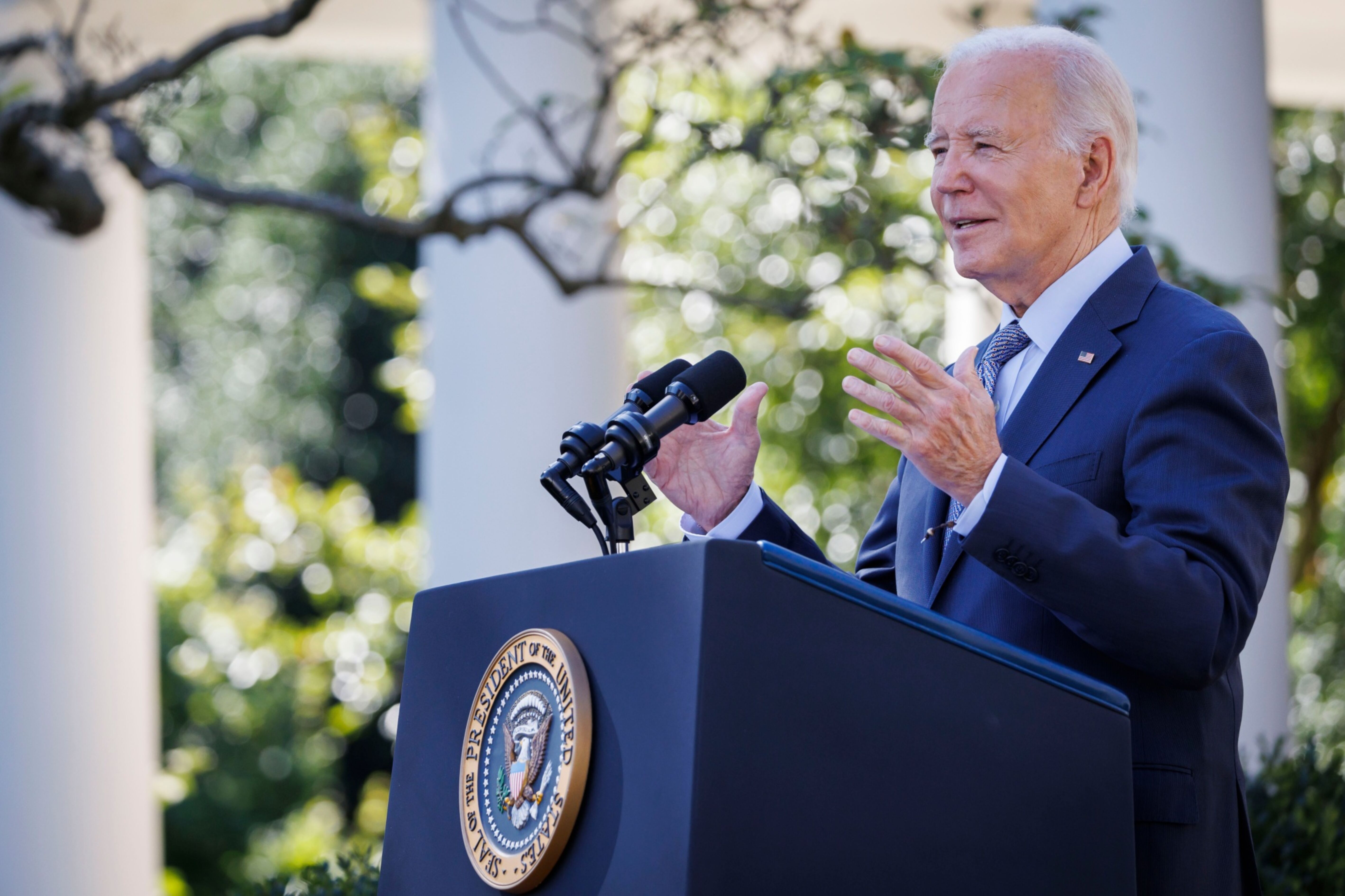
Biden unveils new action on 'junk fees' to counter rising costs
Inversiones · Criptodivisas
Resumen
The new Federal Trade Commission proposal would require companies to disclose whether any fees are refundable up-front and would ban hidden or misleading fees.
Fiserv, Inc.(NYSE: FI), a global leader in payments and financial technology, announces the acquisition of Skytef, primary distributor of Software Express…
Fiserv, Inc.(NYSE: FI), a global leader in payments and financial technology, announces the acquisition of Skytef, primary distributor of Software Express's SiTef ® (Solução Inteligente de Transferência Eletrônica de Fundos), from Fiserv, the leading Electronic Funds Transfer solution in Brazil.