Ripple vs. SEC Lawsuit: FTCS Shields SEC’s Missteps
Resumen
The post Ripple vs. SEC Lawsuit: FTCS Shields SEC’s Missteps appeared first on Coinpedia Fintech News Judge Analisa Torres had previously rejected the U.S. Securities and Exchange Commission’s (SEC) claim that Ripple’s XRP token was a security. The SEC’s aggressive legal maneuvering hurt innocent XRP holders and showcased the agency’s troubling inconsistency in regulating the crypto sector. This landmark case between the SEC and Ripple not only unveils the limitations and overreaches of the SEC but also brings into sharp focus the protections offered to federal agencies by the Federal Tort Claims Act (FTCA). "In short, the @SECGov central argument (against @Ripple) failed almost completely under judicial scrutiny. It did not just hurt defendants. The SEC harmed a lot of innocent people in the process."https://t.co/ZlV0FKn76v— CryptoLaw (@CryptoLawUS) September 28, 2023 It all began in late 2020 when the SEC filed a lawsuit against Ripple Labs, Inc., and its top executives, Brad Garlinghouse and Chris Larsen, alleging that XRP is a “security.” The case, often dubbed “the cryptocurrency case of the century,” sought billions from Ripple and its founders, setting the stage for a showdown that ultimately cost the defendants $100 million. But on July 13, 2023, Judge Torres dismantled the SEC’s central argument, ruling that most XRP sales could not be classified as securities. The SEC’s far-reaching theory, which aimed to label a digital asset as a security, resulted in immediate financial repercussions, destroying over $15 billion in wealth for XRP holders in the secondary market. Double Standards and Deception While the SEC took a public stance suggesting assets like XRP were not securities, internal documents revealed otherwise. Ripple’s defense team unearthed documents showcasing that the SEC had intentionally misled the public for years about its position on cryptocurrencies. When XRP faced severe scrutiny, ethereum got a free pass. The discovery phase of the trial was marked by an unyielding fight from the SEC to keep this evidence under wraps. The agency’s efforts to conceal the truth were so disconcerting that Magistrate Judge Sarah Netburn admonished the SEC for its “hypocrisy” and disregard for legal integrity. The SEC’s Crackdown on Crypto Exchanges But Ripple wasn’t the only one in the SEC’s crosshairs. The regulator also went after crypto giants Binance and Coinbase, leveraging the same dubious legal theory that digital assets are securities. This move suggested a broader agenda, hinting that the SEC aims to dismantle the entire crypto industry—a sentiment echoed by SEC Chairman Gary Gensler’s dismissive comments about digital currencies. Time to Amend the Federal Tort Claims Act (FTCA) While the Ripple case reveals alarming overreach and duplicitous behavior by the SEC, the current legal framework shields the agency from any consequences. The FTCA, grounded in archaic principles of sovereign immunity, essentially means that “the king can do no wrong,” leaving malicious acts by federal regulators unpunishable. In light of the Ripple case, there’s an urgent need to revisit these outdated legal provisions. The SEC’s continuous abuse of its authority further reinforces the necessity for an immediate amendment to the FTCA.
If Republicans can’t unify behind Scalise or another choice to be speaker, paralysis in the House over crypto legislation and a potential government shutd…
Crypto Bills May Depend on U.S. House GOP Battle Over Scalise Speaker Pick
Criptodivisas
Resumen
If Republicans can’t unify behind Scalise or another choice to be speaker, paralysis in the House over crypto legislation and a potential government shutdown could continue.
Tradeshift Holdings has dismissed its co-founder Christian Lanng due to "serious allegations of sexual assault and harassment" and "gross misconduct on mu…
Danish fintech fires CEO facing sexual assault complaint
Herramientas De Negocio · Criptodivisas
Resumen
Tradeshift Holdings has dismissed its co-founder Christian Lanng due to "serious allegations of sexual assault and harassment" and "gross misconduct on multiple grounds," the company says. Lanng denies the allegations.
With US banks facing a fresh wave of capital restrictions, some are searching for ways to trade out of risky loan portfolios and free up their balance she…
Private credit is eyeing bank capital risk trades, Magnetar's Snyderman says
Inversiones · Criptodivisas
Resumen
With US banks facing a fresh wave of capital restrictions, some are searching for ways to trade out of risky loan portfolios and free up their balance sheets. The solution may very well lie with capital-rich lenders in the booming $1.5 trillion private credit market.
Orum launched Verify, a new product to determine the validity of a bank account before initiating payments. Verify is built on top of FedNow and is able t…
Orum Launches Verify to Determine Validity of Bank Accounts
Infraestructura Financiera · Herramientas De Negocio · Criptodivisas
Resumen
Orum launched Verify, a new product to determine the validity of a bank account before initiating payments. Verify is built on top of FedNow and is able to authenticate 100% of all consumer and business bank accounts held in the U.S. Verify leverages the FedNow payment rail to provide businesses with account information in real time. Real-time payments innovator Orum has launched a new product called Verify to determine whether a bank account is open and valid before initiating payments. Verify is built on top of FedNow and is able to authenticate 100% of all consumer and business bank accounts held in the U.S.– all within 15 seconds. Orum’s Verify seeks to help businesses reduce fraud resulting from invalid credentials and mitigate the friction that consumers with valid bank accounts face when making a transaction. Regardless of the reason for the transaction failures, they are costly. A survey conducted in 2020 showed that 60% of business respondents reported losing customers as a result of failed payments and that failed payments lost the global economy more than $118 billion in fees, labor, and lost business in 2020. “Lost time verifying accounts equals lost revenue and ultimately lost customers,” said Orum Founder and CEO Stephany Kirkpatrick. “This is especially true for business bank accounts, which are notoriously difficult to verify. Businesses need confidence they are debiting or crediting a real account to ensure the payment lands safely in the bank account, but most solutions today are slow or don’t include coverage for all B2B use cases. Verify – built on top of FedNow – has changed this equation, making it now possible to verify any type of bank account instantly.” Today’s launch hinges on FedNow. Orum leverages the payment rail to provide real-time account information to businesses. The company uses a webhook to automatically send the data back to the business in real-time. This eliminates the need for the customer to get involved by confirming microdeposits or entering their bank login credentials. Orum was founded in 2019 to serve as a single solution for accessing RTP, FedNow, Same Day ACH, ACH, and Wires. The company’s payment API orchestrates instant payouts, using AI to predict the availability of funds within an account and pre-authorize transactions. Founded by Stephany Kirkpatrick, Orum has raised over $82 million from investors including Accel, Canapi, Bain Capital Ventures, Inspired Capital, American Express Ventures, and others. Photo by Steve Johnson The post Orum Launches Verify to Determine Validity of Bank Accounts appeared first on Finovate.
The new Federal Trade Commission proposal would require companies to disclose whether any fees are refundable up-front and would ban hidden or misleading …
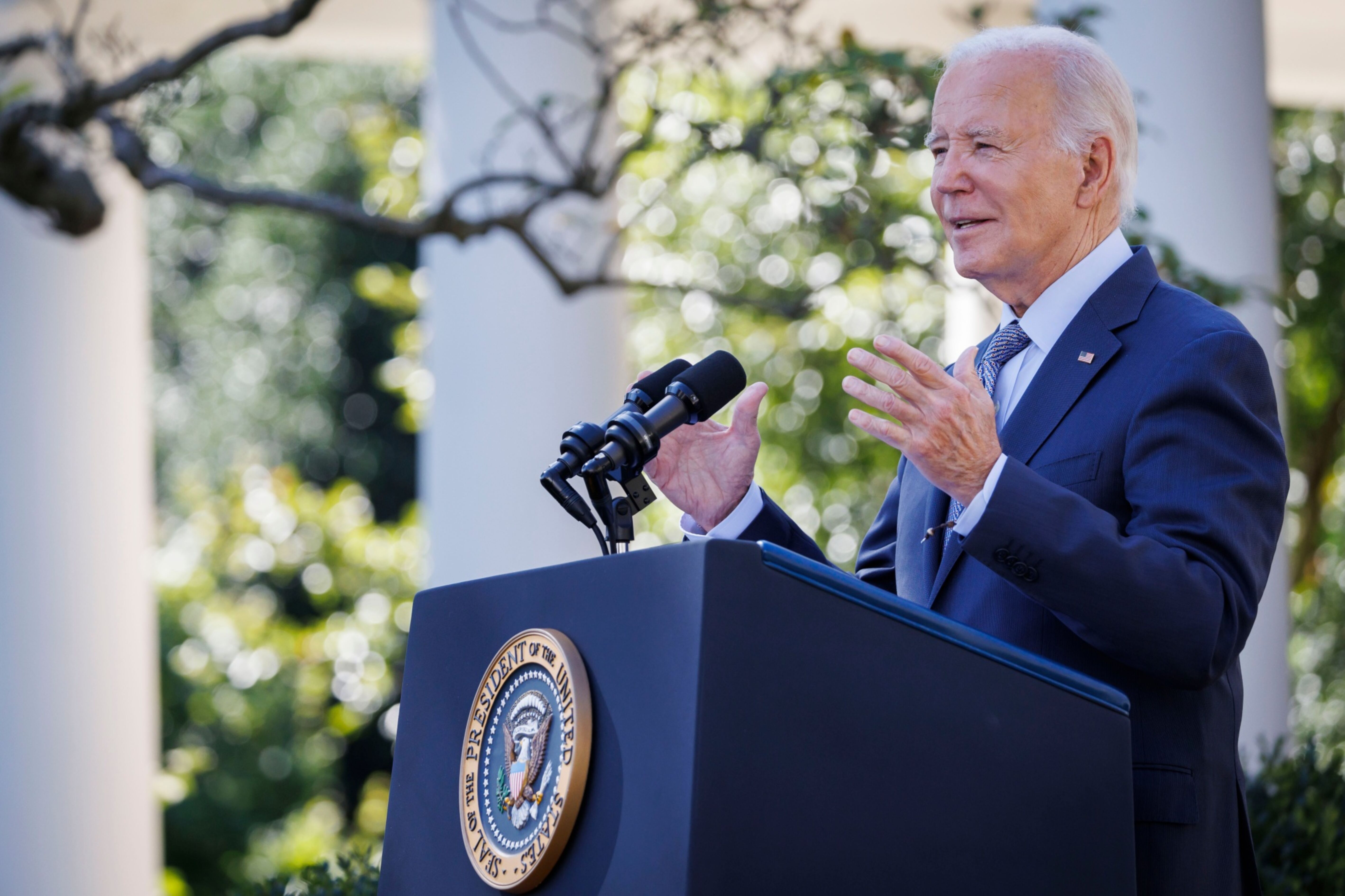
Biden unveils new action on 'junk fees' to counter rising costs
Inversiones · Criptodivisas
Resumen
The new Federal Trade Commission proposal would require companies to disclose whether any fees are refundable up-front and would ban hidden or misleading fees.
Fiserv, Inc.(NYSE: FI), a global leader in payments and financial technology, announces the acquisition of Skytef, primary distributor of Software Express…
Fiserv, Inc.(NYSE: FI), a global leader in payments and financial technology, announces the acquisition of Skytef, primary distributor of Software Express's SiTef ® (Solução Inteligente de Transferência Eletrônica de Fundos), from Fiserv, the leading Electronic Funds Transfer solution in Brazil.