Save Mart CDO: Grocery Shoppers Demand Access on Aggregators
Resumen
With consumers already loyal to third-party aggregators, grocers are increasingly finding that they need to get on board if they want to reach their customers. In an interview with PYMNTS, Tamara Pattison, senior vice president and chief digital officer at The Save Mart Companies, which spans about 200 grocery locations across three banners, said the merchant’s decision to partner with Uber Eats follows consumer demand trends. “[We’re] looking at [our] footprint and understanding where there is some level of penetration [with] existing marketplaces. Making sure that our shoppers see us participating in those marketplaces is critical,” Pattison said. “We want to make sure that we’re not dictating to our shoppers how to engage with us, but that we are looking at their behavior and finding ways to ensure that we can meet them wherever they want us to be.” Pattison noted that the company’s Lucky and FoodMaxx brands operate primarily in “highly dense urban areas,” while its Save Mart chain has a presence in “more of the suburban-valley-based areas,” the types of locations in which aggregators such as Uber Eats are “gaining traction,” she said. Indeed, PYMNTS Intelligence finds that online grocery penetration is much stronger in urban areas than in other kinds of locations. According to data from the study “ConnectedEconomy Monthly Report: The Urban-Rural Health Divide Edition,” which drew from a survey of nearly 2,500 U.S. consumers, 63% of those living in urban areas engage with grocers digitally, while only 29% of those in suburban locations said the same, and just 20% of those in rural environments. The third-party aggregator market is evolving for merchants, as more restaurant aggregators look to compete with Instacart for consumers’ on-demand grocery delivery spending, adding more retailers to their platforms and advertising their non-restaurant offerings more pointedly to consumers. “I think all grocers are looking at ensuring we continue to maintain a level of penetration as more and more marketplaces get into supporting grocery,” Pattison said. Additionally, she said consumers’ orders on these aggregators represent a different occasion than their typical “pre-planned” brick-and-mortar grocery shopping trip, relating more to last-minute needs and purchases with smaller baskets. To that point, the PYMNTS Intelligence study “Consumer Interest in an Everyday App,” created in collaboration with PayPal and based on a survey of more than 2,200 U.S. adults, reveals that 39% of consumers (or 45% of those who shop for groceries) are omnichannel grocery customers, using a combination of connected devices and more traditional means to make such purchases. Looking ahead, Pattison expects artificial intelligence (AI) to improve omnichannel grocery efficiency at every part of the process, from procurement to customer service. However, she believes that grocers will be followers rather than leaders in this area. “I think we’re all seeing this evolve at a hyper speed, so how do we potentially integrate that as a support mechanism in the stores, whether it’s with associates or direct customer engagement?” Pattison said. “I don’t think grocery is going to be the space that really pioneers that. I think some of the specialty retailers will be.”The post Save Mart CDO: Grocery Shoppers Demand Access on Aggregators first appeared on PYMNTS.com.
18 million users of Coins.ph are expected to receive a faster, lower-cost and more accessible remittance option as a result of the new partnership with Ci…
USDC issuer partners with Philippines exchange to promote stablecoin
Criptodivisas · Remesas
Resumen
18 million users of Coins.ph are expected to receive a faster, lower-cost and more accessible remittance option as a result of the new partnership with Circle.
At Sibos 2023, Grayson Clarke, Head of Market Planning and Marketing, LexisNexis® Risk Solutions, presents insights from the recent True Cost of Financial…
At Sibos 2023, Grayson Clarke, Head of Market Planning and Marketing, LexisNexis® Risk Solutions, presents insights from the recent True Cost of Financial Crime Compliance Study, conducted by Forrester Consulting, on how the evolving financial landscape is being shaped by an intricate network of regulations and sanctions, and the increasing use of AI.
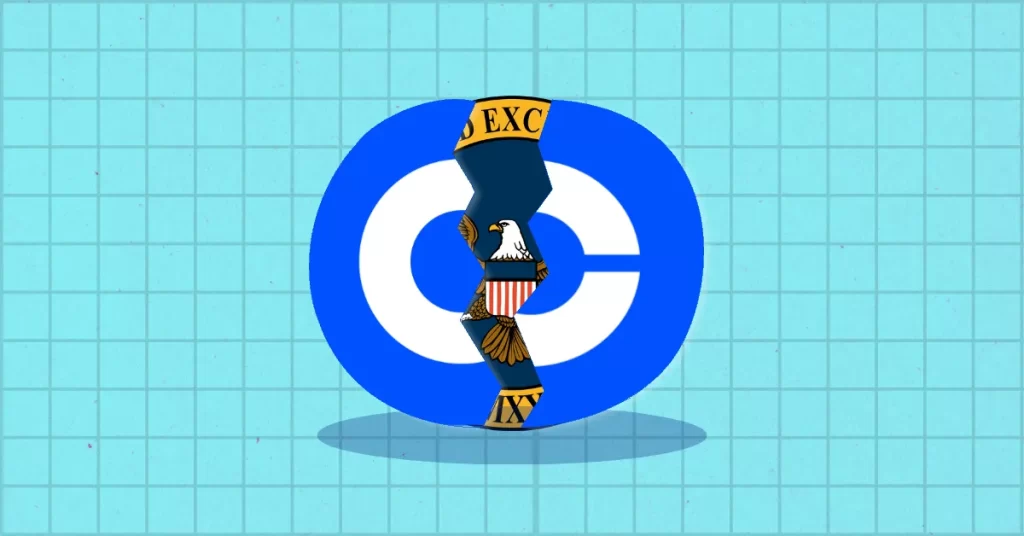
The post SEC Gains Amicus Curiae Support Against Coinbase in Legal Clash appeared first on Coinpedia Fintech News The U.S. SEC is making significant moves…
SEC Gains Amicus Curiae Support Against Coinbase in Legal Clash
Remesas · Criptodivisas
Resumen
The post SEC Gains Amicus Curiae Support Against Coinbase in Legal Clash appeared first on Coinpedia Fintech News The U.S. SEC is making significant moves against both Coinbase and Ripple. While Ripple seems beyond immediate reach, the SEC focuses on Coinbase. They are actively seeking support from industry heavyweights in their case against the exchange. Following a failed attempt to convince a Judge to file an interlocutory appeal in the Ripple lawsuit, the SEC brought multiple amicus curiae against Coinbase. TradFi grey hairs file Amicus Curiae on behalf *drum roll* the SEC, in SEC vs. Coinbasehttps://t.co/ukeHcfcX8BNASAA landing page screenshot and story attached. PROTECT. pic.twitter.com/DczmmRVlm5— Mikko Ohtamaa (@moo9000) October 10, 2023 Multiple Amicus Curiae: SEC’s Dying Bet In the ongoing U.S. Securities and Exchange Commission v. Coinbase lawsuit, the SEC has enlisted various securities and legal entities to file amicus curiae against Coinbase. The American Securities Administrators Association (NASAA), New Finance Institute, and Administrative Law Scholars are all siding with the U.S. SEC. Having faced a setback in the Ripple lawsuit with Judge Analisa Torres, the U.S. Securities and Exchange Commission (SEC) is now working to bolster its position in the Coinbase lawsuit. The North American Securities Administrators Association (NASAA) has submitted an amicus brief, urging the court to reject Coinbase’s motion. Their arguments range from Congress’s broad definition of “security” for effective investment regulation to the assertion that Coinbase’s staking program qualifies as an investment contract. The New Finance Institute (NFI) has also supported the SEC, emphasizing that neither “investing” nor “contract” are prerequisites for identifying an “Investment Contract.” They argue that the SEC has the authority to regulate crypto and request the court to deny Coinbase’s motion. Additionally, Administrative Law Scholars Professors Todd Phillips and Beau Baumann have filed amicus briefs supporting the SEC, urging the court to deny Coinbase’s motion. Coinbase’s Stance On the opposing side, After John Deaton managed to get 1,500 users to support the case, it is evident that some experienced lawyers fraternity backs Coinbase. Currently, Coinbase enjoys the support of Republican Senator Cynthia Lummis, who, along with others, has filed an Amicus Brief urging the Judge to dismiss the case. Coinbase has countered these claims, asserting that the SEC lacks jurisdiction over the crypto industry and its actions go beyond the regulatory framework. Analyst Rebuffs Coinbase’s Dubious Claims Ali Martinez, a famous Crypto expert, took a sharp jab at Coinbase’s portrayal of the “digital asset industry” as a major player in the American economy, deeming it a dubious claim. He argued that, in reality, most digital assets are primarily used for speculative purposes and lack broad practical applications, such as being widely accepted for payments or satisfying government obligations like taxes. “The Court should decline to treat digital assets as somehow special.” This challenges Coinbase’s assertion about the industry’s significant role in economic and political contexts. It’s a heated back-and-forth in the ongoing legal saga!
Verifone, a leading global provider of payment solutions, announces that Mike Kohlsdorf has joined the company as CEO, succeeding Mike Pulli, who is stepp…
Verifone, a leading global provider of payment solutions, announces that Mike Kohlsdorf has joined the company as CEO, succeeding Mike Pulli, who is stepping down after five years with the organization.
New data from the Federal Trade Commission shows that scams originating on social media have accounted for $2.7 billion in reported losses since 2021, mor…
FTC reports that scams on social media have accounted for $2.7 billion in reported losses since 2021
Criptodivisas
Resumen
New data from the Federal Trade Commission shows that scams originating on social media have accounted for $2.7 billion in reported losses since 2021, more than any other contact method.