Why Cryptocurrency Rules Might Change After Ripple’s Win Against SEC?
Resumen
The post Why Cryptocurrency Rules Might Change After Ripple’s Win Against SEC? appeared first on Coinpedia Fintech News Judge Analisa Torres of the U.S. District Court for the Southern District of New York has delivered a noteworthy ruling in the ongoing legal battle between Ripple and the Securities and Exchange Commission (SEC), granting Ripple a partial victory. This ruling not only favors Ripple but also raises questions about the SEC’s stringent stance on the cryptocurrency industry, igniting conversations about the need for regulatory reform. Outdated Regulations Confront Modern Cryptocurrency The SEC’s assertive approach towards digital assets is a cause for concern. It is founded on their interpretation of securities laws dating back to the 1930s, with an aim to categorize most cryptocurrencies as securities. This approach relies heavily on the Howey test, stemming from a Supreme Court decision in 1946. However, this perspective fails to acknowledge the unique characteristics and purposes of modern cryptocurrencies. Judge Torres’ recent ruling marks a significant shift in cryptocurrency regulation. It underscores the importance of individually assessing the classification of each token as a security, considering its unique circumstances instead of applying a one-size-fits-all approach by the SEC. Of particular note is footnote 16 in the judge’s ruling, which emphasizes the importance of not automatically categorizing all secondary market trades of crypto tokens as securities. Call for Regulatory Reform Recent landmark court decisions have sparked discussions regarding the necessity of regulatory reforms in the cryptocurrency domain. These conversations underscore the importance of updating regulations to align with the dynamic and evolving crypto landscape. Rather than hindering progress, adopting a more adaptable approach could foster industry growth and encourage innovation. The Securities and Exchange Commission (SEC) now stands at a pivotal juncture as it contemplates whether to appeal the recent decision. This presents a crucial opportunity for the agency to address any lingering concerns about Ripple and reevaluate its approach to cases involving cryptocurrency exchanges and unregistered securities. Such actions could create a favorable environment for significant crypto reform. The role and approach of the SEC in the ongoing discussions about cryptocurrency regulation are of paramount importance.
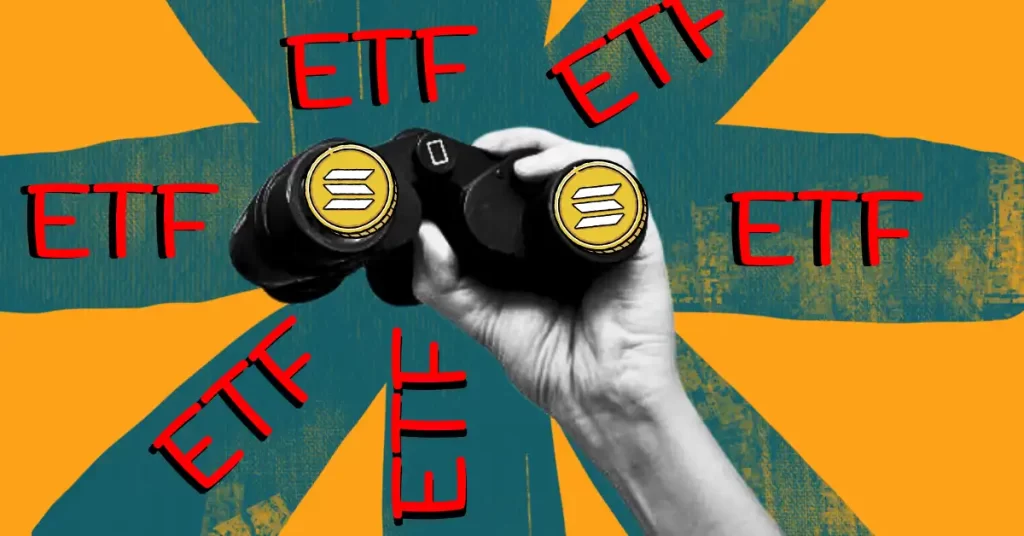
The post Analyzing the Effect of Approval of Ethereum ETF on Solana: Market Trends and Price Prediction appeared first on Coinpedia Fintech News The news …
Analyzing the Effect of Approval of Ethereum ETF on Solana: Market Trends and Price Prediction
Blockchain · Criptodivisas
Resumen
The post Analyzing the Effect of Approval of Ethereum ETF on Solana: Market Trends and Price Prediction appeared first on Coinpedia Fintech News The news of the approval of Ethereum ETFs by the U.S. Securities and Exchange Commission has influenced the cryptocurrency market immensely, particularly affecting Solana. Within this regulatory change, market experts indicate the rapidly changing dynamics and what it means for Solana investors. Solana’s Potential for an ETF With the approval of the Ethereum ETF by the US SEC, the question of whether Solana might also have an ETF emerges. Borovik, an observer on social platform X, indicated that the same similarities exist between Ethereum and Solana, to imply possibly a future route for the ETF of Solana. Ethereum getting a spot ETF literally means that Solana can get one also– both held an ICO– They both do the same thing– they are both used in the same wayI bet Solana gets an ETF during Trumps term— borovik (@3orovik) May 23, 2024 Anthony Scaramucci, the cofounder of SkyBridge Capital, shares a similar view that a SOL ETF will be announced in the future, citing the importance of Solana in the crypto space. Regulatory Hurdles and Market Response While some experts are optimistic about the possibility of a SOL ETF, regulatory difficulties will have to be overcome. Solana, being an altcoin, is under the radar of the SEC as it is considered an unregistered security. While the SEC has allowed Bitcoin and Ethereum to be considered commodities, Solana has no such recognition. Its recent approval of the spot ETF of Ethereum would underscore this regulatory complexity and subsequently Solana’s short-term price movement. Solana’s Price Volatility Amid Market Dynamics Following the Ethereum ETF approval, Solana has seen significant price movements. Its price dipped to a 7-day low following Ethereum’s market dominance and as the market became cautious. Observers note that there exists a connection between regulatory acceptance of Ethereum and price volatility in Solana, which indicates that major cryptocurrencies are in a correlated response to regulatory shifts. Recent staking trends have been reflective of a more cautious approach from Solana investors and node validators. As Ethereum ETFs continue to attract the attention of institutions, Solana stakeholders pulled out substantial amounts of SOL from staking contracts, possibly fearful of market uncertainties. This amount of unstaking reflects investors’ fears over the bearish impact it could have on the price trajectory of Solana. Price Forecast and Market Outlook In spite of Solana’s bounce above key support levels, sentiment in the futures markets remains bearish. Short traders dominate the scene, betting that SOL price would fail to break past key resistance levels. With significant leverage SHORT positions in play, Solana will find it hard to sustain a price uptrend in the near term. Key resistance areas and psychological support levels are telling insights into Solana’s short-term price movements amidst evolving market dynamics.
HSBC today announced the inauguration of its new U.S. headquarters at The Spiral, a renowned office building in New York City’s Hudson Yards neighborhood,…
HSBC today announced the inauguration of its new U.S. headquarters at The Spiral, a renowned office building in New York City’s Hudson Yards neighborhood, marking its largest U.S. relocation to date.
On the latest episode of Hashing It Out, Avail’s co-founder explains the need to unify multiple networks in the Web3 space, not just ideologically but thr…
Hashing It Out: Navigating the next wave of Web3 with Avail’s Anurag Arjun
Criptodivisas
Resumen
On the latest episode of Hashing It Out, Avail’s co-founder explains the need to unify multiple networks in the Web3 space, not just ideologically but through innovation.