Why is Quant Going Down? – A Look Into Why Bitcoin Spark and Polygon Are Gaining Ground
Resumen
The post Why is Quant Going Down? – A Look Into Why Bitcoin Spark and Polygon Are Gaining Ground appeared first on Coinpedia Fintech News Blockchain technology has improved the financial sector by powering decentralized digital platforms such as Bitcoin, Ethereum, Quant, and Polygon. The technology has exponentially grown in user numbers in recent years with the launch of new and improved digital platforms that offer an antithesis to old-generation blockchains such as Bitcoin and Ethereum. Old-generation networks are associated with limited scalability, outdated consensus mechanisms, high transaction costs, and the need for interoperable features. Newer projects like Quant are performing differently than others like Solana and Bitcoin Spark are gaining momentum. What is Quant? Quant is a blockchain-powered utility platform founded in 2018 by a computer expert and cyber security professional called Gilbert Verdian. Quant was developed to make Web3 operations faster and cheaper by applying improved technology to reduce network slowdown when systems get busy. The network was also developed to provide efficiency in cross-network transfers. The Ethereum mainnet powers the network, and its native token is QNT. Quant’s limited social presence and lack of transparent metrics systems make obtaining data from the network hard, making investors prefer Polygon and Bitcoin Spark. What is Polygon? Polygon is an Ethereum sidechain or a layer-two scaling solution for the Ethereum mainnet. The sidechain provides a cheaper and faster platform compared to Ethereum. Polygon was formerly identified as the Matic network and has helped new users interact with decentralized applications without scalability concerns or congestion issues that were experienced on Ethereum before Ethereum’s major hard fork upgrade called “The Merge” that saw the network transform from a proof-of-work consensus mechanism to a proof-of-stake network validation mechanism. Why is Bitcoin Spark trending? Bitcoin Spark is pioneering the next generation of Bitcoin alternatives. The platform applies advanced blockchain-powered systems, including a new consensus mechanism that no other platform uses, making it a first market mover. The platform has become the most likely contender of the top Bitcoin alternatives today. Unlike other Bitcoin alternatives, Bitcoin Spark is on the verge of introducing a smart contract layer to its network that will allow community developers to advance their technological explorations in deploying decentralized applications (dApps). Unlike Polygon, an Ethereum sidechain, Bitcoin Spark has its native network, which will launch soon after the ongoing ICO event ends. The ICO is currently in the sixth phase, where each BTCS token, Bitcoin Spark’s native digital asset, is selling for $2.75 and has a bonus giveaway of 8% of the amount spent deposited on the user’s account after the purchase. Bitcoin Spark has already been audited, and the founders have been KYC verified by two independent auditing platforms. BTCS tokens exist as ERC-20 tokens powered by the Ethereum mainnet to offer potential users a chance to trade, buy, sell, and use them as they await the network’s first block. The ERC-20 tokens will act as a wrapped version of Bitcoin Spark’s main coin, which will be minted on the network post-launch. The existing BTCS tokens act as an IOU or bridgeable digital asset, making depositing and withdrawing on centralised exchanges faster upon mainnet release. The Bitcoin Spark network will integrate a proprietary bridging system for the IOU tokens, allowing users to bridge their BTCS tokens to and from other networks like BNB Smart Chain, Ethereum, and Polygon. Any assets that will accumulate in the renounced contracts powered by the bridging systems will be removed from the deployed network, and the network will recognize their supply to the tokens that have been deployed. If you missed Bitcoin, buy BTCS tokens and participate in the platform’s early development. Learn more about Bitcoin Spark on: Website: https://bitcoinspark.org/ Buy BTCS: https://network.bitcoinspark.org/register
The post Analyzing the Effect of Approval of Ethereum ETF on Solana: Market Trends and Price Prediction appeared first on Coinpedia Fintech News The news …
Analyzing the Effect of Approval of Ethereum ETF on Solana: Market Trends and Price Prediction
Blockchain · Criptodivisas
Resumen
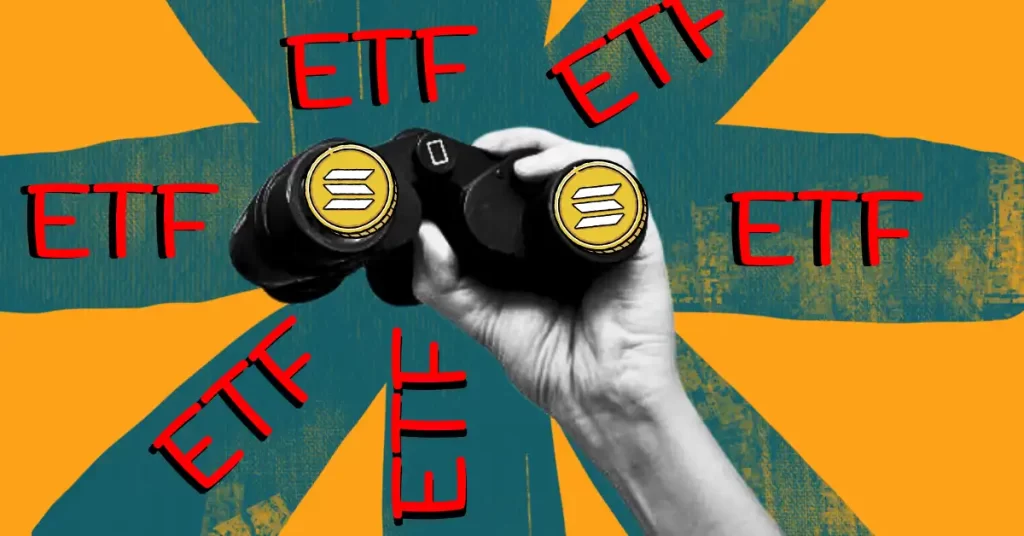
The post Analyzing the Effect of Approval of Ethereum ETF on Solana: Market Trends and Price Prediction appeared first on Coinpedia Fintech News The news of the approval of Ethereum ETFs by the U.S. Securities and Exchange Commission has influenced the cryptocurrency market immensely, particularly affecting Solana. Within this regulatory change, market experts indicate the rapidly changing dynamics and what it means for Solana investors. Solana’s Potential for an ETF With the approval of the Ethereum ETF by the US SEC, the question of whether Solana might also have an ETF emerges. Borovik, an observer on social platform X, indicated that the same similarities exist between Ethereum and Solana, to imply possibly a future route for the ETF of Solana. Ethereum getting a spot ETF literally means that Solana can get one also– both held an ICO– They both do the same thing– they are both used in the same wayI bet Solana gets an ETF during Trumps term— borovik (@3orovik) May 23, 2024 Anthony Scaramucci, the cofounder of SkyBridge Capital, shares a similar view that a SOL ETF will be announced in the future, citing the importance of Solana in the crypto space. Regulatory Hurdles and Market Response While some experts are optimistic about the possibility of a SOL ETF, regulatory difficulties will have to be overcome. Solana, being an altcoin, is under the radar of the SEC as it is considered an unregistered security. While the SEC has allowed Bitcoin and Ethereum to be considered commodities, Solana has no such recognition. Its recent approval of the spot ETF of Ethereum would underscore this regulatory complexity and subsequently Solana’s short-term price movement. Solana’s Price Volatility Amid Market Dynamics Following the Ethereum ETF approval, Solana has seen significant price movements. Its price dipped to a 7-day low following Ethereum’s market dominance and as the market became cautious. Observers note that there exists a connection between regulatory acceptance of Ethereum and price volatility in Solana, which indicates that major cryptocurrencies are in a correlated response to regulatory shifts. Recent staking trends have been reflective of a more cautious approach from Solana investors and node validators. As Ethereum ETFs continue to attract the attention of institutions, Solana stakeholders pulled out substantial amounts of SOL from staking contracts, possibly fearful of market uncertainties. This amount of unstaking reflects investors’ fears over the bearish impact it could have on the price trajectory of Solana. Price Forecast and Market Outlook In spite of Solana’s bounce above key support levels, sentiment in the futures markets remains bearish. Short traders dominate the scene, betting that SOL price would fail to break past key resistance levels. With significant leverage SHORT positions in play, Solana will find it hard to sustain a price uptrend in the near term. Key resistance areas and psychological support levels are telling insights into Solana’s short-term price movements amidst evolving market dynamics.
HSBC today announced the inauguration of its new U.S. headquarters at The Spiral, a renowned office building in New York City’s Hudson Yards neighborhood,…
HSBC today announced the inauguration of its new U.S. headquarters at The Spiral, a renowned office building in New York City’s Hudson Yards neighborhood, marking its largest U.S. relocation to date.
On the latest episode of Hashing It Out, Avail’s co-founder explains the need to unify multiple networks in the Web3 space, not just ideologically but thr…
Hashing It Out: Navigating the next wave of Web3 with Avail’s Anurag Arjun
Criptodivisas
Resumen
On the latest episode of Hashing It Out, Avail’s co-founder explains the need to unify multiple networks in the Web3 space, not just ideologically but through innovation.