Amazon Private Label Pullback May Not Be What It Seems
Summary
As inflation ebbs, shoppers continue to trade down while cautiously increasing their spending. Many consumers have had to drastically change their shopping behavior to stretch their household budget further since inflation took hold of the economy in 2021. One strategy is to cut down on the quantity of goods purchased, while another, trading down, may involve leveraging discount merchants as well as private label goods. The accompanying chart from PYMNTS’ May “Consumer Inflation Sentiment” report notes that 58% are willing to “downgrade” for at least one retail product, and details which products consumers are targeting. The same “Inflation Sentiment” report reflected similar findings when it came to grocery products, although to a slightly lesser extent, with 47% of consumers willing to trade down on these items. Indeed, as the stigma around dollar stores and discounts fades, consumers have been increasingly willing to look past their former brand name loyalties for certain items and entertain private-label goods, also known as generics. In a November PYMNTS interview, Barbara Connors, vice president of commercial insights at 84.51°, the marketing insights subsidiary of grocery giant Kroger, detailed the drivers behind consumers making the private label switch. “Historically, the reasons why someone may continue to be brand loyal just may not hold anymore because people are being forced due to financial constraints to make tradeoffs that they wouldn’t want to make,” Connors said. Retailers with the capacity to do so have been quick to offer private-label items in order to retain their customer base. Given this shopper enthusiasm for private-label goods, it at first seemed strange that Amazon recently made headlines about scaling back dozens of the company’s private label brands. Over the past year, Amazon has eliminated all but three of what had been 30 clothing brands, and will phase out two of its three furniture brands. In a move partially attributed to a Federal Trade Commission (FTC) investigation and expected lawsuit, Amazon is also pulling back in order to streamline its offerings to consumers. As private-label sales only account for 1% of its business, Amazon seems to be doing double duty in trimming the unprofitable while shoring up its FTC defense. Fueling this notion was the news shortly after the pullback announcement that Amazon would be adding its private-label 365 by Whole Foods Market, currently offered only in its subsidiary Whole Foods’ brick-and-mortar locations, to its online marketplace. Ultimately, it seems that Amazon is following other retailers in offering consumers what they want — in this case, private-label goods. However, by cutting clutter, the eCommerce giant may be ahead of the profitability curve in being choosy in its offerings.The post Amazon Private Label Pullback May Not Be What It Seems first appeared on PYMNTS.com.
If Republicans can’t unify behind Scalise or another choice to be speaker, paralysis in the House over crypto legislation and a potential government shutd…
Crypto Bills May Depend on U.S. House GOP Battle Over Scalise Speaker Pick
Digital Currencies
Summary
If Republicans can’t unify behind Scalise or another choice to be speaker, paralysis in the House over crypto legislation and a potential government shutdown could continue.
Tradeshift Holdings has dismissed its co-founder Christian Lanng due to "serious allegations of sexual assault and harassment" and "gross misconduct on mu…
Danish fintech fires CEO facing sexual assault complaint
Business Tools · Digital Currencies
Summary
Tradeshift Holdings has dismissed its co-founder Christian Lanng due to "serious allegations of sexual assault and harassment" and "gross misconduct on multiple grounds," the company says. Lanng denies the allegations.
With US banks facing a fresh wave of capital restrictions, some are searching for ways to trade out of risky loan portfolios and free up their balance she…
Private credit is eyeing bank capital risk trades, Magnetar's Snyderman says
Investments · Digital Currencies
Summary
With US banks facing a fresh wave of capital restrictions, some are searching for ways to trade out of risky loan portfolios and free up their balance sheets. The solution may very well lie with capital-rich lenders in the booming $1.5 trillion private credit market.
Orum launched Verify, a new product to determine the validity of a bank account before initiating payments. Verify is built on top of FedNow and is able t…
Orum Launches Verify to Determine Validity of Bank Accounts
Banking Infrastructure · Business Tools · Digital Currencies
Summary
Orum launched Verify, a new product to determine the validity of a bank account before initiating payments. Verify is built on top of FedNow and is able to authenticate 100% of all consumer and business bank accounts held in the U.S. Verify leverages the FedNow payment rail to provide businesses with account information in real time. Real-time payments innovator Orum has launched a new product called Verify to determine whether a bank account is open and valid before initiating payments. Verify is built on top of FedNow and is able to authenticate 100% of all consumer and business bank accounts held in the U.S.– all within 15 seconds. Orum’s Verify seeks to help businesses reduce fraud resulting from invalid credentials and mitigate the friction that consumers with valid bank accounts face when making a transaction. Regardless of the reason for the transaction failures, they are costly. A survey conducted in 2020 showed that 60% of business respondents reported losing customers as a result of failed payments and that failed payments lost the global economy more than $118 billion in fees, labor, and lost business in 2020. “Lost time verifying accounts equals lost revenue and ultimately lost customers,” said Orum Founder and CEO Stephany Kirkpatrick. “This is especially true for business bank accounts, which are notoriously difficult to verify. Businesses need confidence they are debiting or crediting a real account to ensure the payment lands safely in the bank account, but most solutions today are slow or don’t include coverage for all B2B use cases. Verify – built on top of FedNow – has changed this equation, making it now possible to verify any type of bank account instantly.” Today’s launch hinges on FedNow. Orum leverages the payment rail to provide real-time account information to businesses. The company uses a webhook to automatically send the data back to the business in real-time. This eliminates the need for the customer to get involved by confirming microdeposits or entering their bank login credentials. Orum was founded in 2019 to serve as a single solution for accessing RTP, FedNow, Same Day ACH, ACH, and Wires. The company’s payment API orchestrates instant payouts, using AI to predict the availability of funds within an account and pre-authorize transactions. Founded by Stephany Kirkpatrick, Orum has raised over $82 million from investors including Accel, Canapi, Bain Capital Ventures, Inspired Capital, American Express Ventures, and others. Photo by Steve Johnson The post Orum Launches Verify to Determine Validity of Bank Accounts appeared first on Finovate.
The new Federal Trade Commission proposal would require companies to disclose whether any fees are refundable up-front and would ban hidden or misleading …
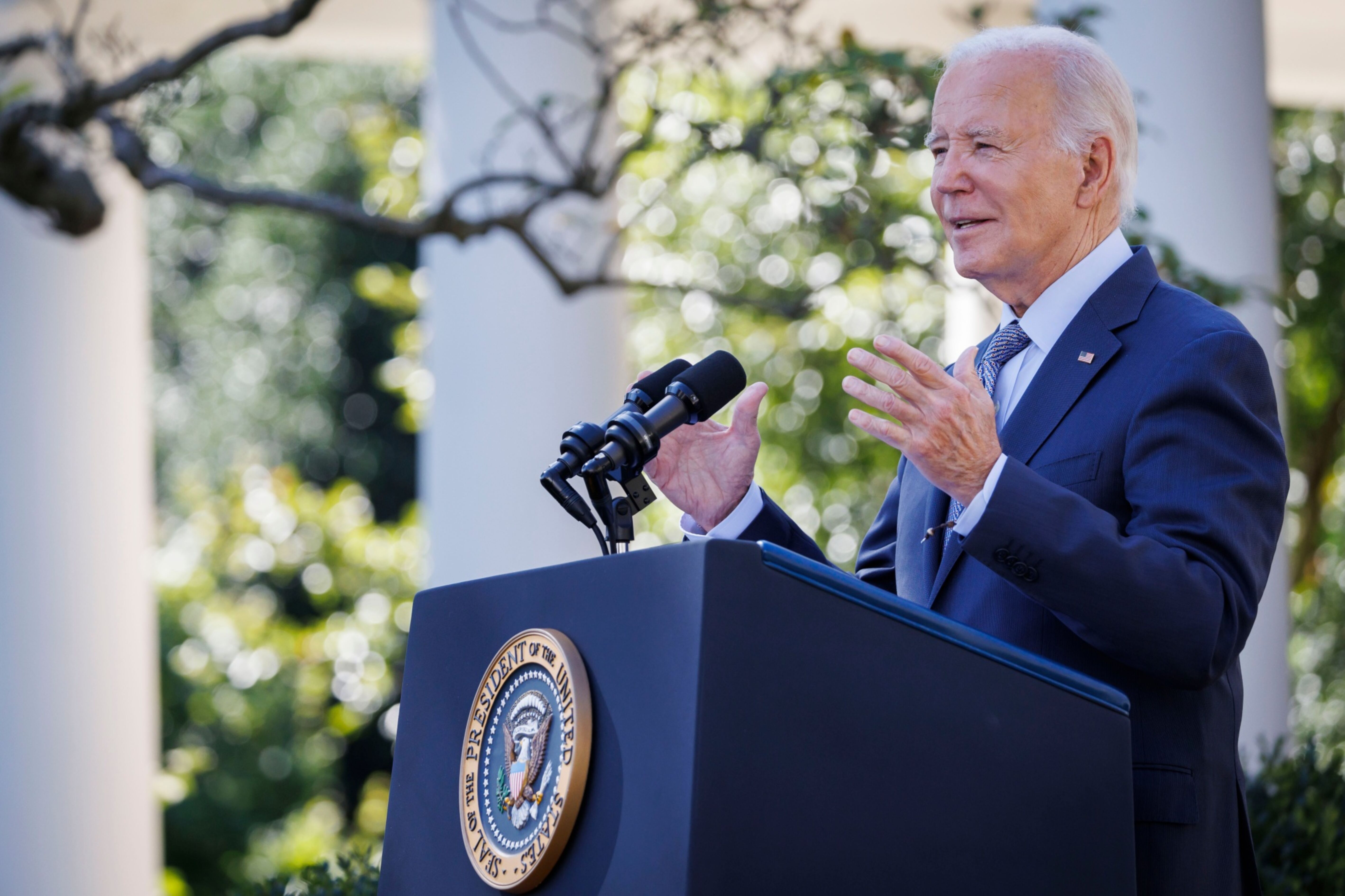
Biden unveils new action on 'junk fees' to counter rising costs
Investments · Digital Currencies
Summary
The new Federal Trade Commission proposal would require companies to disclose whether any fees are refundable up-front and would ban hidden or misleading fees.
Fiserv, Inc.(NYSE: FI), a global leader in payments and financial technology, announces the acquisition of Skytef, primary distributor of Software Express…
Fiserv, Inc.(NYSE: FI), a global leader in payments and financial technology, announces the acquisition of Skytef, primary distributor of Software Express's SiTef ® (Solução Inteligente de Transferência Eletrônica de Fundos), from Fiserv, the leading Electronic Funds Transfer solution in Brazil.