Amazon Private Label Pullback May Not Be What It Seems
Summary
As inflation ebbs, shoppers continue to trade down while cautiously increasing their spending. Many consumers have had to drastically change their shopping behavior to stretch their household budget further since inflation took hold of the economy in 2021. One strategy is to cut down on the quantity of goods purchased, while another, trading down, may involve leveraging discount merchants as well as private label goods. The accompanying chart from PYMNTS’ May “Consumer Inflation Sentiment” report notes that 58% are willing to “downgrade” for at least one retail product, and details which products consumers are targeting. The same “Inflation Sentiment” report reflected similar findings when it came to grocery products, although to a slightly lesser extent, with 47% of consumers willing to trade down on these items. Indeed, as the stigma around dollar stores and discounts fades, consumers have been increasingly willing to look past their former brand name loyalties for certain items and entertain private-label goods, also known as generics. In a November PYMNTS interview, Barbara Connors, vice president of commercial insights at 84.51°, the marketing insights subsidiary of grocery giant Kroger, detailed the drivers behind consumers making the private label switch. “Historically, the reasons why someone may continue to be brand loyal just may not hold anymore because people are being forced due to financial constraints to make tradeoffs that they wouldn’t want to make,” Connors said. Retailers with the capacity to do so have been quick to offer private-label items in order to retain their customer base. Given this shopper enthusiasm for private-label goods, it at first seemed strange that Amazon recently made headlines about scaling back dozens of the company’s private label brands. Over the past year, Amazon has eliminated all but three of what had been 30 clothing brands, and will phase out two of its three furniture brands. In a move partially attributed to a Federal Trade Commission (FTC) investigation and expected lawsuit, Amazon is also pulling back in order to streamline its offerings to consumers. As private-label sales only account for 1% of its business, Amazon seems to be doing double duty in trimming the unprofitable while shoring up its FTC defense. Fueling this notion was the news shortly after the pullback announcement that Amazon would be adding its private-label 365 by Whole Foods Market, currently offered only in its subsidiary Whole Foods’ brick-and-mortar locations, to its online marketplace. Ultimately, it seems that Amazon is following other retailers in offering consumers what they want — in this case, private-label goods. However, by cutting clutter, the eCommerce giant may be ahead of the profitability curve in being choosy in its offerings.The post Amazon Private Label Pullback May Not Be What It Seems first appeared on PYMNTS.com.
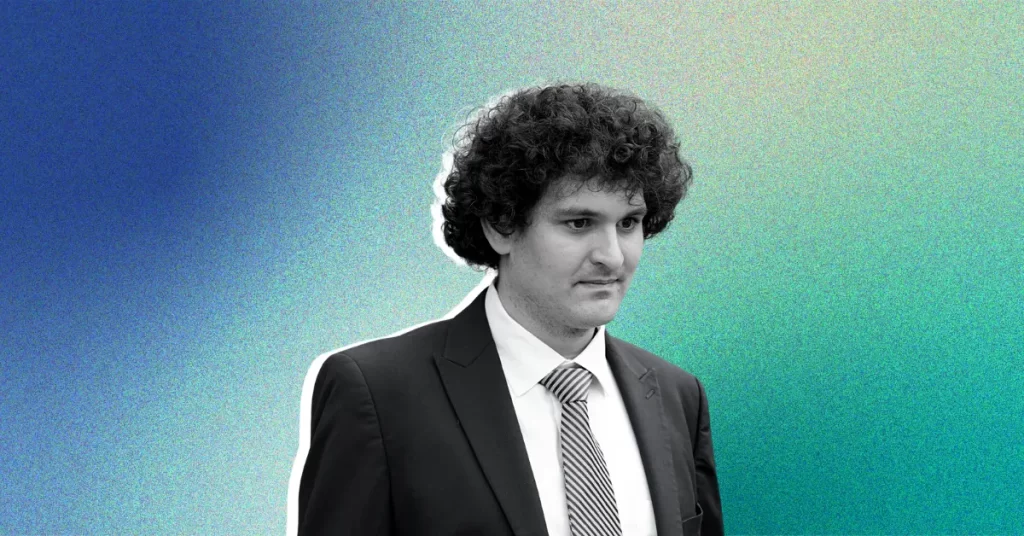
The post Caroline Ellison Accuses Ex-Boyfriend Sam Bankman-Fried Of Directing Her To Commit Fraud Against FTX Users appeared first on Coinpedia Fintech Ne…
Caroline Ellison Accuses Ex-Boyfriend Sam Bankman-Fried Of Directing Her To Commit Fraud Against FTX Users
Lending · Investments · Digital Currencies
Summary
The post Caroline Ellison Accuses Ex-Boyfriend Sam Bankman-Fried Of Directing Her To Commit Fraud Against FTX Users appeared first on Coinpedia Fintech News In a shocking revelation in today’s trial, Caroline Ellison, the ex-girlfriend of FTX founder Sam Bankman-Fried, has come forward with serious allegations against the billionaire entrepreneur. Ellison claims that Bankman-Fried directed her to engage in illicit activities and commit fraud against FTX customers. SBF Set Up The System, Ordered To Take Money: Ellison Ellison, who maintained a relationship with Bankman-Fried for a significant period, alleges that she was coerced into committing crimes. In the courtroom proceedings on October 10th, Ellison confessed to engaging in fraudulent activities while at Alameda, asserting it was under the directives of Bankman-Fried. The erstwhile CEO of Alameda pointedly attributed the misappropriation of FTX user assets straight back to SBF, alleging he “made the systems” that resulted in Alameda diverting approximately $14 billion from the exchange. She said, “He was the head of Alameda then FTX. He directed me to commit these crimes. Alameda took several billions of dollars from FTX customers and used it for investments. I sent balance sheets that made Alameda look less risky that it was.” Ellison first crossed paths with Bankman-Fried at Jane Street Capital, where SBF persuaded her to depart from the investment firm and join his cryptocurrency-centric ventures. Subsequent to the disintegration of FTX in November 2022, reports imply that the duo has largely ceased communication. The relationship between Ellison and SBF becomes a crucial element in the accusations directed at the ex-CEO, given his leadership of the crypto exchange while she spearheaded the team at Alameda. The fraud charges against Bankman-Fried hinge on allegations that he instructed Alameda to access FTX user funds without customer approval, utilizing them for various expenditures, including real estate acquisitions and political campaign contributions. Wang Reveals FTX ‘Fixer’ Provided Him With Loans During the cross-examination, Wang amusingly admitted to now understanding the difference between liquidity and solvency, eliciting chuckles from reporters. The defense did probe into the $200 million loans, revealing that Wang utilized a loan from Alameda Research for a home purchase. Evidence included a promissory note, dated April 30, 2022, detailing a $35 million loan to Wang from Alameda at a 2.21% interest rate, a seemingly standard business practice. In a late October 9 court filing, Sam Bankman-Fried’s defense aims to probe Gary Wang during cross-examination for evidence of legal involvement in Alameda Research’s loan structuring. Despite Judge Kaplan previously barring such inquiries, prosecutors questioned Wang about $200-$300 million loans from Alameda Research, used for FTX venture investments and a Bahamas house purchase. Wang asserts these were legitimate loans, formalized in promissory notes with interest obligations. Ellison and Wang, among the initial FTX and Alameda insiders, pleaded guilty in a deal with U.S. authorities in exchange for her testimony. The decision of whether Bankman-Fried will testify as part of his defense remains uncertain. The live trial is set to recommence shortly after the intermission, around 2 PM New York time.
Today, Nuapay, EML Payments’ Open Banking and account-to-account (A2A) payments business, announces the results of research into PSPs and ISVs views on Op…
UK payment providers frustrated by lack of VRP progress
Banking Infrastructure · Digital Currencies
Summary
Today, Nuapay, EML Payments’ Open Banking and account-to-account (A2A) payments business, announces the results of research into PSPs and ISVs views on Open Banking adoption and potential barriers.
Versana today announced that founding investor Citi is now connected to its transformative digital data platform, enabling syndicated loans agented by Cit…
Citi syndicated loan data comes to Versana platform
Banking
Summary
Versana today announced that founding investor Citi is now connected to its transformative digital data platform, enabling syndicated loans agented by Citi to be available to Versana’s growing subscriber base in real-time.
NCino, Inc. (NASDAQ: NCNO), a pioneer in cloud banking for the global financial services industry, today announced that Honor Bank, a full-service communi…
NCino, Inc. (NASDAQ: NCNO), a pioneer in cloud banking for the global financial services industry, today announced that Honor Bank, a full-service community bank in Northern Michigan, is live on the nCino Cloud Banking Platform.
Reorg, the leading global provider of credit data, analytics and intelligence, announced its latest innovation, CreditAI, an industry-first artificial int…
Reorg, the leading global provider of credit data, analytics and intelligence, announced its latest innovation, CreditAI, an industry-first artificial intelligence model set to redefine how subscribers interact with the platform.