Amazon Private Label Pullback May Not Be What It Seems
Summary
As inflation ebbs, shoppers continue to trade down while cautiously increasing their spending. Many consumers have had to drastically change their shopping behavior to stretch their household budget further since inflation took hold of the economy in 2021. One strategy is to cut down on the quantity of goods purchased, while another, trading down, may involve leveraging discount merchants as well as private label goods. The accompanying chart from PYMNTS’ May “Consumer Inflation Sentiment” report notes that 58% are willing to “downgrade” for at least one retail product, and details which products consumers are targeting. The same “Inflation Sentiment” report reflected similar findings when it came to grocery products, although to a slightly lesser extent, with 47% of consumers willing to trade down on these items. Indeed, as the stigma around dollar stores and discounts fades, consumers have been increasingly willing to look past their former brand name loyalties for certain items and entertain private-label goods, also known as generics. In a November PYMNTS interview, Barbara Connors, vice president of commercial insights at 84.51°, the marketing insights subsidiary of grocery giant Kroger, detailed the drivers behind consumers making the private label switch. “Historically, the reasons why someone may continue to be brand loyal just may not hold anymore because people are being forced due to financial constraints to make tradeoffs that they wouldn’t want to make,” Connors said. Retailers with the capacity to do so have been quick to offer private-label items in order to retain their customer base. Given this shopper enthusiasm for private-label goods, it at first seemed strange that Amazon recently made headlines about scaling back dozens of the company’s private label brands. Over the past year, Amazon has eliminated all but three of what had been 30 clothing brands, and will phase out two of its three furniture brands. In a move partially attributed to a Federal Trade Commission (FTC) investigation and expected lawsuit, Amazon is also pulling back in order to streamline its offerings to consumers. As private-label sales only account for 1% of its business, Amazon seems to be doing double duty in trimming the unprofitable while shoring up its FTC defense. Fueling this notion was the news shortly after the pullback announcement that Amazon would be adding its private-label 365 by Whole Foods Market, currently offered only in its subsidiary Whole Foods’ brick-and-mortar locations, to its online marketplace. Ultimately, it seems that Amazon is following other retailers in offering consumers what they want — in this case, private-label goods. However, by cutting clutter, the eCommerce giant may be ahead of the profitability curve in being choosy in its offerings.The post Amazon Private Label Pullback May Not Be What It Seems first appeared on PYMNTS.com.
The Federal Trade Commission said it has been flooded with reports from consumers who have been taken in by scammers purporting to represent some of today…
FTC: Company Impersonation Scams Cost Consumers Millions of Dollars
Payments
Summary
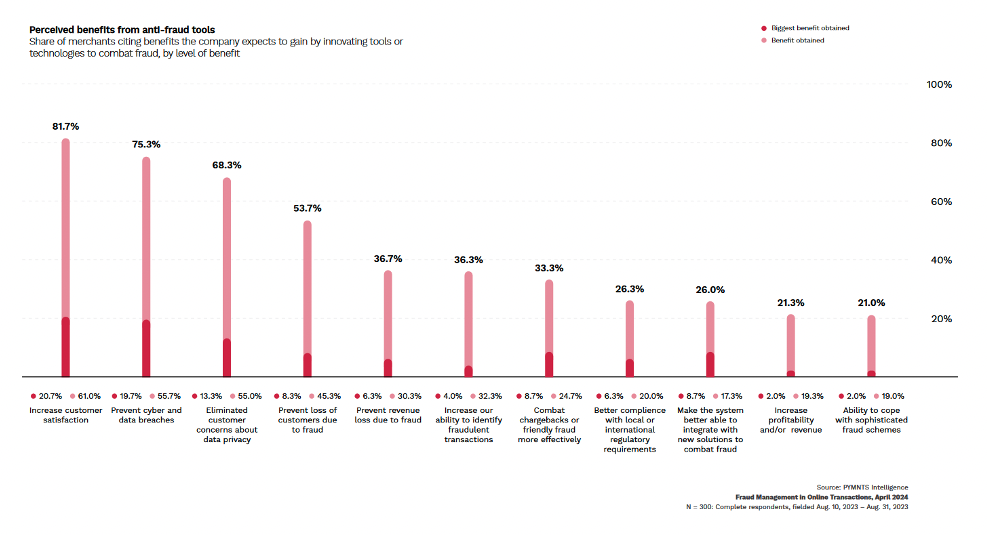
The Federal Trade Commission said it has been flooded with reports from consumers who have been taken in by scammers purporting to represent some of today’s leading companies. The FTC said Friday (May 24) that it received 52,000 consumer complaints in 2023 detailing scams where fraudsters claimed to represent Best Buy’s Geek Squad, which resulted in $15 million in consumer losses. Another 34,000 consumers reported losing $19 million to scam artists impersonating Amazon employees. PayPal impersonation frauds, meanwhile, cost consumers $16 million last year. These were the three leading impersonation scams, but the FTC said criminals pretending to represent Norton, Apple, Bank of America and Wells Fargo were also common last year. The tactics varied per swindle, the FTC said. Emails from fake Geek Squad representatives prompted consumers to share their credit card information to renew nonexistent service plans. Bogus Microsoft staffers alerted consumers about fake security breaches that could be resolved for a small price. Fraudsters claiming to represent Publishers Clearing House urged people to pay a modest fee so their nonexistent sweepstakes winnings could be delivered. To shield themselves from such hoaxes, the FTC said diligence is the first line of defense. Proceed with caution before paying anyone for anything or before clicking questionable links, the agency warned. The FTC also reminded businesses they have a role to play in protecting consumers. “At minimum, make it easier for customers to reach you to find out what communications are legit,” the FTC told merchants. “… [Look] to your workforce’s ingenuity to deploy solutions that protect your loyal customers and your good name.” The PYMNTS Intelligence report “Fraud Management in Online Transactions,” revealed that proactive fraud prevention on the part of merchants can help reinforce customer loyalty and satisfaction. The study found that 93% of eCommerce businesses saw improved customer experiences after integrating enhanced anti-fraud technologies. Of the 300 eCommerce executives who were surveyed for the report, 82% said increased consumer satisfaction would be the leading benefit following improved security measures. While 75% said upgrading fraud-prevention tools will help circumvent future cyber and data breaches — making it the No. 2 benefit — the next two leading benefits put the focus right back on the customer. Sixty-eight percent of merchants said enhancing fraud prevention tools will help mitigate customer concerns about data privacy, while 54% said it helps minimize customer churn. Only 37% said improving anti-fraud safeguards will help prevent future fraud losses. Merchants don’t have to go it alone. There are many third-party fraud prevention providers in the market, and PYMNTS Intelligence found that using external fraud-prevention expertise can pay off. Forty-four percent of merchants now outsource at least a portion of their fraud prevention operations to specialized third-party providers. Those surveyed in this group reported a lower average failed payment rate of 8.5% — 32% lower than the 13% rate experienced by businesses that opt to handle all their anti-fraud efforts internally. Although partnering with specialized third-party providers won’t put a dent in the millions of dollars consumers lose due to impersonation schemes, doing so can help merchants deliver on the FTC’s request to help protect customers. By doing so, businesses can improve their own internal security — and, in turn, boost customer satisfaction. The post FTC: Company Impersonation Scams Cost Consumers Millions of Dollars appeared first on PYMNTS.com.
Looking to protect the millions you've made from crypto during the Bitcoin-Ether ETF mania before this bull run comes crashing to an end? Here are a few i…
3 tips for protecting Bitcoin profits amid Ethereum ETF mania
Blockchain · Digital Currencies
Summary
Looking to protect the millions you've made from crypto during the Bitcoin-Ether ETF mania before this bull run comes crashing to an end? Here are a few ideas.
Joint CFTC and SEC jurisdiction as outlined in the landmark legislation will add heavy compliance costs, bifurcate global crypto markets and undermine a n…
The Unintended Consequences of FIT21’s Crypto Market Structure Bill
Digital Currencies
Summary
Joint CFTC and SEC jurisdiction as outlined in the landmark legislation will add heavy compliance costs, bifurcate global crypto markets and undermine a nascent industry in the U.S.
BlockDAG’s Rapid Climb As Leading Future Crypto With $32.4M Presale, Outshining Polygon’s Rally And PEPE’s Fall In the current cryptocurrency environment,…
BlockDAG’s Rapid Climb As Leading Future Crypto With $32.4M Presale, Outshining Polygon’s Rally And PEPE’s Fall In the current cryptocurrency environment, Polygon (MATIC) faces a stabilization period, while PEPE has experienced a notable decline from its peak. Amid these fluctuations, BlockDAG has risen as a pillar of innovation and promise. Lauded by influencers as the premier future cryptocurrency, BlockDAG has driven its presale to an impressive $32.4 million. It stands out with its advanced technology and a visionary approach to transforming the blockchain landscape. Is a Bull Run Approaching for Polygon (MATIC)? The market for Polygon shows signs of consolidation, hinting at possible bearish trends, yet MATIC has remained resilient, fluctuating within established support and resistance levels. A quick 40% rise in its value was short-lived, reverting to prior levels. Indicators like a bullish turn in the Gaussian channel predict resistance near $0.8 and the potential to escalate to $1, suggesting a possible breakout by late 2024 or early 2025. Has PEPE Reached Its Peak? PEPE recently achieved a record high, leading to a wave of profit-taking by investors. Having broken significant resistance levels, the token now risks a downturn as over 40% of holders begin to sell off their stakes. Should PEPE maintain levels above the recent peak, it might stabilize and attempt to reach new highs; otherwise, it could decline to $0.00000900 or below. BlockDAG’s Phenomenal Growth Fueled by Influencer Support BlockDAG’s presale has been exceptionally successful, raising over $32.4 million through the sale of 9.8 billion BDAG coins, thanks largely to endorsements from influential figures like Crypto Infinity. These endorsements have showcased BlockDAG’s innovative tokenomics and high-return potential, propelling its price upward and rewarding early investors with a 750% increase by the end of the 14th batch. The roadmap for BlockDAG focuses on implementing smart contracts, setting the coin’s initial market value, and launching strategic marketing initiatives. This plan outlines a progression from securing funding and forging strategic partnerships to preparing for the mainnet launch and concluding the presale phases. BlockDAG’s roadmap clearly illustrates its strategy to position itself as a top player in the cryptocurrency industry. BlockDAG’s strategy contrasts starkly with those of PEPE and Polygon. PEPE, driven by transient meme appeal, targets short-lived visibility, while Polygon’s approach is more cautious, focusing on scalability and interoperability for steady growth. In contrast, BlockDAG’s roadmap is ambitious, targeting rapid expansion and forecasting a monumental 30,000x ROI by 2030. Final Analysis As PEPE capitalizes on fleeting meme fame and Polygon advances with measured improvements, BlockDAG offers a more enticing investment opportunity. Its innovative strategies and strong support from influencers have propelled its presale to $32.4 million, achieving a 750% gain for early backers within just a few months. Unlike PEPE’s reliance on hype and Polygon’s gradual progression, BlockDAG uses strategic influencer collaborations and clear milestones to aim for exponential returns, setting a trajectory for a significant 30,000x ROI by 2030. This strategic positioning makes BlockDAG a compelling choice for investors focused on the future of cryptocurrency. Join BlockDAG Presale Now: Website: https://blockdag.network Presale: https://purchase.blockdag.network Telegram: https://t.me/blockDAGnetworkOfficial Discord: https://discord.gg/Q7BxghMVyu Disclosure: This is a sponsored press release. Please do your research before buying any cryptocurrency or investing in any projects. Read the full disclosure here. The post Polygon (MATIC) Bull Run | PEPE Price | BlockDAG’s Huge Presale appeared first on The Merkle News.