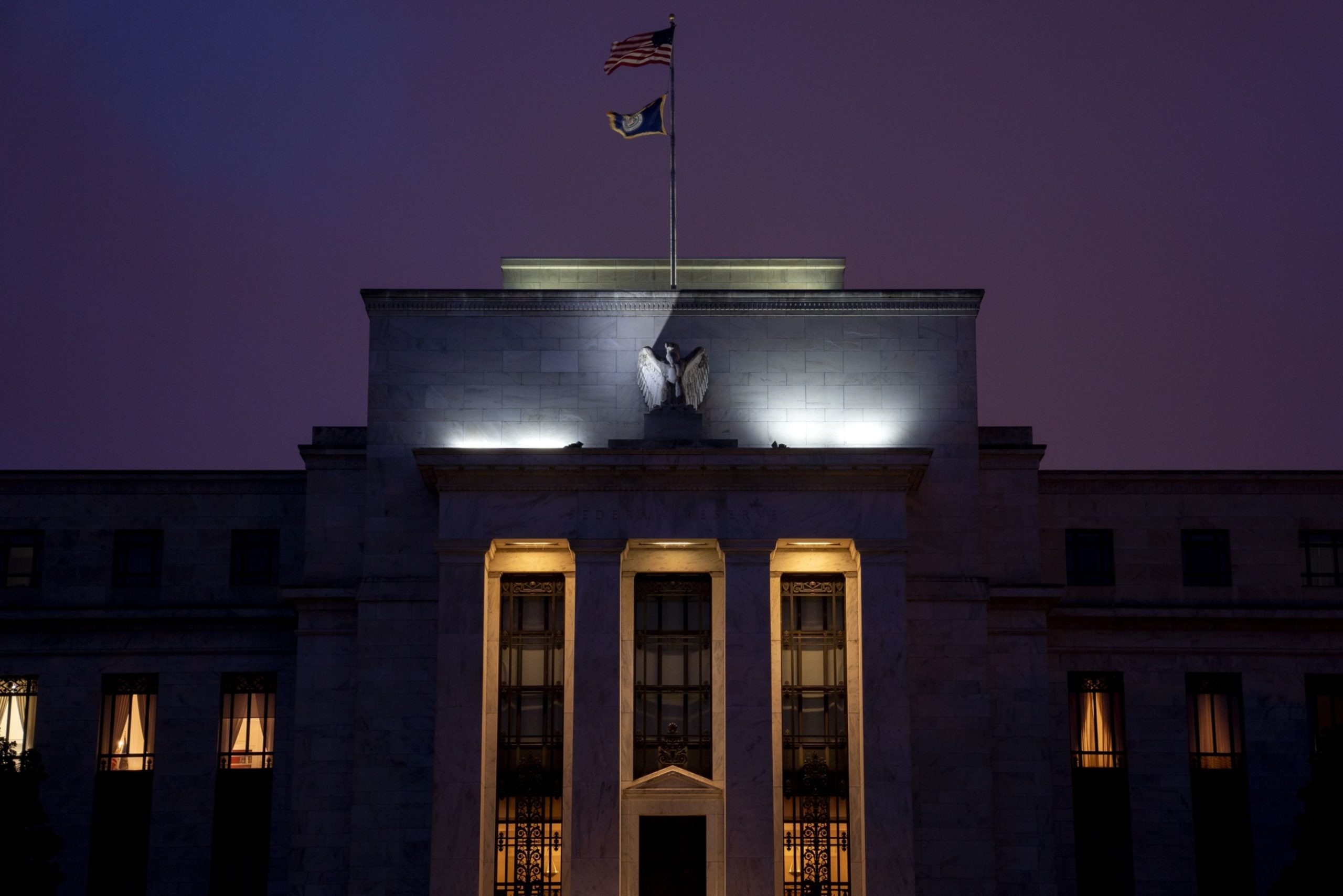
Banking Crisis on the Horizon? Mark Yusko Deciphers Market Trends
Summary
The post Banking Crisis on the Horizon? Mark Yusko Deciphers Market Trends appeared first on Coinpedia Fintech News Hedge fund manager and investor Mark Yusko expressed concerns about the current economic policies, mainly the quantitative easing (QE) and the bailout of banks. He highlighted that issues like credit default swaps on banks have escalated, potentially leading to the collapse of several banks. He said this was a result of unwise strategies, such as forcing banks to borrow from the Federal Reserve at low rates to buy treasuries. In a new video by Savvy Finance, Yusko also said that the uncertainty in the bond market further escalates these challenges. The lack of buyers for government bonds has pushed interest rates higher, making it harder for the market to clear. He cautioned that this interest rate issue could significantly affect the broader economy. Additionally, Yusko touched on the “Santa Claus rally” concept, explaining that it typically occurs when a market dislocation allows investors to rotate into specific segments. However, with most assets performing steadily this year, there may be less motivation for such a rally. He said the need for caution given the current economic and financial landscape. “We peaked in July, so we peaked on July 28th, and we’ve given back almost half, not quite half, almost half of the gains for the year. Could we go back to zero for the year? Yes, we could. Everybody knows the Santa Claus rally exists in years where you have big losses in certain sectors, and there’s a rebalancing. It usually happens in October.” Despite these concerns, other experts anticipate a year-end rally in the stock market, assuming no major unexpected events like a government shutdown or auto strike. They hope third-quarter earnings will exceed expectations, potentially driving higher stock prices.
The Clearing House’s RTP network and The Fed's FedNow network are prepared to tackle interoperability eventually — but for now, its value remains minimal.
FedNow, RTP interoperability is inevitable — down the line
Digital Currencies
Summary
The Clearing House’s RTP network and The Fed's FedNow network are prepared to tackle interoperability eventually — but for now, its value remains minimal.
The post Solana Struggles Amid Intense Bearish Pressure at Resistance Lines: What’s Next for SOL Price appeared first on Coinpedia Fintech News Solana pri…
Solana Struggles Amid Intense Bearish Pressure at Resistance Lines: What’s Next for SOL Price
Blockchain · Digital Currencies
Summary
The post Solana Struggles Amid Intense Bearish Pressure at Resistance Lines: What’s Next for SOL Price appeared first on Coinpedia Fintech News Solana price has been declining steeply following the SEC’s approval of spot Ethereum ETFs. For example, the SOL/ETH pair, which is closely monitored, has dropped by 16.8% since May 17 following the U.S. Securities and Exchange Commission’s (SEC) request for Ether ETF applicants to revise their 19b-4 filings. Additionally, there’s a decline in activity in the SOL ecosystem, suggesting further bearish pressure on the edge. Analysts Expect SOL ETF By 2025 Solana might be losing its momentum to Ethereum following SEC’s approval of spot ETH ETF. However, analysts believe that Solana is not far from having its own ETF. Geoffrey Kendrick, an analyst at Standard Chartered, predicts that SOL and XRP ETFs could receive approval by 2025. Kendrick suggests that the recent approval of the ETH ETF implies that Ether and altcoins may not be classified as securities. Analysts from The Birb Nest have observed that discussions around a Solana ETF are surging on crypto Twitter and in media circles, indicating that it’s likely to happen. The total value locked (TVL) within the Solana ecosystem experienced a notable decline in May. As of May 23, there were 27.48 million SOL locked, down from the monthly peak of 29.4 million SOL. This decline in Solana’s TVL was particularly sharp after May 20, following reports on the potential approval of spot Ether ETFs. On that date, the TVL was recorded at 28.3 million SOL, suggesting that the news about the Ether ETFs might have triggered the withdrawals from the Solana ecosystem. Since the Ethereum ETF approval on May 20, Solana node validators started rapidly withdrawing funds. Initially holding 368.8 million SOL in staking contracts, they withdrew 3.5 million SOL by May 24, reducing the active staking to 365.3 million SOL. Also read: Analyzing the Effect of Approval of Ethereum ETF on Solana: Market Trends and Price Prediction With Solana’s current price at $167, these unstaked SOL are valued at approximately $580 million. Such significant withdrawals from a Proof-of-Stake (PoS) network generally lead to short-term price declines. What’s Next For SOL Price? Solana price failed to break above $190 as sellers strongly defended a surge above that level, resulting in a steep decline below immediate Fib channels. SOL price dropped below its EMA trend lines too; however, buyers defended further drops below $160. As of writing, SOL price trades at $166, declining over 4% in the last 24 hours. SOL price is struggling to surpass the EMA20 trend line, indicating continued bearish pressure at higher levels. The declining EMA trend lines and the RSI level heading toward the oversold region suggest a rising dominance in bearish positions. Should buyers push past the descending resistance line, the SOL/USDT pair might aim to retest the significant resistance at $192. A break above this level might send the SOL price toward $210.
The Securities and Exchange Commission (SEC) is poised to green-light Ethereum (Ether) ETFs after years of pushback. As of this writing, it was not clear …
Digital Currencies · Banking Infrastructure · Blockchain
Summary
The Securities and Exchange Commission (SEC) is poised to green-light Ethereum (Ether) ETFs after years of pushback. As of this writing, it was not clear as
Services: Binance, YouHodler, Digital Asset, Lolli, Ethereum, Coinbase, Bitcoin