Binance’s $1 Billion Recovery Initiative Flops: What Went Wrong?
Summary
The post Binance’s $1 Billion Recovery Initiative Flops: What Went Wrong? appeared first on Coinpedia Fintech News A recent Bloomberg report revealed that Binance’s highly anticipated Industry Recovery Initiative (IRI), initially seen as a lifeline for a struggling market, has fallen well below expectations. Despite committing a hefty $1 billion, the IRI has only managed to invest a mere $30 million, surprising and worrying many. How It All Began The IRI was created in response to a string of market crises, including the Terra-LUNA and FTX exchange problems. Binance’s CEO, Changpeng “CZ” Zhao, introduced this initiative with the aim of stabilizing the rocky cryptocurrency market. With support from big names like Jump Crypto and Polygon Ventures, the goal was to financially assist struggling companies and spark investor interest. Binance CEO’s Industry Recovery Initiative Fails!https://t.co/0DwLnocPrc— John Morgan (@johnmorganFL) October 10, 2023 Despite strong backing and a $1 billion commitment in Binance’s BUSD stablecoin, the IRI has only been able to distribute $30 million. This modest amount has been directed to just 14 undisclosed projects and one purchase – the South Korean crypto exchange, Gopax. Such limited achievements have left industry observers baffled and disappointed. Regulatory Hurdles In The Way The IRI faced additional challenges due to changing regulations, particularly the SEC’s legal actions against major players in the crypto industry, including Binance and Coinbase. The emergence of “Operation Choke Point 2.0” added more uncertainty, forcing the IRI to convert its remaining funds into Bitcoin, BNB, and Ethereum because stablecoins faced more scrutiny. Also Read: Binance’s POR Reports: Transparency Amidst Legal Uncertainty Interestingly, Binance decided to move the remaining $985 million back to its corporate treasury, citing “growing regulatory concerns” as the primary reason. This decision has raised questions about the original goals of the initiative and what it intends to achieve. Confidence Takes a Hit The IRI’s underwhelming performance comes at a particularly bad time. According to analytics firm Messari, venture capital funding for crypto-related ventures has dropped by a substantial 70%. The failure of such a high-profile initiative is likely to further shake investor confidence. Binance’s IRI’s disappointing outcomes lead to important questions about whether large-scale initiatives are effective in guiding the cryptocurrency market during challenging periods. This Might Interest You: Binance Coin Price Analysis: Is The Coin Dead? What’s Next For BNB Price?
If Republicans can’t unify behind Scalise or another choice to be speaker, paralysis in the House over crypto legislation and a potential government shutd…
Crypto Bills May Depend on U.S. House GOP Battle Over Scalise Speaker Pick
Digital Currencies
Summary
If Republicans can’t unify behind Scalise or another choice to be speaker, paralysis in the House over crypto legislation and a potential government shutdown could continue.
Tradeshift Holdings has dismissed its co-founder Christian Lanng due to "serious allegations of sexual assault and harassment" and "gross misconduct on mu…
Danish fintech fires CEO facing sexual assault complaint
Business Tools · Digital Currencies
Summary
Tradeshift Holdings has dismissed its co-founder Christian Lanng due to "serious allegations of sexual assault and harassment" and "gross misconduct on multiple grounds," the company says. Lanng denies the allegations.
With US banks facing a fresh wave of capital restrictions, some are searching for ways to trade out of risky loan portfolios and free up their balance she…
Private credit is eyeing bank capital risk trades, Magnetar's Snyderman says
Investments · Digital Currencies
Summary
With US banks facing a fresh wave of capital restrictions, some are searching for ways to trade out of risky loan portfolios and free up their balance sheets. The solution may very well lie with capital-rich lenders in the booming $1.5 trillion private credit market.
Orum launched Verify, a new product to determine the validity of a bank account before initiating payments. Verify is built on top of FedNow and is able t…
Orum Launches Verify to Determine Validity of Bank Accounts
Banking Infrastructure · Business Tools · Digital Currencies
Summary
Orum launched Verify, a new product to determine the validity of a bank account before initiating payments. Verify is built on top of FedNow and is able to authenticate 100% of all consumer and business bank accounts held in the U.S. Verify leverages the FedNow payment rail to provide businesses with account information in real time. Real-time payments innovator Orum has launched a new product called Verify to determine whether a bank account is open and valid before initiating payments. Verify is built on top of FedNow and is able to authenticate 100% of all consumer and business bank accounts held in the U.S.– all within 15 seconds. Orum’s Verify seeks to help businesses reduce fraud resulting from invalid credentials and mitigate the friction that consumers with valid bank accounts face when making a transaction. Regardless of the reason for the transaction failures, they are costly. A survey conducted in 2020 showed that 60% of business respondents reported losing customers as a result of failed payments and that failed payments lost the global economy more than $118 billion in fees, labor, and lost business in 2020. “Lost time verifying accounts equals lost revenue and ultimately lost customers,” said Orum Founder and CEO Stephany Kirkpatrick. “This is especially true for business bank accounts, which are notoriously difficult to verify. Businesses need confidence they are debiting or crediting a real account to ensure the payment lands safely in the bank account, but most solutions today are slow or don’t include coverage for all B2B use cases. Verify – built on top of FedNow – has changed this equation, making it now possible to verify any type of bank account instantly.” Today’s launch hinges on FedNow. Orum leverages the payment rail to provide real-time account information to businesses. The company uses a webhook to automatically send the data back to the business in real-time. This eliminates the need for the customer to get involved by confirming microdeposits or entering their bank login credentials. Orum was founded in 2019 to serve as a single solution for accessing RTP, FedNow, Same Day ACH, ACH, and Wires. The company’s payment API orchestrates instant payouts, using AI to predict the availability of funds within an account and pre-authorize transactions. Founded by Stephany Kirkpatrick, Orum has raised over $82 million from investors including Accel, Canapi, Bain Capital Ventures, Inspired Capital, American Express Ventures, and others. Photo by Steve Johnson The post Orum Launches Verify to Determine Validity of Bank Accounts appeared first on Finovate.
The new Federal Trade Commission proposal would require companies to disclose whether any fees are refundable up-front and would ban hidden or misleading …
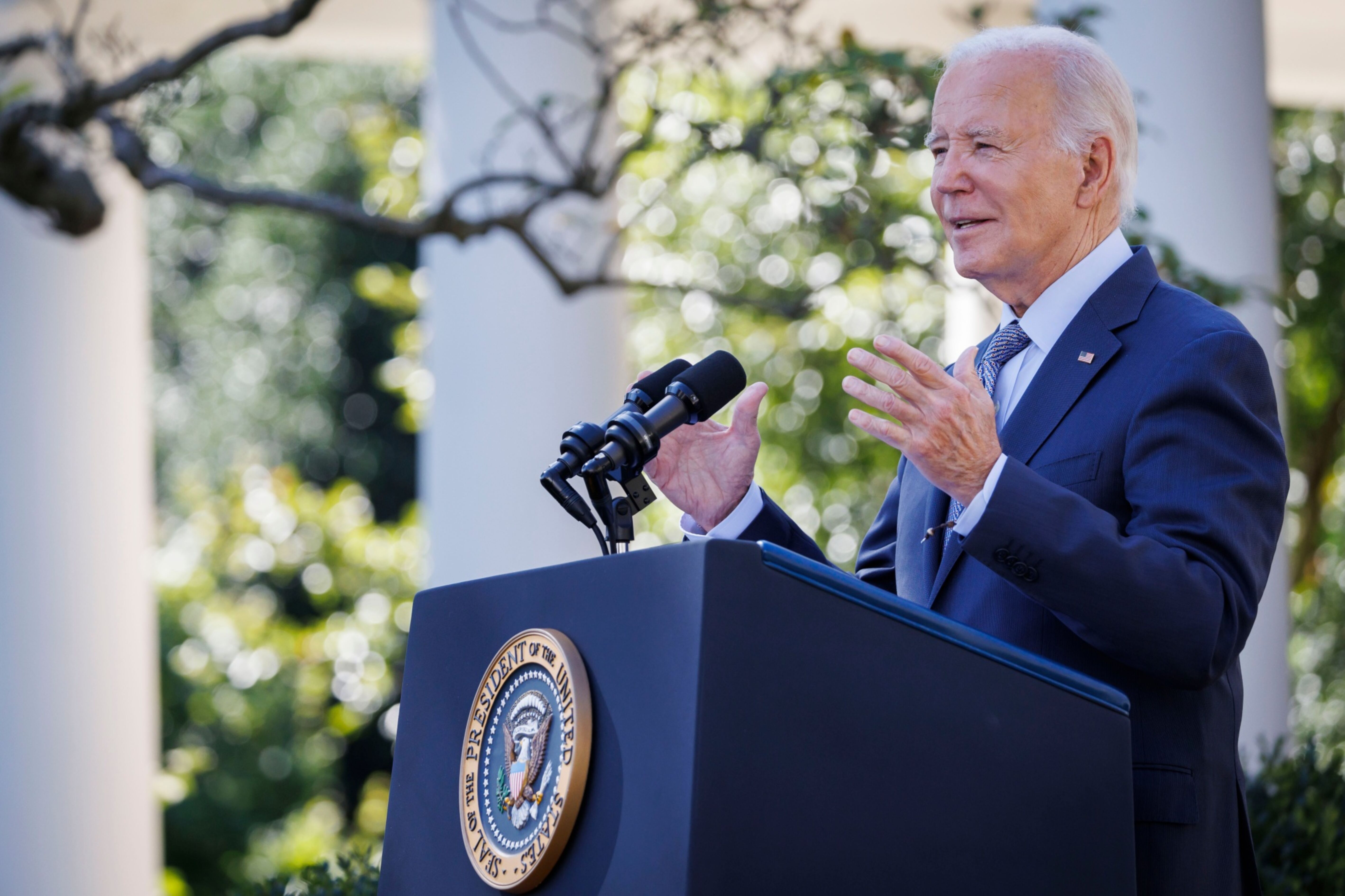
Biden unveils new action on 'junk fees' to counter rising costs
Investments · Digital Currencies
Summary
The new Federal Trade Commission proposal would require companies to disclose whether any fees are refundable up-front and would ban hidden or misleading fees.
Fiserv, Inc.(NYSE: FI), a global leader in payments and financial technology, announces the acquisition of Skytef, primary distributor of Software Express…
Fiserv, Inc.(NYSE: FI), a global leader in payments and financial technology, announces the acquisition of Skytef, primary distributor of Software Express's SiTef ® (Solução Inteligente de Transferência Eletrônica de Fundos), from Fiserv, the leading Electronic Funds Transfer solution in Brazil.