Coinbase Vs. SEC: SEC’s Lawsuit Against Coinbase Gains Support from Securities Regulators
Summary
The post Coinbase Vs. SEC: SEC’s Lawsuit Against Coinbase Gains Support from Securities Regulators appeared first on Coinpedia Fintech News In a lawsuit involving the U.S. SEC and Coinbase, an association made up of securities regulators claimed that a New York district court shouldn’t treat digital assets “as somehow special.” In an amicus brief submitted on Tuesday, the North American Securities Administrators Association argued in favor of the Securities and Exchange Commission’s legal action against Coinbase. The SEC accused the cryptocurrency exchange of operating as an unlicensed exchange, broker, and clearing agency in June. The State securities regulators argued that it would be fair if the respected Court would reject Coinbase’s attempt to interpret the law narrowly and improperly to avoid having to comply with the exact regulatory requirements as other participants in the nation’s securities markets. Additionally, the prosecution argues that the Court should reject any attempt to give digital assets a special status. The regulators voice that the SEC’s case against Coinbase is not “extraordinary,” citing the Howey Test, a 1946 case concerning citrus orchards that the U.S. Supreme Court used to decide whether transactions constitute investment contracts and hence subject to securities laws. Some people in the cryptocurrency business disagreed with how the SEC applied that court case. The SEC’s assertion that specific digital assets qualify as investment contracts for the test is “well within the bounds of established law,” according to NASAA. NASAA Discriminates Crypto Regulations In its brief, NASAA stated that the SEC is simply upholding the law and not adopting new policies about digital assets. The organization stated, “It cannot be the law that an agency needs specific Congressional authorization to apply existing legislation to new fact patterns in complex and changing financial markets.” Lawmakers have proposed several measures to regulate cryptocurrency, but none have yet been passed. Two bills— one that would govern stablecoins, and the other would take a comprehensive approach to developing a regulatory framework for cryptocurrencies— passed through a House committee over the summer and are now awaiting a challenging Senate vote and a full House vote. Congress has not yet passed legislation establishing a thorough regulatory framework for digital assets, although it may do so in the future. Additionally, Congress can decide not to, the group noted. Major Questions Put Forward Additionally, NASAA disputed claims that the concept of the major question may be applied to cryptography. According to the idea, an agency needs explicit congressional authorization before deciding on a matter of significant national importance. The critical questions doctrine is divided into two parts: whether the issue will significantly affect the public or the country’s economy and whether a federal agency has the legal right to enact new rules. According to NASAA, incidents involving the theory of the major questions cannot be legitimately compared to the crypto sector regarding economic and political relevance. Since most digital assets have no real economic use case other than speculation, NASAA wrote, “As a first matter, digital assets cannot reasonably be considered a sufficiently significant component of the American economy.” To safeguard investors from fraud and abuse, NASAA represents state and provincial securities authorities in the United States, Canada, and Mexico. Over the past year, a few state securities regulators have also brought legal cases against Coinbase, Nexo Capital, and other businesses.
If Republicans can’t unify behind Scalise or another choice to be speaker, paralysis in the House over crypto legislation and a potential government shutd…
Crypto Bills May Depend on U.S. House GOP Battle Over Scalise Speaker Pick
Digital Currencies
Summary
If Republicans can’t unify behind Scalise or another choice to be speaker, paralysis in the House over crypto legislation and a potential government shutdown could continue.
Tradeshift Holdings has dismissed its co-founder Christian Lanng due to "serious allegations of sexual assault and harassment" and "gross misconduct on mu…
Danish fintech fires CEO facing sexual assault complaint
Business Tools · Digital Currencies
Summary
Tradeshift Holdings has dismissed its co-founder Christian Lanng due to "serious allegations of sexual assault and harassment" and "gross misconduct on multiple grounds," the company says. Lanng denies the allegations.
With US banks facing a fresh wave of capital restrictions, some are searching for ways to trade out of risky loan portfolios and free up their balance she…
Private credit is eyeing bank capital risk trades, Magnetar's Snyderman says
Investments · Digital Currencies
Summary
With US banks facing a fresh wave of capital restrictions, some are searching for ways to trade out of risky loan portfolios and free up their balance sheets. The solution may very well lie with capital-rich lenders in the booming $1.5 trillion private credit market.
Orum launched Verify, a new product to determine the validity of a bank account before initiating payments. Verify is built on top of FedNow and is able t…
Orum Launches Verify to Determine Validity of Bank Accounts
Banking Infrastructure · Business Tools · Digital Currencies
Summary
Orum launched Verify, a new product to determine the validity of a bank account before initiating payments. Verify is built on top of FedNow and is able to authenticate 100% of all consumer and business bank accounts held in the U.S. Verify leverages the FedNow payment rail to provide businesses with account information in real time. Real-time payments innovator Orum has launched a new product called Verify to determine whether a bank account is open and valid before initiating payments. Verify is built on top of FedNow and is able to authenticate 100% of all consumer and business bank accounts held in the U.S.– all within 15 seconds. Orum’s Verify seeks to help businesses reduce fraud resulting from invalid credentials and mitigate the friction that consumers with valid bank accounts face when making a transaction. Regardless of the reason for the transaction failures, they are costly. A survey conducted in 2020 showed that 60% of business respondents reported losing customers as a result of failed payments and that failed payments lost the global economy more than $118 billion in fees, labor, and lost business in 2020. “Lost time verifying accounts equals lost revenue and ultimately lost customers,” said Orum Founder and CEO Stephany Kirkpatrick. “This is especially true for business bank accounts, which are notoriously difficult to verify. Businesses need confidence they are debiting or crediting a real account to ensure the payment lands safely in the bank account, but most solutions today are slow or don’t include coverage for all B2B use cases. Verify – built on top of FedNow – has changed this equation, making it now possible to verify any type of bank account instantly.” Today’s launch hinges on FedNow. Orum leverages the payment rail to provide real-time account information to businesses. The company uses a webhook to automatically send the data back to the business in real-time. This eliminates the need for the customer to get involved by confirming microdeposits or entering their bank login credentials. Orum was founded in 2019 to serve as a single solution for accessing RTP, FedNow, Same Day ACH, ACH, and Wires. The company’s payment API orchestrates instant payouts, using AI to predict the availability of funds within an account and pre-authorize transactions. Founded by Stephany Kirkpatrick, Orum has raised over $82 million from investors including Accel, Canapi, Bain Capital Ventures, Inspired Capital, American Express Ventures, and others. Photo by Steve Johnson The post Orum Launches Verify to Determine Validity of Bank Accounts appeared first on Finovate.
The new Federal Trade Commission proposal would require companies to disclose whether any fees are refundable up-front and would ban hidden or misleading …
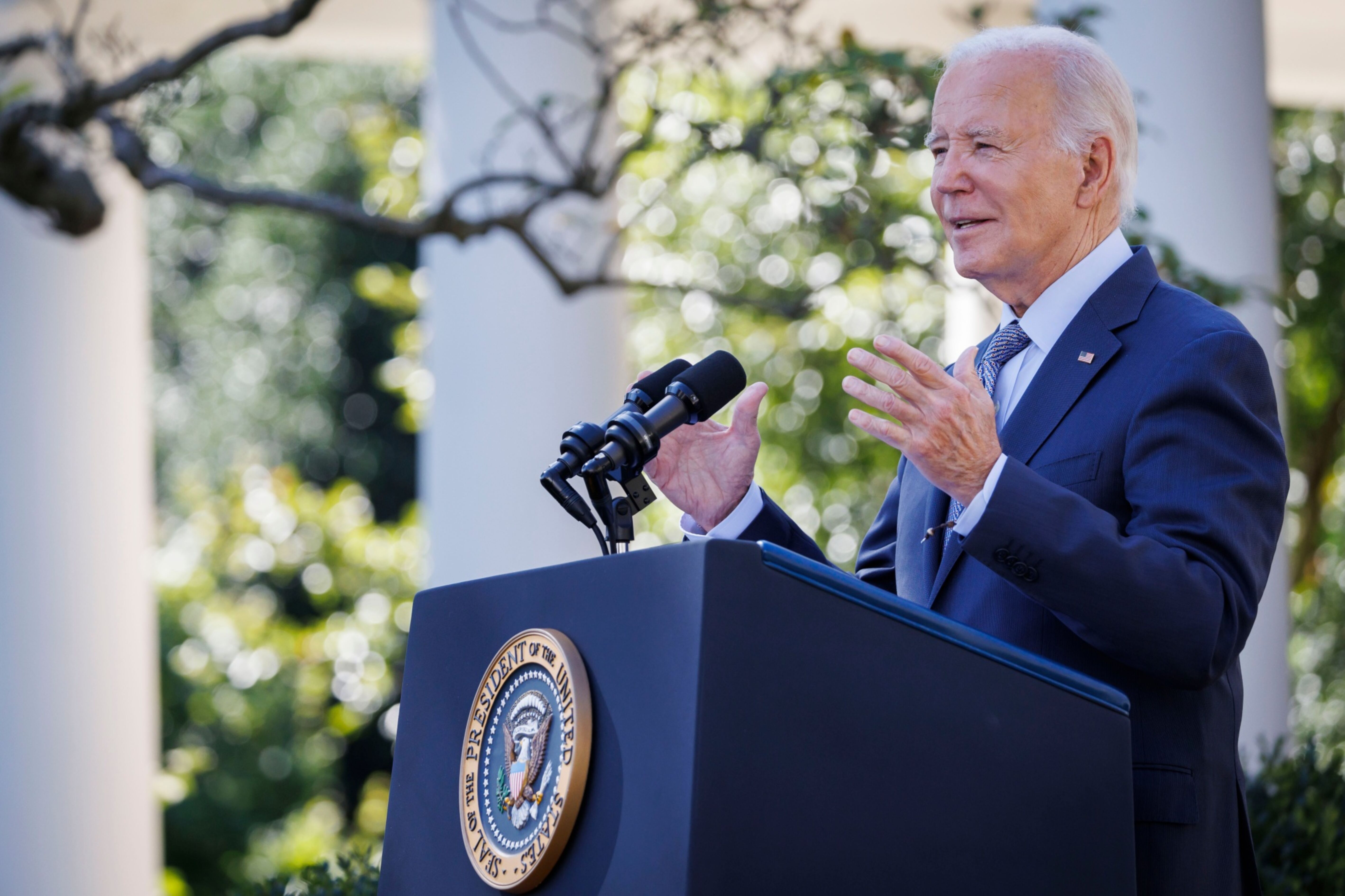
Biden unveils new action on 'junk fees' to counter rising costs
Investments · Digital Currencies
Summary
The new Federal Trade Commission proposal would require companies to disclose whether any fees are refundable up-front and would ban hidden or misleading fees.
Fiserv, Inc.(NYSE: FI), a global leader in payments and financial technology, announces the acquisition of Skytef, primary distributor of Software Express…
Fiserv, Inc.(NYSE: FI), a global leader in payments and financial technology, announces the acquisition of Skytef, primary distributor of Software Express's SiTef ® (Solução Inteligente de Transferência Eletrônica de Fundos), from Fiserv, the leading Electronic Funds Transfer solution in Brazil.