Commercial Card Adoption Poised to Rise as Acceptance Costs Decrease
Summary
Commercial cards, long sidelined by businesses because of cost concerns, are experiencing a renewed interest in business-to-business (B2B) transactions. The primary drivers of this change in outlook include today’s higher interest rates that lower effective working-capital costs and the growing willingness among card issuers to negotiate fees. As the value proposition for commercial cards becomes increasingly hard to overlook, businesses are rethinking their B2B payment strategies. PYMNTS’ latest research on the role of commercial cards in B2B payments finds that, with cost no longer the barrier it once was, businesses are focusing on the potential upsides of incorporating commercial cards into their payments lineup. These are just some of the findings detailed in “The Treasury Management Playbook: Businesses Give Commercial Cards a Fresh Look,” a PYMNTS and Citi collaboration. This report delves into the trends driving commercial card adoption, evaluates costs and value propositions, and investigates its role in the broader B2B payments landscape. Key findings from the report include: Suppliers benefit as card issuers negotiate fees. Previously deterred by substantial processing fees, suppliers now see the appeal of commercial cards. This shift is primarily due to card issuers’ newfound flexibility in negotiating terms and fees. As issuers tackle the cost dilemma, the asymmetry in B2B payments cost lessens, positioning commercial cards as a stronger player in the B2B space. Commercial cards optimize B2B operational efficiency. Commercial cards streamline buyer and supplier reconciliation processes through straight-through processing and unique virtual card numbers. These cards offer real-time visibility into expenses by integrating seamlessly with existing accounts payable systems. This visibility contrasts sharply with the inefficiencies of traditional purchase orders and notably enhances the management of ad hoc payments. Commercial cards build B2B trust and streamline global transactions. Commercial cards foster trust in business relationships, explaining the positive correlation between higher spend per account and increased business-banking satisfaction. These cards also minimize friction in cross-border B2B payments, enabling more efficient and compliant international transactions. This playbook examines the evolving role of commercial cards in B2B transactions and offers readers valuable tools to help determine how commercial cards fit into the business payments mix. Download the report to learn how a more appealing value proposition and issuer flexibility drives commercial card adoption.The post Commercial Card Adoption Poised to Rise as Acceptance Costs Decrease first appeared on PYMNTS.com.
If Republicans can’t unify behind Scalise or another choice to be speaker, paralysis in the House over crypto legislation and a potential government shutd…
Crypto Bills May Depend on U.S. House GOP Battle Over Scalise Speaker Pick
Digital Currencies
Summary
If Republicans can’t unify behind Scalise or another choice to be speaker, paralysis in the House over crypto legislation and a potential government shutdown could continue.
Tradeshift Holdings has dismissed its co-founder Christian Lanng due to "serious allegations of sexual assault and harassment" and "gross misconduct on mu…
Danish fintech fires CEO facing sexual assault complaint
Business Tools · Digital Currencies
Summary
Tradeshift Holdings has dismissed its co-founder Christian Lanng due to "serious allegations of sexual assault and harassment" and "gross misconduct on multiple grounds," the company says. Lanng denies the allegations.
With US banks facing a fresh wave of capital restrictions, some are searching for ways to trade out of risky loan portfolios and free up their balance she…
Private credit is eyeing bank capital risk trades, Magnetar's Snyderman says
Investments · Digital Currencies
Summary
With US banks facing a fresh wave of capital restrictions, some are searching for ways to trade out of risky loan portfolios and free up their balance sheets. The solution may very well lie with capital-rich lenders in the booming $1.5 trillion private credit market.
Orum launched Verify, a new product to determine the validity of a bank account before initiating payments. Verify is built on top of FedNow and is able t…
Orum Launches Verify to Determine Validity of Bank Accounts
Banking Infrastructure · Business Tools · Digital Currencies
Summary
Orum launched Verify, a new product to determine the validity of a bank account before initiating payments. Verify is built on top of FedNow and is able to authenticate 100% of all consumer and business bank accounts held in the U.S. Verify leverages the FedNow payment rail to provide businesses with account information in real time. Real-time payments innovator Orum has launched a new product called Verify to determine whether a bank account is open and valid before initiating payments. Verify is built on top of FedNow and is able to authenticate 100% of all consumer and business bank accounts held in the U.S.– all within 15 seconds. Orum’s Verify seeks to help businesses reduce fraud resulting from invalid credentials and mitigate the friction that consumers with valid bank accounts face when making a transaction. Regardless of the reason for the transaction failures, they are costly. A survey conducted in 2020 showed that 60% of business respondents reported losing customers as a result of failed payments and that failed payments lost the global economy more than $118 billion in fees, labor, and lost business in 2020. “Lost time verifying accounts equals lost revenue and ultimately lost customers,” said Orum Founder and CEO Stephany Kirkpatrick. “This is especially true for business bank accounts, which are notoriously difficult to verify. Businesses need confidence they are debiting or crediting a real account to ensure the payment lands safely in the bank account, but most solutions today are slow or don’t include coverage for all B2B use cases. Verify – built on top of FedNow – has changed this equation, making it now possible to verify any type of bank account instantly.” Today’s launch hinges on FedNow. Orum leverages the payment rail to provide real-time account information to businesses. The company uses a webhook to automatically send the data back to the business in real-time. This eliminates the need for the customer to get involved by confirming microdeposits or entering their bank login credentials. Orum was founded in 2019 to serve as a single solution for accessing RTP, FedNow, Same Day ACH, ACH, and Wires. The company’s payment API orchestrates instant payouts, using AI to predict the availability of funds within an account and pre-authorize transactions. Founded by Stephany Kirkpatrick, Orum has raised over $82 million from investors including Accel, Canapi, Bain Capital Ventures, Inspired Capital, American Express Ventures, and others. Photo by Steve Johnson The post Orum Launches Verify to Determine Validity of Bank Accounts appeared first on Finovate.
The new Federal Trade Commission proposal would require companies to disclose whether any fees are refundable up-front and would ban hidden or misleading …
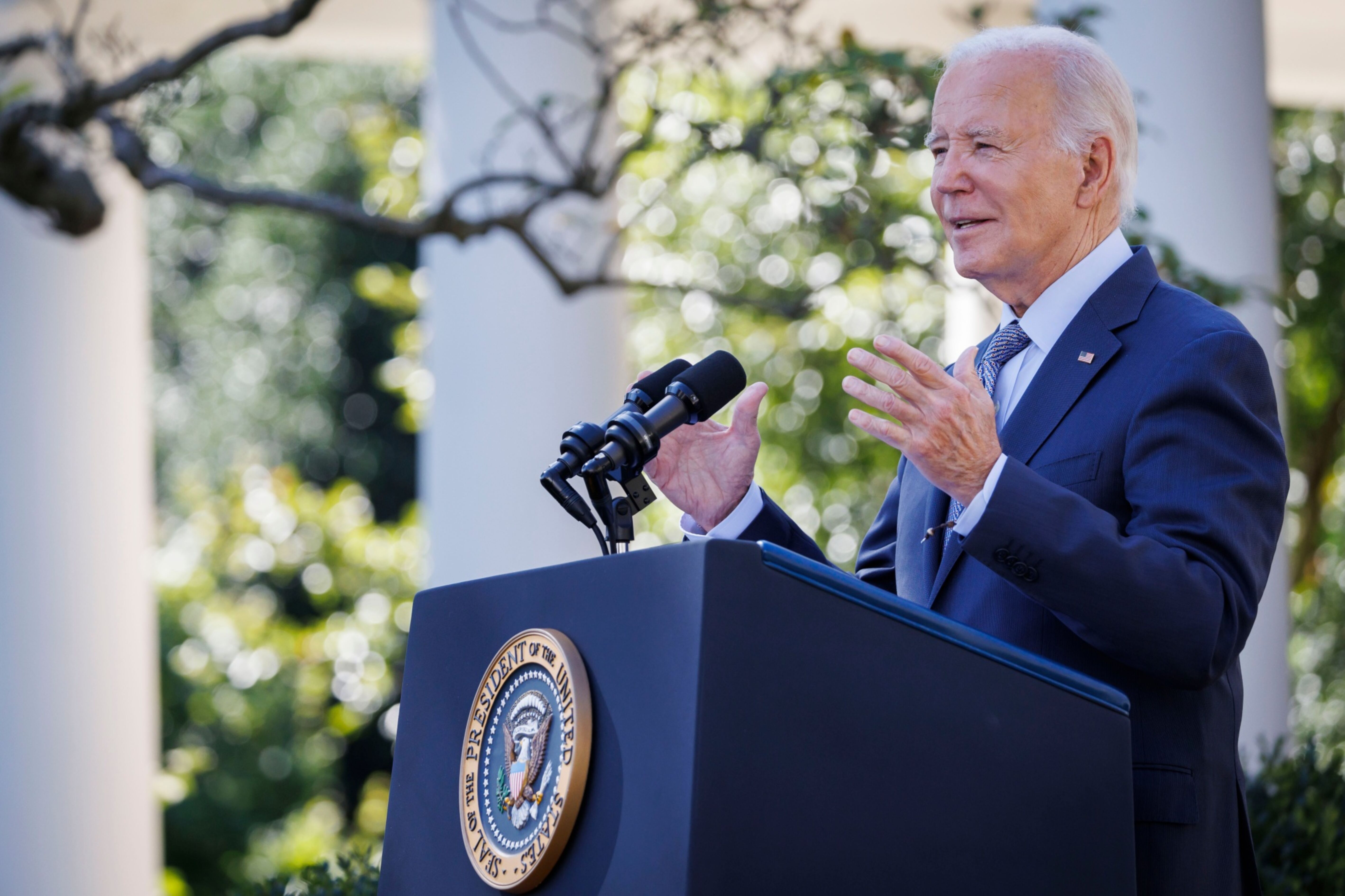
Biden unveils new action on 'junk fees' to counter rising costs
Investments · Digital Currencies
Summary
The new Federal Trade Commission proposal would require companies to disclose whether any fees are refundable up-front and would ban hidden or misleading fees.
Fiserv, Inc.(NYSE: FI), a global leader in payments and financial technology, announces the acquisition of Skytef, primary distributor of Software Express…
Fiserv, Inc.(NYSE: FI), a global leader in payments and financial technology, announces the acquisition of Skytef, primary distributor of Software Express's SiTef ® (Solução Inteligente de Transferência Eletrônica de Fundos), from Fiserv, the leading Electronic Funds Transfer solution in Brazil.