Expert Tips and Techniques for Effective Risk Management in Forex Trading
Summary
The post Expert Tips and Techniques for Effective Risk Management in Forex Trading appeared first on Coinpedia Fintech News Picture credit Forex trading, the largest financial market in the world, presents an exciting opportunity for traders to profit from fluctuations in currency exchange rates. However, it’s also a highly volatile and risky market where fortunes can be made or lost instantly. To succeed in Forex trading, one must possess a solid understanding of the market and employ effective risk management strategies. This article will explore expert tips and techniques for effective risk management in Forex trading, ensuring that your investments remain secure while pursuing profits. Understand Your Risk Tolerance The first step in effective risk management is to understand your risk tolerance. It’s the amount of risk you are willing and able to take in your Forex trading activities. Assess your financial situation, including any long-term or short term loans you may have taken, and determine how much capital you can afford to risk without compromising your financial stability. It’s essential to balance risk and reward that aligns with your financial goals. Set Clear Goals and Objectives Before you start trading, establish clear and realistic goals and objectives. Consider what you aim to achieve in both the short and long term. Setting specific targets will help you stay focused and disciplined while trading. Be mindful of your risk tolerance when setting these goals to ensure they are attainable without taking unnecessary risks. Use Proper Position Sizing Proper position sizing is crucial for managing risk effectively. It involves determining the size of each trade relative to your account balance. A common rule of thumb is never to risk more than 1-2% of your trading capital on a single trade. By adhering to this guideline, you minimize the impact of losses on your overall account balance, even if you encounter a series of losing trades. Utilize Stop-Loss Orders One of the most powerful risk management tools in Forex trading is the use of stop-loss orders. These orders automatically close a trade when it reaches a predetermined price level, limiting potential losses. It’s essential to set stop-loss orders at a level that aligns with your risk tolerance and trading strategy. By doing so, you protect your capital from a substantial decline in value. Diversify Your Portfolio Diversification is a fundamental risk management principle that can help mitigate the impact of adverse market movements. Avoid putting all your eggs in one basket by trading multiple currency pairs and instruments. Diversification can help spread risk and reduce the chances of a significant loss impacting your trading capital. However, diversification should be done thoughtfully, as overextending your portfolio can also lead to increased risk. Stay Informed and Educated Continuous learning is essential in the Forex market. The more you understand the factors that influence currency exchange rates, the better equipped you’ll be to make informed decisions. Keep up with economic news, central bank announcements, and global events that can affect the Forex market. Knowledge is your most valuable tool in managing risk. Avoid Overtrading Overtrading is a common pitfall for Forex traders. It occurs when traders take on too many positions at once or trade excessively in pursuit of quick profits. This behavior can lead to significant losses and increased risk. Stick to your trading plan and only enter positions that meet your predefined criteria. Avoid the temptation to deviate from your strategy. Practice Risk-Reward Ratio Creating a favorable risk-reward ratio stands as a vital element in proficient risk management. This ratio quantifies the possible gains from a trade about the inherent risk. A widely accepted practice suggests targeting a risk-reward ratio of 1:2 or higher, signifying that for every dollar put at risk, the potential reward should be a minimum of double that amount. This approach guarantees that successful trades can counterbalance losses over an extended period. Keep Emotions in Check Emotions can be a trader’s worst enemy. Fear and greed often drive impulsive decisions that lead to significant losses. To manage risk effectively, it’s crucial to maintain emotional discipline. Stick to your trading plan, and don’t let fear or greed dictate your actions. Regularly evaluate your performance and make adjustments when necessary, based on your trading strategy and risk management rules. Regularly Review and Adjust Your Strategy Forex markets are dynamic, and what works today may not work tomorrow. Regularly review your trading strategy and risk management techniques to ensure they remain effective. Adjust your approach as needed to adapt to changing market conditions. Additionally, seek feedback from experienced traders or mentors to gain valuable insights into improving your risk management skills. Conclusion Effective risk management is the cornerstone of successful Forex trading. By understanding your risk tolerance, setting clear goals, using proper position sizing, and employing risk management tools like stop-loss orders, you can safeguard your trading capital while pursuing profits. Diversifying your portfolio, staying informed, and avoiding overtrading are additional strategies to help manage risk effectively. Remember that emotions can be your worst enemy, so keep them in check and regularly review and adjust your strategy to stay ahead in the dynamic world of Forex trading.
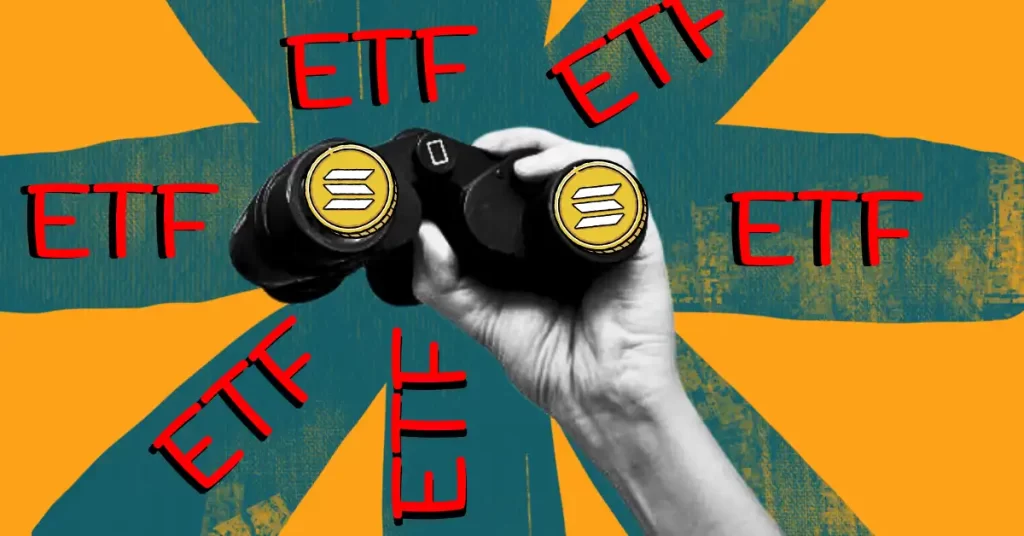
The post Analyzing the Effect of Approval of Ethereum ETF on Solana: Market Trends and Price Prediction appeared first on Coinpedia Fintech News The news …
Analyzing the Effect of Approval of Ethereum ETF on Solana: Market Trends and Price Prediction
Blockchain · Digital Currencies
Summary
The post Analyzing the Effect of Approval of Ethereum ETF on Solana: Market Trends and Price Prediction appeared first on Coinpedia Fintech News The news of the approval of Ethereum ETFs by the U.S. Securities and Exchange Commission has influenced the cryptocurrency market immensely, particularly affecting Solana. Within this regulatory change, market experts indicate the rapidly changing dynamics and what it means for Solana investors. Solana’s Potential for an ETF With the approval of the Ethereum ETF by the US SEC, the question of whether Solana might also have an ETF emerges. Borovik, an observer on social platform X, indicated that the same similarities exist between Ethereum and Solana, to imply possibly a future route for the ETF of Solana. Ethereum getting a spot ETF literally means that Solana can get one also– both held an ICO– They both do the same thing– they are both used in the same wayI bet Solana gets an ETF during Trumps term— borovik (@3orovik) May 23, 2024 Anthony Scaramucci, the cofounder of SkyBridge Capital, shares a similar view that a SOL ETF will be announced in the future, citing the importance of Solana in the crypto space. Regulatory Hurdles and Market Response While some experts are optimistic about the possibility of a SOL ETF, regulatory difficulties will have to be overcome. Solana, being an altcoin, is under the radar of the SEC as it is considered an unregistered security. While the SEC has allowed Bitcoin and Ethereum to be considered commodities, Solana has no such recognition. Its recent approval of the spot ETF of Ethereum would underscore this regulatory complexity and subsequently Solana’s short-term price movement. Solana’s Price Volatility Amid Market Dynamics Following the Ethereum ETF approval, Solana has seen significant price movements. Its price dipped to a 7-day low following Ethereum’s market dominance and as the market became cautious. Observers note that there exists a connection between regulatory acceptance of Ethereum and price volatility in Solana, which indicates that major cryptocurrencies are in a correlated response to regulatory shifts. Recent staking trends have been reflective of a more cautious approach from Solana investors and node validators. As Ethereum ETFs continue to attract the attention of institutions, Solana stakeholders pulled out substantial amounts of SOL from staking contracts, possibly fearful of market uncertainties. This amount of unstaking reflects investors’ fears over the bearish impact it could have on the price trajectory of Solana. Price Forecast and Market Outlook In spite of Solana’s bounce above key support levels, sentiment in the futures markets remains bearish. Short traders dominate the scene, betting that SOL price would fail to break past key resistance levels. With significant leverage SHORT positions in play, Solana will find it hard to sustain a price uptrend in the near term. Key resistance areas and psychological support levels are telling insights into Solana’s short-term price movements amidst evolving market dynamics.
HSBC today announced the inauguration of its new U.S. headquarters at The Spiral, a renowned office building in New York City’s Hudson Yards neighborhood,…
HSBC today announced the inauguration of its new U.S. headquarters at The Spiral, a renowned office building in New York City’s Hudson Yards neighborhood, marking its largest U.S. relocation to date.
On the latest episode of Hashing It Out, Avail’s co-founder explains the need to unify multiple networks in the Web3 space, not just ideologically but thr…
Hashing It Out: Navigating the next wave of Web3 with Avail’s Anurag Arjun
Digital Currencies
Summary
On the latest episode of Hashing It Out, Avail’s co-founder explains the need to unify multiple networks in the Web3 space, not just ideologically but through innovation.