FinTech Australia Prepares to Spotlight Consumer Data Rights at Second Summit
Summary
FinTech Australia is gearing up to host its second annual Consumer Data Right (CDR) Summit, setting the agenda for the regime ahead of a broader consumer rollout. This year’s Consumer Data Right Summit has plans to showcase local and international experts, policymakers, founders and builders who will take to the stage to discuss the future of the CDR and the most exciting emerging use cases at The Hilton in Sydney on Wednesday 3 July. Launched in Australia in 2020, the CDR currently enables the use of consumer data from their banks and energy service providers in third-party services, with explicit consent from the consumer. Rehan D’Almeida, CEO of FinTech Australia Rehan D’Almeida, CEO of FinTech Australia, said: “After four years of solid policy groundwork, the CDR has reached the threshold of industry adoption that will precede mass consumer adoption. “This is a suite of fintech tools that will have a real effect on cost of living pressures, enabling consumers to use their own financial data to power better decisions on their services providers. It’s also set to supplant the practice of screenscraping and over time replace it with a more regulated regimented means by which fintechs can responsibly access consumer financial data. “Our goal for this summit is to connect key industry players to discuss the rollout to date, and set the tone where we enter a crucial phase where consumer adoption and education will be as crucial as considered policy settings. This includes broadening interest in the CDR to those in superannuation, insurance, telecommunications, as well as other key consumer industries that will be involved in its rollout.” Brenton Charnley, head of open banking at Mastercard Australasia; Dan Jovevski, founder and CEO of WeMoney; Damir Cuca, founder of Basiq; and Jodi Ross, chief risk and compliance officer at Tiimely, are also set to take to the stage. The post FinTech Australia Prepares to Spotlight Consumer Data Rights at Second Summit appeared first on The Fintech Times.
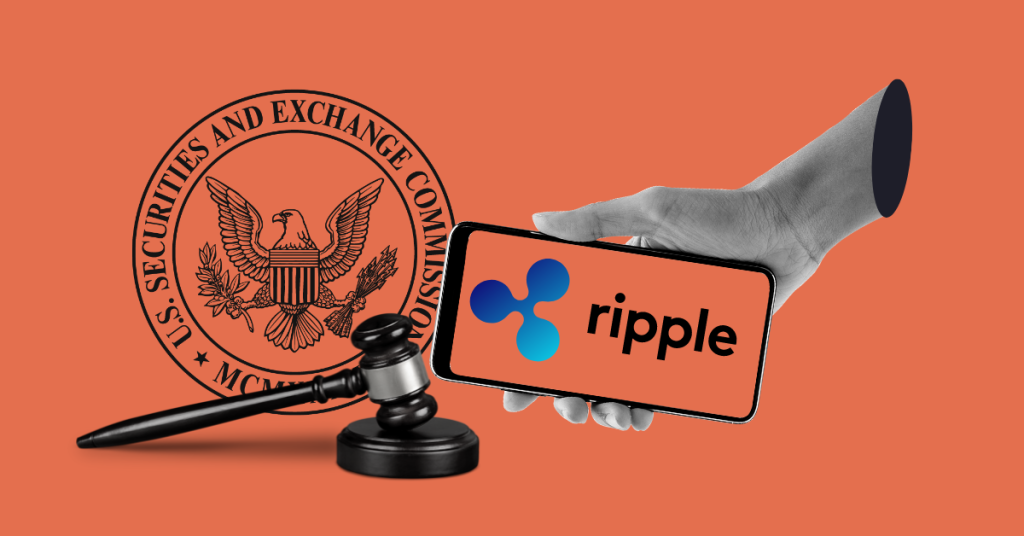
The post Ripple vs. SEC: Another Win For Ripple As Judge Torres DENIED SEC’s Motion to File an Interlocutory Appeal. appeared first on Coinpedia Fintech N…
Ripple vs. SEC: Another Win For Ripple As Judge Torres DENIED SEC’s Motion to File an Interlocutory Appeal.
Banking Infrastructure · Money Transfer · Digital Currencies
Summary
The post Ripple vs. SEC: Another Win For Ripple As Judge Torres DENIED SEC’s Motion to File an Interlocutory Appeal. appeared first on Coinpedia Fintech News The U.S. Securities and Exchange Commission (SEC) experienced a setback in its legal battle against Ripple, a prominent digital payment protocol and cryptocurrency (XRP). The SEC’s motion to appeal a previous loss was denied by District Judge Analisa Torres, sparking various reactions within the crypto community and impacting XRP’s market position. Let’s delve into the details of this case and explore its implications in a simplified manner. The Denied Motion: A Closer Look On August 18th, the SEC filed a pre-motion for an interlocutory appeal against a court judgment. Initially, Judge Analisa Torres granted permission for the SEC to file the appeal. However, the request was ultimately denied by Judge Torres. She ruled that the SEC had failed to provide sufficient evidence to justify the appeal, stating that it would not “materially advance the ultimate termination of the litigation.” #XRPCommunity #SECGov v. #Ripple #XRP BREAKING: Judge Torres has DENIED the SEC’s Motion to File an Interlocutory Appeal. https://t.co/czEIz93Vfn— James K. Filan (@FilanLaw) October 3, 2023 The Howey Test Controversy One of the central points of contention was the SEC’s claim that the court had improperly applied the Howey test to the case. In her rejection of the appeal, Judge Torres emphasized that the Howey test was irrelevant to this particular case. She cited a 2009 lawsuit to support her argument, stating that the circumstances surrounding the Howey test did not warrant consideration for an interlocutory appeal. Judge Torres’s decision to deny the SEC’s motion to appeal was grounded in the absence of substantial grounds for differences of opinion on controlling legal questions. This means the SEC failed to demonstrate a significant legal dispute or ambiguity that warranted an appeal. While this is a setback for the SEC, the case is far from over, with a trial date set for April 2024 to resolve the remaining issues. Ripple’s lawyer, John Deaton, correctly anticipated the outcome, believing that the SEC’s motion for an appeal would be rejected. He speculated that this would allow Judge Torres to clarify her reasoning further and make the case “appeal-proof.” Indeed, Judge Torres reinforced her reasoning and upheld the rejection of the SEC’s appeal. Following the announcement of the denied appeal, XRP price experienced a notable rally, increasing by about 5%. While the denied motion is a positive development for Ripple and its supporters, the journey through the legal corridors is not concluded. The upcoming trial in 2024 will further explore unresolved issues and could still swing in favor of either party.
The regulator has asked a federal judge to deny Coinbase’s motion to dismiss its lawsuit, claiming the exchange knew the cryptocurrencies it sold were sec…
SEC asks judge to reject Coinbase’s motion to dismiss lawsuit
Digital Currencies
Summary
The regulator has asked a federal judge to deny Coinbase’s motion to dismiss its lawsuit, claiming the exchange knew the cryptocurrencies it sold were securities under the Howey test.
M&T Bank, Truist Financial and Eastern Bankshares are among the banks that have sold all or part of their insurance subsidiaries over the last year. T…
Banks' insurance units are fetching top dollar, but selling brings risk
Investments · Digital Currencies
Summary
M&T Bank, Truist Financial and Eastern Bankshares are among the banks that have sold all or part of their insurance subsidiaries over the last year. Though the price is right, analysts warn that when interest rates decline, sellers will be without a key source of fee income.
HSBC, Nationwide, Tesco Bank, Newday and Ovo have joined with Experian to launch a one-stop portal for disabled consumers to tell multiple service provide…
Banks join with Experian to launch 'tell-it-once' platform for disabled consumers
Banking
Summary
HSBC, Nationwide, Tesco Bank, Newday and Ovo have joined with Experian to launch a one-stop portal for disabled consumers to tell multiple service providers how they need to be contacted and what support they need to access their services.
Saga, the British brand focussed on providing products and services to the over 50s, has teamed up with cash deposit platform Flagstone on a savings platf…
Saga partners Flagstone on savings platform for over-50s
Banking
Summary
Saga, the British brand focussed on providing products and services to the over 50s, has teamed up with cash deposit platform Flagstone on a savings platform.