Fuse Technology Simplifies Cross-Border Payments for Global Businesses in the GCC
Summary
Fuse, launched in January 2023, aims to facilitate cross-border payments for global businesses, particularly focusing on the GCC (Gulf Cooperation Council) region. In an interview with Mark Walker, editorial director at The Fintech Times, George Davis, co-founder and CEO of Fuse Technologies, shared insights into his company’s operations, challenges, and future directions. George Davis’s journey and Fuses’ origins George Davis, co-founder and CEO of Fuse Technologies George Davis, a serial entrepreneur, has a rich background in machine learning and payments. He previously built and sold a machine learning company and worked on payment solutions for various businesses in London. Davis’s experiences led him to co-found a cross-border payments business, leveraging stablecoins to facilitate transactions in challenging markets like Thailand. However, expanding into the Middle East revealed significant infrastructure barriers, prompting the inception of Fuse with his co-founder, James. Addressing cross-border payment challenges Fuse targets large international public payment businesses, helping them expand into the GCC region through what they term “last mile payouts.” This involves facilitating local currency payments from businesses based abroad. Davis explains that the Middle East, being one of the few untapped payments markets globally, offers immense growth potential. However, setting up the necessary infrastructure is complex and time-consuming, often taking years. Fuse simplifies this process by operating under their local licence, allowing businesses to bypass the regulatory and logistical hurdles typically associated with market entry. Differentiation from local providers When asked how Fuse compares to local payment providers like NemCard and GPS, Davis highlighted the distinct focus of Fuse Technologies on international enterprise businesses. Unlike local providers that cater to local fintechs, Fuse exclusively serves businesses with no local presence or desire to establish one. Their first major client, DLocal, exemplifies the type of large, public companies they target. By providing virtual IBANs and facilitating compliance with local regulations, Fuse Technologies enables seamless transactions for international businesses. Overcoming regulatory hurdles Navigating the regulatory landscape in the Middle East is particularly challenging. Davis notes that unlike in Europe or the UK, where regulations are well-defined, the Middle East often relies on supervisory frameworks with no objection certificates. This approach allows regulators to maintain flexibility but creates uncertainty for businesses. However, Davis emphasises that building strong relationships with regulators and maintaining transparency are crucial for success. Fuse benefited from hiring a Chief Compliance Officer with extensive experience in regulatory enforcement, ensuring their operations align with local requirements. Future directions and expansion Looking ahead, Fuse plans to enhance its offerings by enabling payments in both directions—into and out of the GCC region. This includes facilitating local payments in dollars and euros, and addressing a significant pain point for businesses in the Middle East seeking to transact internationally. Additionally, the company is expanding its infrastructure to support local payments in other global markets, such as the US and Singapore. Compliance and trust-building Compliance has been a cornerstone of Fuses’ strategy from the outset. Recognising the sensitivity of the region to issues like money laundering and fraud, the company built its operations with a compliance-first approach. This has paid off, with regulators responding positively to their transparent and meticulous application processes. Market reception and challenges Despite the regulatory complexities, Fuse has encountered a welcoming market, particularly due to its focus on bringing new revenue to local banking partners without cannibalising existing business. Their approach contrasts with many fintechs that often compete directly with traditional banks. By targeting smaller banks for initial partnerships, Fuse Technologies has found a niche that benefits both its operations and its banking partners. Fuse stands out in the fintech landscape for its strategic focus on the GCC region, addressing significant market gaps in cross-border payments. With a compliance-first approach and a clear vision for future expansion, the company is well-positioned to facilitate the seamless flow of payments into and out of one of the world’s most dynamic and fast-growing markets. The post Fuse Technology Simplifies Cross-Border Payments for Global Businesses in the GCC appeared first on The Fintech Times.
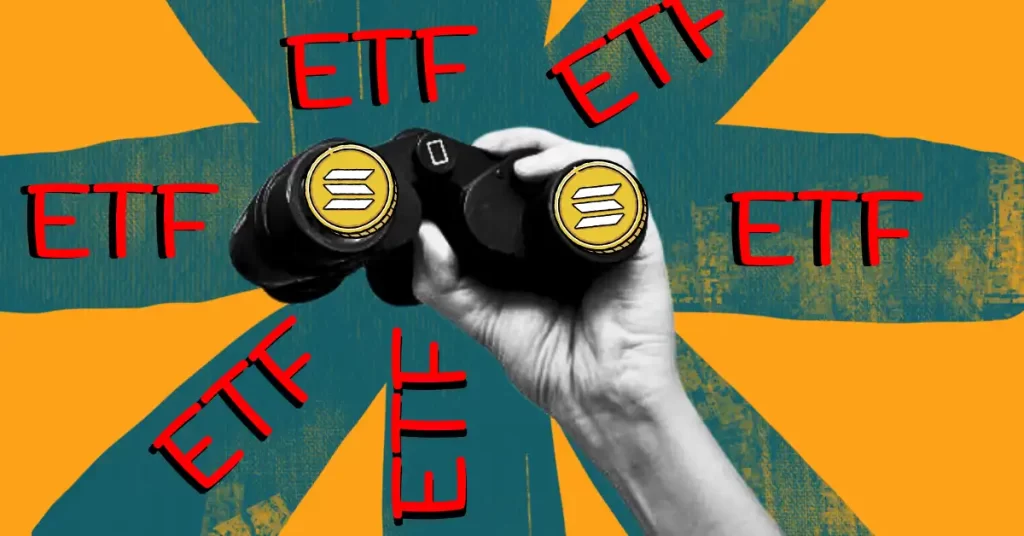
The post Analyzing the Effect of Approval of Ethereum ETF on Solana: Market Trends and Price Prediction appeared first on Coinpedia Fintech News The news …
Analyzing the Effect of Approval of Ethereum ETF on Solana: Market Trends and Price Prediction
Blockchain · Digital Currencies
Summary
The post Analyzing the Effect of Approval of Ethereum ETF on Solana: Market Trends and Price Prediction appeared first on Coinpedia Fintech News The news of the approval of Ethereum ETFs by the U.S. Securities and Exchange Commission has influenced the cryptocurrency market immensely, particularly affecting Solana. Within this regulatory change, market experts indicate the rapidly changing dynamics and what it means for Solana investors. Solana’s Potential for an ETF With the approval of the Ethereum ETF by the US SEC, the question of whether Solana might also have an ETF emerges. Borovik, an observer on social platform X, indicated that the same similarities exist between Ethereum and Solana, to imply possibly a future route for the ETF of Solana. Ethereum getting a spot ETF literally means that Solana can get one also– both held an ICO– They both do the same thing– they are both used in the same wayI bet Solana gets an ETF during Trumps term— borovik (@3orovik) May 23, 2024 Anthony Scaramucci, the cofounder of SkyBridge Capital, shares a similar view that a SOL ETF will be announced in the future, citing the importance of Solana in the crypto space. Regulatory Hurdles and Market Response While some experts are optimistic about the possibility of a SOL ETF, regulatory difficulties will have to be overcome. Solana, being an altcoin, is under the radar of the SEC as it is considered an unregistered security. While the SEC has allowed Bitcoin and Ethereum to be considered commodities, Solana has no such recognition. Its recent approval of the spot ETF of Ethereum would underscore this regulatory complexity and subsequently Solana’s short-term price movement. Solana’s Price Volatility Amid Market Dynamics Following the Ethereum ETF approval, Solana has seen significant price movements. Its price dipped to a 7-day low following Ethereum’s market dominance and as the market became cautious. Observers note that there exists a connection between regulatory acceptance of Ethereum and price volatility in Solana, which indicates that major cryptocurrencies are in a correlated response to regulatory shifts. Recent staking trends have been reflective of a more cautious approach from Solana investors and node validators. As Ethereum ETFs continue to attract the attention of institutions, Solana stakeholders pulled out substantial amounts of SOL from staking contracts, possibly fearful of market uncertainties. This amount of unstaking reflects investors’ fears over the bearish impact it could have on the price trajectory of Solana. Price Forecast and Market Outlook In spite of Solana’s bounce above key support levels, sentiment in the futures markets remains bearish. Short traders dominate the scene, betting that SOL price would fail to break past key resistance levels. With significant leverage SHORT positions in play, Solana will find it hard to sustain a price uptrend in the near term. Key resistance areas and psychological support levels are telling insights into Solana’s short-term price movements amidst evolving market dynamics.
HSBC today announced the inauguration of its new U.S. headquarters at The Spiral, a renowned office building in New York City’s Hudson Yards neighborhood,…
HSBC today announced the inauguration of its new U.S. headquarters at The Spiral, a renowned office building in New York City’s Hudson Yards neighborhood, marking its largest U.S. relocation to date.
On the latest episode of Hashing It Out, Avail’s co-founder explains the need to unify multiple networks in the Web3 space, not just ideologically but thr…
Hashing It Out: Navigating the next wave of Web3 with Avail’s Anurag Arjun
Digital Currencies
Summary
On the latest episode of Hashing It Out, Avail’s co-founder explains the need to unify multiple networks in the Web3 space, not just ideologically but through innovation.