Google and Microsoft Spar Over Training Rights to AI Data
Summary
Training data is the key competitive moat when it comes to generative artificial intelligence (AI). The winner-take-most dynamics of digital tech’s operational ecosystem create network effects that frequently play out across, and are captured by, huge platforms where products and services become more valuable with a larger user network. With generative AI added into the mix, those large user networks are creating positive feedback loops by way of activatable, platform-native public data that can be fed into increasingly data-hungry AI models. Microsoft CEO Satya Nadella said Monday (Oct. 2), per Reuters, while testifying during the U.S. Justice Department’s antitrust fight against Google, that Big Tech companies are competing for vast troves of content needed to train their AI models. Without naming Microsoft competitor and Google parent Alphabet, he complained other companies are locking up exclusive deals in a way that is “problematic.” While the data landscape is becoming increasingly competitive and expensive as tech firms large and small alike ramp up their efforts to build differentiated content libraries, John Schmidtlein, Google’s lead lawyer, argued that Microsoft’s data deficit is due to a series of strategic errors and an inferior search product, according to the report. Schmidtlein noted that even when Microsoft pre-installed its Bing search engine on Windows devices, it still failed to gain more than a 20% market share, with users consistently switching to Google, the report said. Adding to Microsoft’s inability to gain a foothold in the search market was the company’s failure to prepare for the mobile revolution, Schmidtlein said, as well as its failure to appropriately invest in resources like servers and engineers to build a market-leading search product. Google’s dominance in search and position as the internet’s first stop for users also provides it a competitive advantage when it comes to building out its AI models. Read also: Does Meta’s 3.59 Billion Users Give It Competitive AI Moat? Data Deficits, Distribution Rights and the Future of AI Generative AI models are typically opaque black boxes trained on publicly available web data and further refined using licensed content. An analysis by The Washington Post in April of just one data set used for training AI found that nearly the entire 30-year history of the internet has been scraped by tech companies looking to add to the billions, even trillions, of parameters their models are trained on. The Atlantic reported Aug. 19 that a dataset known as “Books3,” which included more than 191,000 books — many of them pirated — was used to train generative AI models later published by Meta, Bloomberg and others. Today’s neural networks would not have had their breakthroughs without these digital landfills that pockmark the internet. Increasingly, every activity that takes place on the internet will in some way eventually benefit an AI model by being integrated into its vast sea of training fodder. Once a piece of data has been fed into a model, it is nearly impossible to extricate that information or un-teach the AI, Fortune reported Aug. 30. See also: Peeking Under the Hood of AI’s High-Octane Technical Needs The latest generation of Meta’s AI products announced Wednesday (Sept. 27) were trained using public posts on the company’s own Facebook and Instagram platforms. Using public data on wholly-owned products is becoming a popular way for tech platforms to build out their own distinct AI content libraries, and more companies are updating their privacy policies to allow for user data to be collected to train AI models. “The algorithm is only as good as the data that it’s trained on,” Erik Duhaime, co-founder and CEO of healthcare AI startup Centaur Labs, told PYMNTS in an interview published in May. Companies including X (formerly Twitter), Microsoft, Instacart, Meta, Zoom and more are apparently of the mind that their data is best. Elon Musk-owned X’s latest privacy agreement informed users that their biometric data, job and education history, will be used to train AI and machine learning models, Bloomberg reported Aug. 30. “We may use the information we collect and publicly available information to help train our machine learning or artificial intelligence models for the purposes outlined in this policy,” the company’s updated policy stated. Musk has threatened to sue Microsoft over the “illegal” use of data from X. Meanwhile, per a Sept. 28 Reuters report, Meta said it purposefully excluded public LinkedIn data from its training set because of privacy concerns. LinkedIn is owned by Microsoft. “A lot of people are using OpenAI’s [application programming interfaces (APIs)] to test and sort of play with [generative AI] technology,” Taylor Lowe, CEO and co-founder of AI developer platform Metal, told PYMNTS in an interview published in July. “This won’t last forever … and enterprises are right to push for data privacy, up to and including running the whole stack on their own network.” For all PYMNTS AI coverage, subscribe to the daily AI Newsletter.The post Google and Microsoft Spar Over Training Rights to AI Data first appeared on PYMNTS.com.
Eight Republicans voted against Republican Representative McCarthy, making it the first time in U.S. history that the House Speaker has been ousted by Con…
Crypto-friendly Patrick McHenry takes interim House Speaker position
Digital Currencies
Summary
Eight Republicans voted against Republican Representative McCarthy, making it the first time in U.S. history that the House Speaker has been ousted by Congress.
The post Potential Outcomes in the High-Profile Trial of FTX Founder Sam Bankman-Fried – Experts Debate appeared first on Coinpedia Fintech News FTX found…
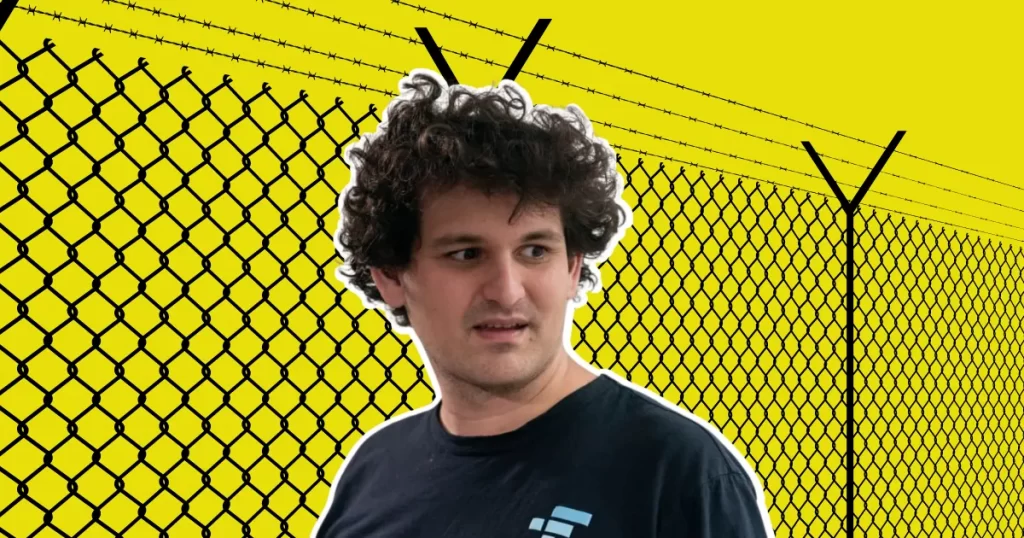
Potential Outcomes in the High-Profile Trial of FTX Founder Sam Bankman-Fried – Experts Debate
Banking Infrastructure · Digital Currencies
Summary
The post Potential Outcomes in the High-Profile Trial of FTX Founder Sam Bankman-Fried – Experts Debate appeared first on Coinpedia Fintech News FTX founder Sam Bankman-Fried finds himself engulfed in a whirlwind of legal turmoil, sparking widespread speculation about the potential outcomes of his impending trial. Some legal analysts predict a decades-long sentence, while others believe his political connections may offer a shield against severe consequences. A Gamble on Trial: Ego or Strategy? Attorney John Deaton has weighed in on the matter, suggesting that Bankman-Fried’s ego might drive him to gamble with an all-or-nothing strategy at trial, despite estimates of a 10–20-year sentence if he pleads guilty. Deaton speculates that the entrepreneur will attempt to sway the jury by portraying his actions as well-intentioned mistakes. However, legal experts say this approach is fraught with risk, as it could spectacularly backfire. I’ve seen estimates of 10-20 years. That would be a very light sentence in this case. If he pled guilty, he might get that light of a sentence. But SBFraud is a narcissist and a megalomaniac. He will testify. He sees the jury the same as being interviewed by @andrewrsorkin. He… https://t.co/iVIe8UMm8d— John E Deaton (@JohnEDeaton1) October 3, 2023 The Double-Edged Sword of Arrogance and Political Connections Deaton further opines that Bankman-Fried’s past displays of narcissism and a dismissive attitude towards regulators, evident in previous interviews, may not bode well in a courtroom setting. He even suggests that such posturing could lead to a staggering sentence of up to 50 years. Conversely, some legal experts posit that Bankman-Fried’s political affiliations might be pivotal in seeking leniency. Nonetheless, the sheer scale of losses and the audacity of the alleged fraud might overshadow any advantages gained through political ties. Skepticism Surrounding the Legal Process In a contrasting viewpoint, Scott Melker, also known as “The Wolf of All Streets,” expressed skepticism regarding the entire legal process. Melker’s tweet painted a bleak picture of the CEO’s arrest, describing it as a mere spectacle and revealing that the defendant had already endured months of incarceration. He also cast doubt on the probability of a conviction, suggesting that Bankman-Fried’s extensive network might insulate him from legal repercussions. SBF is politically connected, they’ll never arrest him!He was arrested in a matter of weeks. SBF’s arrest is just a farce, they’ll never put him in jail. He’s been in jail for months. SBF will never get convicted, he knows too many people!….. I bet he goes to jail for…— The Wolf Of All Streets (@scottmelker) October 3, 2023 A Case Under the Microscope Deaton and Melker’s tweet highlights the prevailing uncertainty and debate enveloping Bankman-Fried’s forthcoming trial. As the legal drama unfolds, both the cryptocurrency community and the general public will be keenly observing, with bated breath, how these divergent predictions pan out. The trial’s outcome is poised to significantly impact the cryptocurrency industry and its regulatory framework, generating immense interest and speculation from various quarters. Closing: The case against Bankman-Fried stands as a pivotal moment for the cryptocurrency industry, potentially influencing future regulatory approaches and industry practices. As the trial progresses, the sector awaits to see whether the disgraced CEO’s connections will afford him leniency or if the alleged scale of fraud will pave the way for a stringent sentence.
Ripple has secured a full license to provide digital payment token services in Singapore from the Monetary Authority of Singapore (MAS), four months after
Ripple has secured a full license to provide digital payment token services in Singapore from the Monetary Authority of Singapore (MAS), four months after