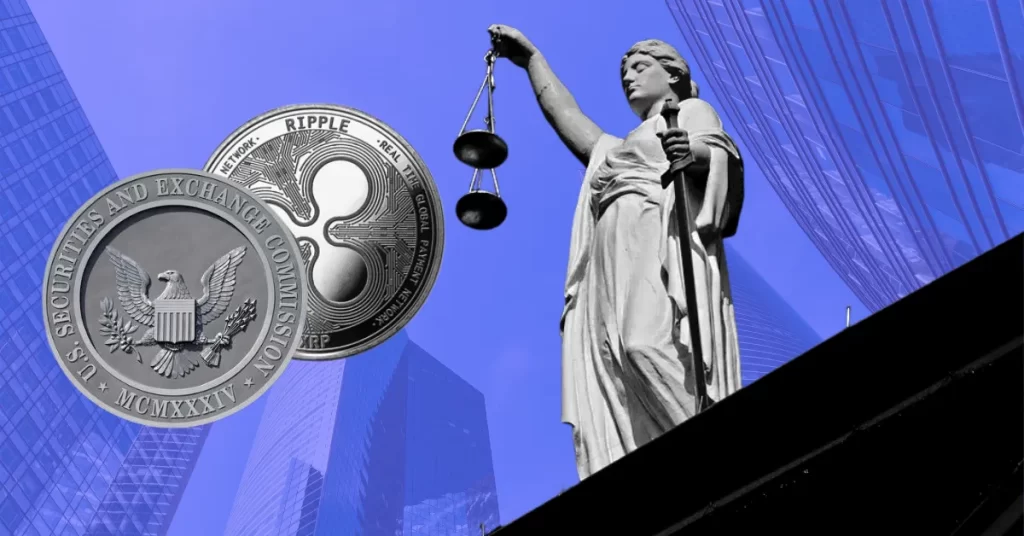
Ripple vs. SEC Lawsuit: FTCS Shields SEC’s Missteps
Summary
The post Ripple vs. SEC Lawsuit: FTCS Shields SEC’s Missteps appeared first on Coinpedia Fintech News Judge Analisa Torres had previously rejected the U.S. Securities and Exchange Commission’s (SEC) claim that Ripple’s XRP token was a security. The SEC’s aggressive legal maneuvering hurt innocent XRP holders and showcased the agency’s troubling inconsistency in regulating the crypto sector. This landmark case between the SEC and Ripple not only unveils the limitations and overreaches of the SEC but also brings into sharp focus the protections offered to federal agencies by the Federal Tort Claims Act (FTCA). "In short, the @SECGov central argument (against @Ripple) failed almost completely under judicial scrutiny. It did not just hurt defendants. The SEC harmed a lot of innocent people in the process."https://t.co/ZlV0FKn76v— CryptoLaw (@CryptoLawUS) September 28, 2023 It all began in late 2020 when the SEC filed a lawsuit against Ripple Labs, Inc., and its top executives, Brad Garlinghouse and Chris Larsen, alleging that XRP is a “security.” The case, often dubbed “the cryptocurrency case of the century,” sought billions from Ripple and its founders, setting the stage for a showdown that ultimately cost the defendants $100 million. But on July 13, 2023, Judge Torres dismantled the SEC’s central argument, ruling that most XRP sales could not be classified as securities. The SEC’s far-reaching theory, which aimed to label a digital asset as a security, resulted in immediate financial repercussions, destroying over $15 billion in wealth for XRP holders in the secondary market. Double Standards and Deception While the SEC took a public stance suggesting assets like XRP were not securities, internal documents revealed otherwise. Ripple’s defense team unearthed documents showcasing that the SEC had intentionally misled the public for years about its position on cryptocurrencies. When XRP faced severe scrutiny, ethereum got a free pass. The discovery phase of the trial was marked by an unyielding fight from the SEC to keep this evidence under wraps. The agency’s efforts to conceal the truth were so disconcerting that Magistrate Judge Sarah Netburn admonished the SEC for its “hypocrisy” and disregard for legal integrity. The SEC’s Crackdown on Crypto Exchanges But Ripple wasn’t the only one in the SEC’s crosshairs. The regulator also went after crypto giants Binance and Coinbase, leveraging the same dubious legal theory that digital assets are securities. This move suggested a broader agenda, hinting that the SEC aims to dismantle the entire crypto industry—a sentiment echoed by SEC Chairman Gary Gensler’s dismissive comments about digital currencies. Time to Amend the Federal Tort Claims Act (FTCA) While the Ripple case reveals alarming overreach and duplicitous behavior by the SEC, the current legal framework shields the agency from any consequences. The FTCA, grounded in archaic principles of sovereign immunity, essentially means that “the king can do no wrong,” leaving malicious acts by federal regulators unpunishable. In light of the Ripple case, there’s an urgent need to revisit these outdated legal provisions. The SEC’s continuous abuse of its authority further reinforces the necessity for an immediate amendment to the FTCA.
The post Major Players Eye Bitcoin ETFs: What it Means for Crypto Investors? appeared first on Coinpedia Fintech News Bitcoin ETFs (Exchange-Traded Funds)…
Major Players Eye Bitcoin ETFs: What it Means for Crypto Investors?
Lending · Digital Currencies
Summary
The post Major Players Eye Bitcoin ETFs: What it Means for Crypto Investors? appeared first on Coinpedia Fintech News Bitcoin ETFs (Exchange-Traded Funds) have been a hot topic in the crypto world, but why do they matter, and what impact can they have on the market? Popular analyst Lark Davis took to his YouTube channel and explained the importance of Bitcoin ETFs. The SEC (U.S. Securities and Exchange Commission) evaluates Bitcoin ETF applications. Recent legal battles like Grayscale’s victory have pushed the SEC to reconsider its stance. This could lead to the approval of Bitcoin spot ETFs, providing an alternative to Bitcoin futures contracts. The SEC has said no to many Bitcoin ETF applications due to concerns about Bitcoin’s price fluctuations, trading liquidity, and potential manipulation. However, recent approvals of Bitcoin ETFs based on futures, like those from VanEck and ProShares, and the Grayscale case suggest the SEC might be warming up to the idea. Lark Davis pointed out the implications of the ETFs and highlighted their significance in cryptocurrency. Big Players Entering the Game Several major players in the financial world are vying to introduce Bitcoin ETFs. Institutions like BlackRock, with $10 trillion in assets under management, Fidelity managing $4.5 trillion, and Franklin Templeton overseeing $1.5 trillion, are all looking to get in on the action. These giants collectively manage an astronomical $17.7 trillion, a fraction of which flowing into Bitcoin would be game-changing. Tax Benefits and Accessibility Bitcoin ETFs offer tax advantages, making them appealing for investors to include in their retirement accounts. This accessibility appeals to those who want exposure to Bitcoin without the complexities of self-custody. It broadens the market to a broader audience who may not want to use cryptocurrency exchanges. Liquidity Boost and Inclusion in Other ETFs The introduction of Bitcoin ETFs would inject significant liquidity into the market. Projections suggest they could bring in up to $30 billion in new demand, potentially driving up Bitcoin prices. Additionally, these ETFs could be included in other ETF products, further boosting demand.
The post Ripple vs SEC: Pro-XRP lawyer says SEC May Seek Emergency Writ to 2nd Circuit: ‘But That Will be Denied’ appeared first on Coinpedia Fintech News…
Ripple vs SEC: Pro-XRP lawyer says SEC May Seek Emergency Writ to 2nd Circuit: ‘But That Will be Denied’
Money Transfer · Digital Currencies
Summary
The post Ripple vs SEC: Pro-XRP lawyer says SEC May Seek Emergency Writ to 2nd Circuit: ‘But That Will be Denied’ appeared first on Coinpedia Fintech News In the ongoing legal battle between the U.S. Securities and Exchange Commission (SEC) and Ripple, a federal judge has denied the SEC’s request to appeal its earlier loss. District Judge Analisa Torres issued a brief ruling on Tuesday, stating that the SEC had not met the legal burden to show substantial grounds for differences of opinion. Pro-XRP lawyer Fred Rispoli commented on the ruling, noting that while the July 13 victory was significant, this latest development is also a positive outcome for Ripple. Judge Torres’ ruling seemed to express her frustration with the SEC’s approach to the case, with Rispoli interpreting it as a display of contempt for the SEC’s disrespect and misuse of her time. According to Rispoli, the SEC’s position took a turn for the worse during the Hinman Emails saga when it adopted seemingly contradictory stances, ultimately proving detrimental to its case. One key takeaway from Judge Torres’ order, as pointed out by Rispoli, was a footnote highlighting the SEC’s presentation of shifting and inconsistent arguments regarding its legal theory about “Other Distributions.” According to Rispoli, this observation was an unusual departure from Judge Torres’ typical approach but was deemed necessary to underscore the SEC’s inconsistency. “The SEC may seek an emergency writ to 2nd Circuit, but that will be denied. It would waste time and money, so I cannot put that at 0% probability. The order’s many references to facts yet-to-be-decided were saturated with implications by J. Torres that any arguments by SEC will be greeted from a starting point of being non-credible,” he wrote on X. While the SEC may explore options such as seeking an emergency writ to the 2nd Circuit, Rispoli believes such a move is unlikely to succeed and would only waste time and resources. The judge’s repeated references to undecided facts in the case suggest a skepticism towards the SEC’s credibility in future arguments.
Vyzer, an innovative digital wealth management platform, has successfully raised a Seed round of $6.3 million from leading VCs, angel investors, and famil…
WealthTech Vyzer secures $6.3 million in seed funding
Banking · Blockchain
Summary
Vyzer, an innovative digital wealth management platform, has successfully raised a Seed round of $6.3 million from leading VCs, angel investors, and family offices including iAngels, Guy Gamzu, MonetaVC, Jonathan Kolber and Rafi Gidron.
Fiserv, Inc. (NYSE: FI), a leading global provider of payments and financial services technology solutions, has expanded its longstanding relationship wit…
Fiserv, Inc. (NYSE: FI), a leading global provider of payments and financial services technology solutions, has expanded its longstanding relationship with Swift by joining the Swift Partner Programme as a Platform Partner.
LinkedIn plans to pilot a new AI-powered assistant aimed at recruiters searching for job candidates and will also release an AI educational assistant in i…
Microsoft-owned LinkedIn releases AI-powered assistant for job recruiters
Digital Currencies
Summary
LinkedIn plans to pilot a new AI-powered assistant aimed at recruiters searching for job candidates and will also release an AI educational assistant in its learning section.