Ripple vs. SEC Lawsuit: FTCS Shields SEC’s Missteps
Summary
The post Ripple vs. SEC Lawsuit: FTCS Shields SEC’s Missteps appeared first on Coinpedia Fintech News Judge Analisa Torres had previously rejected the U.S. Securities and Exchange Commission’s (SEC) claim that Ripple’s XRP token was a security. The SEC’s aggressive legal maneuvering hurt innocent XRP holders and showcased the agency’s troubling inconsistency in regulating the crypto sector. This landmark case between the SEC and Ripple not only unveils the limitations and overreaches of the SEC but also brings into sharp focus the protections offered to federal agencies by the Federal Tort Claims Act (FTCA). "In short, the @SECGov central argument (against @Ripple) failed almost completely under judicial scrutiny. It did not just hurt defendants. The SEC harmed a lot of innocent people in the process."https://t.co/ZlV0FKn76v— CryptoLaw (@CryptoLawUS) September 28, 2023 It all began in late 2020 when the SEC filed a lawsuit against Ripple Labs, Inc., and its top executives, Brad Garlinghouse and Chris Larsen, alleging that XRP is a “security.” The case, often dubbed “the cryptocurrency case of the century,” sought billions from Ripple and its founders, setting the stage for a showdown that ultimately cost the defendants $100 million. But on July 13, 2023, Judge Torres dismantled the SEC’s central argument, ruling that most XRP sales could not be classified as securities. The SEC’s far-reaching theory, which aimed to label a digital asset as a security, resulted in immediate financial repercussions, destroying over $15 billion in wealth for XRP holders in the secondary market. Double Standards and Deception While the SEC took a public stance suggesting assets like XRP were not securities, internal documents revealed otherwise. Ripple’s defense team unearthed documents showcasing that the SEC had intentionally misled the public for years about its position on cryptocurrencies. When XRP faced severe scrutiny, ethereum got a free pass. The discovery phase of the trial was marked by an unyielding fight from the SEC to keep this evidence under wraps. The agency’s efforts to conceal the truth were so disconcerting that Magistrate Judge Sarah Netburn admonished the SEC for its “hypocrisy” and disregard for legal integrity. The SEC’s Crackdown on Crypto Exchanges But Ripple wasn’t the only one in the SEC’s crosshairs. The regulator also went after crypto giants Binance and Coinbase, leveraging the same dubious legal theory that digital assets are securities. This move suggested a broader agenda, hinting that the SEC aims to dismantle the entire crypto industry—a sentiment echoed by SEC Chairman Gary Gensler’s dismissive comments about digital currencies. Time to Amend the Federal Tort Claims Act (FTCA) While the Ripple case reveals alarming overreach and duplicitous behavior by the SEC, the current legal framework shields the agency from any consequences. The FTCA, grounded in archaic principles of sovereign immunity, essentially means that “the king can do no wrong,” leaving malicious acts by federal regulators unpunishable. In light of the Ripple case, there’s an urgent need to revisit these outdated legal provisions. The SEC’s continuous abuse of its authority further reinforces the necessity for an immediate amendment to the FTCA.
Financial document automation platform Ocrolus has proven its technology as a useful tool in the mortgage industry. The New York-based company is augmenti…
Financial document automation platform Ocrolus has proven its technology as a useful tool in the mortgage industry. The New York-based company is augmenting its reputation today, after announcing this morning it has enhanced its dashboard for mortgage lenders. The new capability enables both wholesale and direct mortgage lenders to enhance their loan origination workflow. It also automates complex income calculations for both traditional and self-employed borrowers, including those with non-traditional employment, multiple borrowers, or several employers. “Manual document processing and income analysis create a bottle neck in the origination process,” said Ocrolus COO Vik Dua. “With Ocrolus’ enhanced mortgage offering, we’re empowering lenders with accurate document analysis to help reduce processing time, mitigate risk, and maximize profit margin on every single loan. We provide lenders with a highly flexible and scalable back office so they can focus on their core business.” Significant to the enhancement is the combination of three of Ocrolus’ tools: Classify, which enables lenders to speed up processing time with automated document indexing; Capture, which combines AI computer vision and human validation to extract key information from documents with over 99% accuracy; and Analyze, which enables lenders to streamline income calculation for both traditionally and self-employed borrowers with automated, transparent and flexible worksheets. The technology also has positive implications for borrowers as it offers an objective and standardized approach to evaluating income and supports streamlined communication channels between the borrower and the lender. Ocrolus was founded in 2014 and has gone on to raise $127 million for its AI-powered document automation platform. The company, which demoed its technology earlier this month at FinovateFall 2023 and won Best of Show honors at FinovateFall 2021, counts PayPal, Brex, SoFi, and Plaid among its clients. Photo by RDNE Stock project The post Ocrolus Enhances its Mortgagetech appeared first on Finovate.
The U.S. Securities and Exchange Commission moved earlier than required to extend a couple of deadlines in the pile of spot bitcoin ETF applications await…
SEC Extends Ark, Global X ETF Deadlines as Government Shutdown Looms
Digital Currencies
Summary
The U.S. Securities and Exchange Commission moved earlier than required to extend a couple of deadlines in the pile of spot bitcoin ETF applications awaiting responses.
Financial institutions can look to data analytics technology to better understand customer sentiment so they can drive organizational change. Financial i…
Podcast: Data analytics, automation help FIs better understand customer sentiment
Insurance · Payments
Summary
Financial institutions can look to data analytics technology to better understand customer sentiment so they can drive organizational change. Financial institutions are looking to utilize all available unstructured data from calls, emails and chat capabilities to understand customer needs, Global Head of Financial Services at Qualtrics Dmitry Binkevich tells Bank Automation News on this episode […]
The $75 million deal between the megabank and the U.S. Virgin Islands includes various commitments, such as terminating customers' accounts if there is cr…
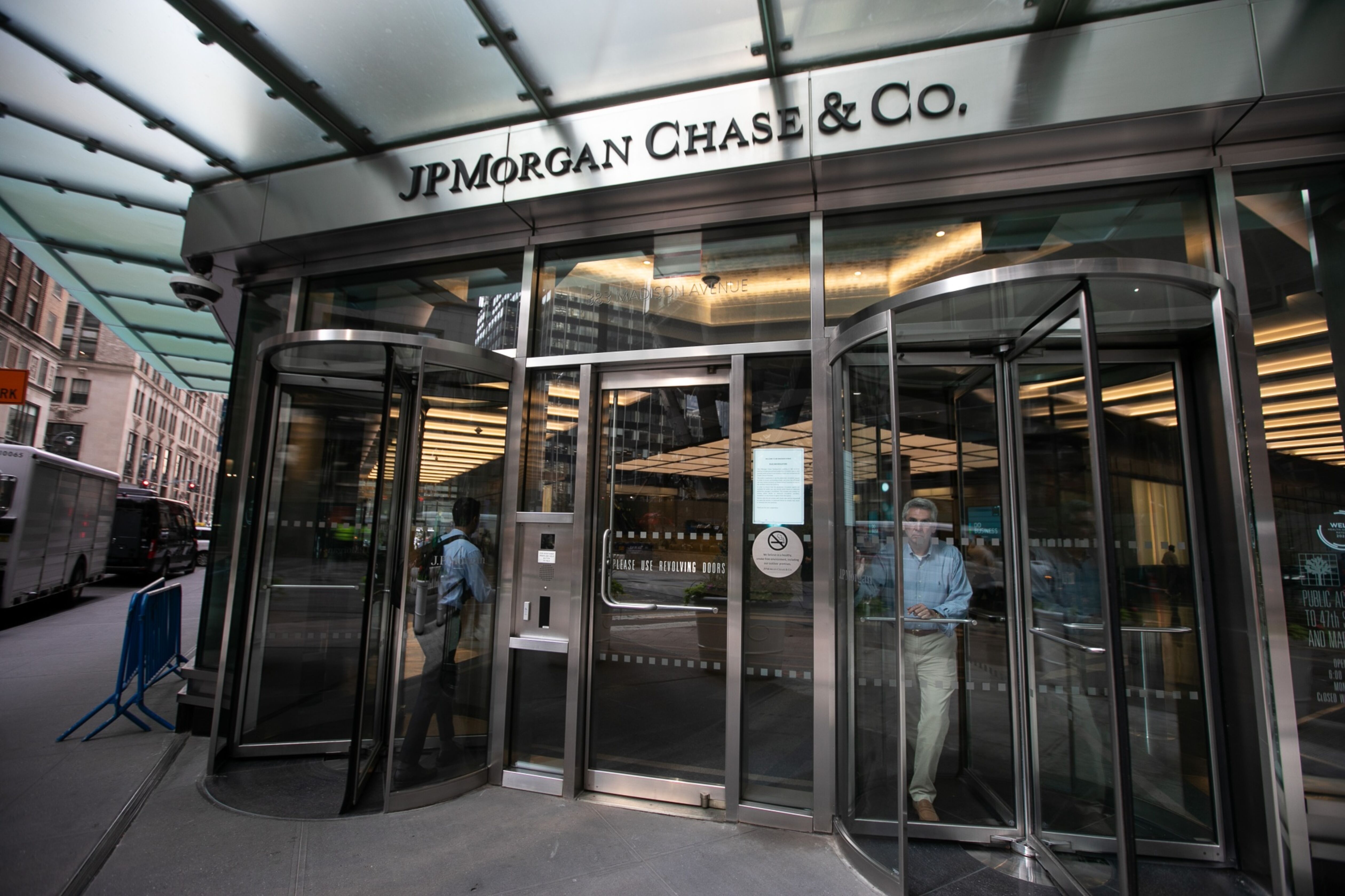
JPMorgan makes anti-trafficking pledges in latest Epstein settlement
Digital Currencies
Summary
The $75 million deal between the megabank and the U.S. Virgin Islands includes various commitments, such as terminating customers' accounts if there is credible information that the accounts are involved in human trafficking.