Sam Bankman-Fried on Trial: Everything You Need to Know About the Recent Hearings
Summary
The post Sam Bankman-Fried on Trial: Everything You Need to Know About the Recent Hearings appeared first on Coinpedia Fintech News Sam Bankman-Fried, co-founder of the cryptocurrency exchange FTX, began facing trial on October 3rd, a case that has drawn widespread attention due to its high-profile nature. Bankman-Fried is charged with seven counts related to conspiracy and fraud, all stemming from the collapse of FTX. These legal proceedings have become a central point of discussion within the crypto sector. Here are all the developments, broken down into bite-sized pieces, for you to come upto speed. Day 2: Witness Testimonies (Oct 04) On the second day of the trial, the jury heard testimonies from two witnesses: Mark Julliard, a former FTX client, and Adam Yedidia, a former employee of both Alameda Research and FTX. Mark Julliard’s Testimony: Julliard revealed that he had significant investments in FTX, totaling nearly $100,000 in Bitcoin, and had trusted the exchange due to its marketing efforts and notable venture capital support. However, he was unaware that FTX was using client funds for crypto trading with Alameda Research. OK – at US v. Bankman-Fried, now with opening arguments done. Witness(es) soon – but first, legal arguments. Inner City Press on the case https://t.co/p4nqdHGSIW 12 https://t.co/C1XjacxPKQ 6 https://t.co/z912mQtirv and will live tweet, thread below pic.twitter.com/rSSC19mSV9— Inner City Press (@innercitypress) October 4, 2023 Adam Yedidia’s Testimony: Yedidia’s testimony centered on his educational background at MIT, where he first crossed paths with Bankman-Fried, and his professional experiences with the FTX founder. He briefly worked at Alameda in 2017 as a trader and later returned to FTX as a developer in 2021. Yedidia’s testimony underscored FTX’s marketing strategies, depicting the exchange as a secure and reliable platform. The trial is set to resume on October 5th. Also Read: The DOJ May Forfeit Sam Bankman-Fried’s Two Multimillion-Dollar Jets. An Expensive Setback! Day 1: Opening Statements and Initial Arguments (Oct 03) Jury Selection: The trial commenced with the critical process of jury selection on October 3rd, aimed at assembling an impartial jury that would play a pivotal role in determining the case’s outcome. Potential jurors were queried about their views on cryptocurrency, Sam Bankman-Fried, and FTX. They were even asked about their thoughts on Attention Deficit Hyperactive Disorder (ADHD), which could potentially affect Bankman-Fried’s demeanor during the trial. Opening Statements: Following the jury selection process, both the prosecution (DOJ) and the defense had the opportunity to present their opening statements to the 12-person jury. These initial statements set the stage for the arguments unfolding during the trial. The DOJ’s Stance: The Department of Justice took a firm stance in its opening statement, portraying Sam Bankman-Fried as a deliberate deceiver who had enriched himself by misleading investors and expanding his cryptocurrency empire. They alleged that Bankman-Fried had lied to FTX customers and investors while using Alameda as a partner to “steal customers’ funds.” Key DOJ Arguments: The DOJ’s arguments primarily revolve around allegations that Bankman-Fried intentionally misled FTX customers, investors, and lenders regarding the safety of their funds. They contend that he used Alameda to misappropriate funds and influence political figures in Washington. It’s only been one week since SBF’s notorious “FTX is fine. Assets are fine.” pic.twitter.com/zKoILqquHF— Robert Smith (@BondHack) November 14, 2022 The Defense’s Counterarguments: In response to these allegations, Bankman-Fried’s defense presented a different narrative. They portrayed their client as a young entrepreneur who had made business decisions that did not yield the desired results. The defense denied the existence of secret transactions between Alameda and FTX or any backdoor used to steal customer funds. They argued that all transactions were legitimate and made in good faith, especially during the challenging period of the cryptocurrency market downturn and FTX’s subsequent collapse in November 2022. 1) Hi all:Today, I filed FTX, FTX US, and Alameda for voluntary Chapter 11 proceedings in the US.— SBF (@SBF_FTX) November 11, 2022 Binance’s Role: The defense highlighted the role of Binance in the bank run that led to FTX’s collapse. They argued that Bankman-Fried believed FTX was allowed to loan funds to Alameda as part of a business relationship with the market maker, emphasizing that there was no secret transaction conduit between the two companies. Witnesses and Credibility: The prosecution and defense discussed key witnesses, including Caroline Ellison, Gary Wang, and Nishad Singh, who are expected to provide insider details about Bankman-Fried’s role in FTX’s operations and alleged crimes. However, the defense raised concerns about their credibility, as they had cooperated with the government as part of their cooperation agreements. “No Theft” Defense: The defense firmly asserted, “There was no theft,” emphasizing that being the CEO of a company that filed for bankruptcy is not a crime. They maintained that FTX margin traders knew the risks associated with their transactions. Read More: Potential Outcomes in the High-Profile Trial of FTX Founder Sam Bankman-Fried – Experts Debate What Next? The Sam Bankman-Fried trial is poised to be a significant event in the cryptocurrency world. As the prosecution and defense present their arguments and witnesses testify, the outcome will have implications for the future of crypto regulation. Regardless of the verdict, this trial underscores the importance of transparency and accountability in the cryptocurrency industry. The proceedings will continue for several weeks, with the crypto community eagerly awaiting the final verdict.
The post Analyzing the Effect of Approval of Ethereum ETF on Solana: Market Trends and Price Prediction appeared first on Coinpedia Fintech News The news …
Analyzing the Effect of Approval of Ethereum ETF on Solana: Market Trends and Price Prediction
Blockchain · Digital Currencies
Summary
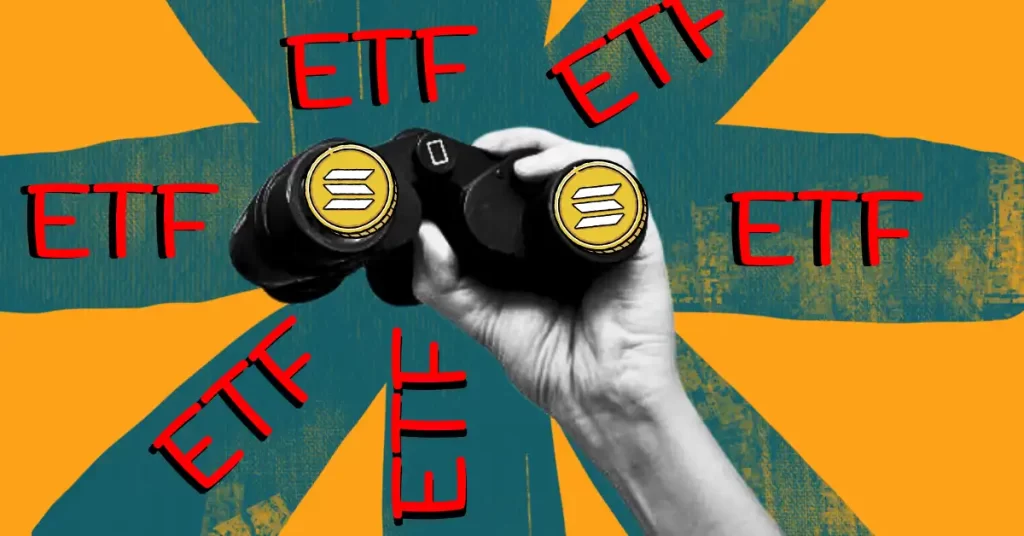
The post Analyzing the Effect of Approval of Ethereum ETF on Solana: Market Trends and Price Prediction appeared first on Coinpedia Fintech News The news of the approval of Ethereum ETFs by the U.S. Securities and Exchange Commission has influenced the cryptocurrency market immensely, particularly affecting Solana. Within this regulatory change, market experts indicate the rapidly changing dynamics and what it means for Solana investors. Solana’s Potential for an ETF With the approval of the Ethereum ETF by the US SEC, the question of whether Solana might also have an ETF emerges. Borovik, an observer on social platform X, indicated that the same similarities exist between Ethereum and Solana, to imply possibly a future route for the ETF of Solana. Ethereum getting a spot ETF literally means that Solana can get one also– both held an ICO– They both do the same thing– they are both used in the same wayI bet Solana gets an ETF during Trumps term— borovik (@3orovik) May 23, 2024 Anthony Scaramucci, the cofounder of SkyBridge Capital, shares a similar view that a SOL ETF will be announced in the future, citing the importance of Solana in the crypto space. Regulatory Hurdles and Market Response While some experts are optimistic about the possibility of a SOL ETF, regulatory difficulties will have to be overcome. Solana, being an altcoin, is under the radar of the SEC as it is considered an unregistered security. While the SEC has allowed Bitcoin and Ethereum to be considered commodities, Solana has no such recognition. Its recent approval of the spot ETF of Ethereum would underscore this regulatory complexity and subsequently Solana’s short-term price movement. Solana’s Price Volatility Amid Market Dynamics Following the Ethereum ETF approval, Solana has seen significant price movements. Its price dipped to a 7-day low following Ethereum’s market dominance and as the market became cautious. Observers note that there exists a connection between regulatory acceptance of Ethereum and price volatility in Solana, which indicates that major cryptocurrencies are in a correlated response to regulatory shifts. Recent staking trends have been reflective of a more cautious approach from Solana investors and node validators. As Ethereum ETFs continue to attract the attention of institutions, Solana stakeholders pulled out substantial amounts of SOL from staking contracts, possibly fearful of market uncertainties. This amount of unstaking reflects investors’ fears over the bearish impact it could have on the price trajectory of Solana. Price Forecast and Market Outlook In spite of Solana’s bounce above key support levels, sentiment in the futures markets remains bearish. Short traders dominate the scene, betting that SOL price would fail to break past key resistance levels. With significant leverage SHORT positions in play, Solana will find it hard to sustain a price uptrend in the near term. Key resistance areas and psychological support levels are telling insights into Solana’s short-term price movements amidst evolving market dynamics.
HSBC today announced the inauguration of its new U.S. headquarters at The Spiral, a renowned office building in New York City’s Hudson Yards neighborhood,…
HSBC today announced the inauguration of its new U.S. headquarters at The Spiral, a renowned office building in New York City’s Hudson Yards neighborhood, marking its largest U.S. relocation to date.
On the latest episode of Hashing It Out, Avail’s co-founder explains the need to unify multiple networks in the Web3 space, not just ideologically but thr…
Hashing It Out: Navigating the next wave of Web3 with Avail’s Anurag Arjun
Digital Currencies
Summary
On the latest episode of Hashing It Out, Avail’s co-founder explains the need to unify multiple networks in the Web3 space, not just ideologically but through innovation.