The Alameda Research and FTX Debacle: Uncovering the Truth
Summary
The post The Alameda Research and FTX Debacle: Uncovering the Truth appeared first on Coinpedia Fintech News A series of tweets from insiders at FTX and Alameda Research has laid bare the dire consequences of this trade-off: substantial financial losses, questionable practices, and the collapse of the two companies. Here’s what you need to know. A prominent crypto influencer, Adam Cochran, recently visited Twitter to discuss the perplexing financial transactions between FTX and Alameda Research. According to Cochran, there are discrepancies in the losses incurred and funds transferred between the companies. He mentions an “unknown $XX Billion” loss by Alameda and a transfer of at least $15 Billion from FTX, purportedly for executive purchases and loan settlements. But even after $2 Billion investments in FTX Ventures and a $2 Billion buyout of Binance, billions remain unaccounted for. 2/2We also know the $2B went to FTX Ventures, $2B~ to buyout Binance. Unclear which bucket that came from.But that still leaves $6b-$10b to unknown lenders, plus possibly $10b+ more lost by Alameda to begin with?!— Adam Cochran (adamscochran.eth) (@adamscochran) October 11, 2023 The spotlight now is on the $6 Billion to $10 Billion supposedly paid to unknown lenders, not to mention the unspecified billions initially lost by Alameda. The only named lender is Genesis, who was reportedly paid back $500 million. Where did the rest of the money go? And how much exactly did Alameda lose initially? Also Read – FTX’s Strategy Against Binance Unveiled in Ellison’s To-Do List Ex-Alameda Engineer Exposes Weak Corporate Controls A former Alameda Research engineer, Aditya Bharadwaj, offered a deeper look into what he describes as a “complete failure of corporate controls” at both companies. The narrative details poor security and accounting practices, often compromised for speed. PART 3: THE HACKSorHow poor security practices at Alameda Research caused the company to lose hundreds of millions of dollars(1/n) #SBF #FTX pic.twitter.com/RFocE7w3Gx— Adi (e/acc) (@aditya_baradwaj) October 11, 2023 According to Baradwaj, standard engineering and accounting practices were ignored in the name of “developer velocity.” As a result, basic safety measures like code testing and secure storage of blockchain keys were neglected. This tradeoff led to several high-stakes security incidents, with hundreds of millions of dollars in losses. Three Big Security Incidents Baradwaj outlines three significant incidents at Alameda: Phishing Scam: A trader lost over $100 Million after falling for a phishing scam while trying to complete a DeFi transaction. Questionable Yield Farming: Alameda lost $40 Million in a yield farming scheme on an unreliable blockchain. Data Leak: $50 Million was lost after a plaintext file containing blockchain keys was leaked, likely by a former employee. Sam Bankman-Fried, the man behind FTX and Alameda, believed the risk was worth the reward. But was it? The bankruptcy lawyer John Ray III described the situation as a “complete failure of corporate controls.” And now, both companies are under scrutiny, facing financial ruin and reputational damage that could have ripple effects across the cryptocurrency ecosystem.
If Republicans can’t unify behind Scalise or another choice to be speaker, paralysis in the House over crypto legislation and a potential government shutd…
Crypto Bills May Depend on U.S. House GOP Battle Over Scalise Speaker Pick
Digital Currencies
Summary
If Republicans can’t unify behind Scalise or another choice to be speaker, paralysis in the House over crypto legislation and a potential government shutdown could continue.
Tradeshift Holdings has dismissed its co-founder Christian Lanng due to "serious allegations of sexual assault and harassment" and "gross misconduct on mu…
Danish fintech fires CEO facing sexual assault complaint
Business Tools · Digital Currencies
Summary
Tradeshift Holdings has dismissed its co-founder Christian Lanng due to "serious allegations of sexual assault and harassment" and "gross misconduct on multiple grounds," the company says. Lanng denies the allegations.
With US banks facing a fresh wave of capital restrictions, some are searching for ways to trade out of risky loan portfolios and free up their balance she…
Private credit is eyeing bank capital risk trades, Magnetar's Snyderman says
Investments · Digital Currencies
Summary
With US banks facing a fresh wave of capital restrictions, some are searching for ways to trade out of risky loan portfolios and free up their balance sheets. The solution may very well lie with capital-rich lenders in the booming $1.5 trillion private credit market.
Orum launched Verify, a new product to determine the validity of a bank account before initiating payments. Verify is built on top of FedNow and is able t…
Orum Launches Verify to Determine Validity of Bank Accounts
Banking Infrastructure · Business Tools · Digital Currencies
Summary
Orum launched Verify, a new product to determine the validity of a bank account before initiating payments. Verify is built on top of FedNow and is able to authenticate 100% of all consumer and business bank accounts held in the U.S. Verify leverages the FedNow payment rail to provide businesses with account information in real time. Real-time payments innovator Orum has launched a new product called Verify to determine whether a bank account is open and valid before initiating payments. Verify is built on top of FedNow and is able to authenticate 100% of all consumer and business bank accounts held in the U.S.– all within 15 seconds. Orum’s Verify seeks to help businesses reduce fraud resulting from invalid credentials and mitigate the friction that consumers with valid bank accounts face when making a transaction. Regardless of the reason for the transaction failures, they are costly. A survey conducted in 2020 showed that 60% of business respondents reported losing customers as a result of failed payments and that failed payments lost the global economy more than $118 billion in fees, labor, and lost business in 2020. “Lost time verifying accounts equals lost revenue and ultimately lost customers,” said Orum Founder and CEO Stephany Kirkpatrick. “This is especially true for business bank accounts, which are notoriously difficult to verify. Businesses need confidence they are debiting or crediting a real account to ensure the payment lands safely in the bank account, but most solutions today are slow or don’t include coverage for all B2B use cases. Verify – built on top of FedNow – has changed this equation, making it now possible to verify any type of bank account instantly.” Today’s launch hinges on FedNow. Orum leverages the payment rail to provide real-time account information to businesses. The company uses a webhook to automatically send the data back to the business in real-time. This eliminates the need for the customer to get involved by confirming microdeposits or entering their bank login credentials. Orum was founded in 2019 to serve as a single solution for accessing RTP, FedNow, Same Day ACH, ACH, and Wires. The company’s payment API orchestrates instant payouts, using AI to predict the availability of funds within an account and pre-authorize transactions. Founded by Stephany Kirkpatrick, Orum has raised over $82 million from investors including Accel, Canapi, Bain Capital Ventures, Inspired Capital, American Express Ventures, and others. Photo by Steve Johnson The post Orum Launches Verify to Determine Validity of Bank Accounts appeared first on Finovate.
The new Federal Trade Commission proposal would require companies to disclose whether any fees are refundable up-front and would ban hidden or misleading …
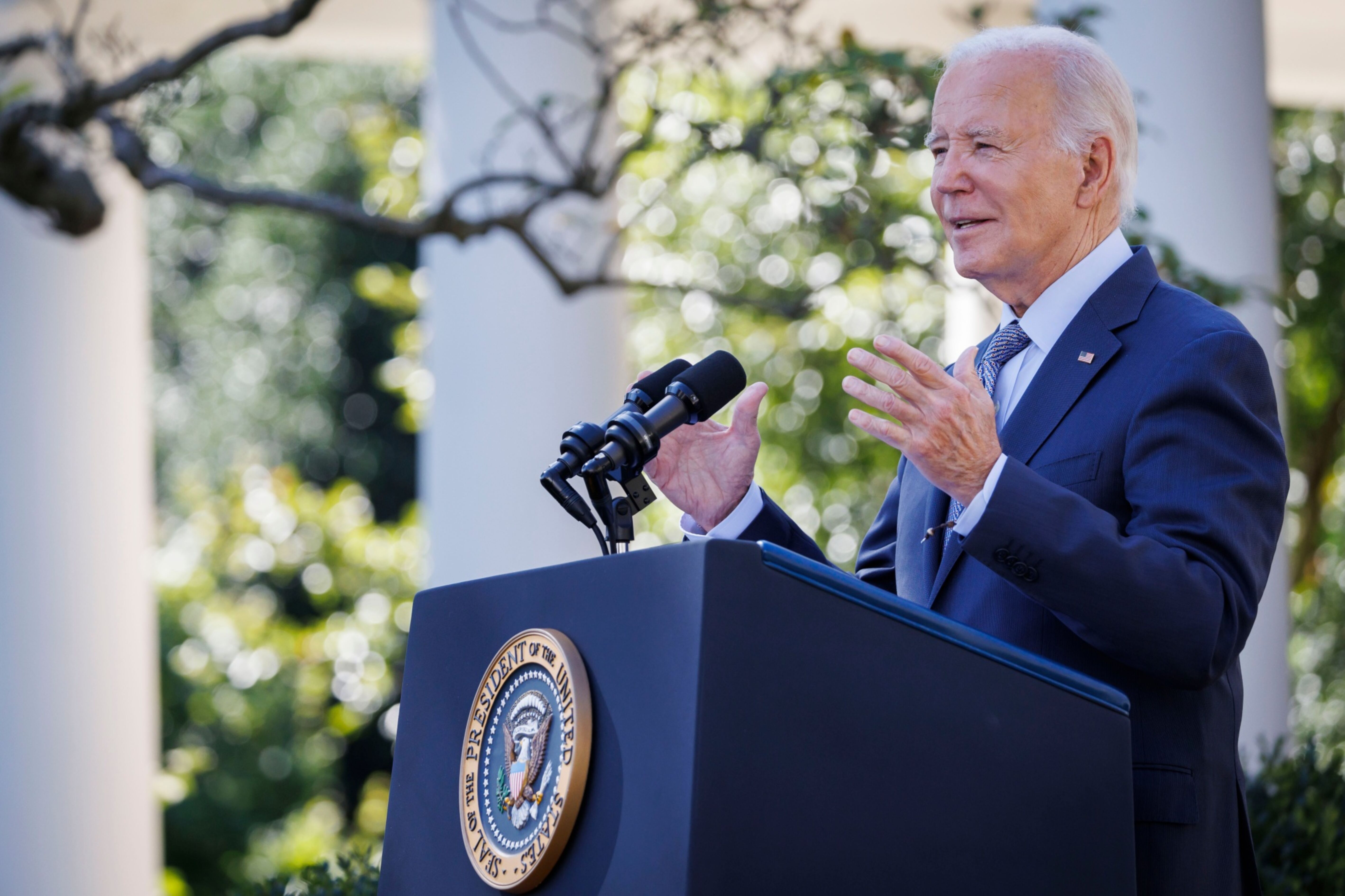
Biden unveils new action on 'junk fees' to counter rising costs
Investments · Digital Currencies
Summary
The new Federal Trade Commission proposal would require companies to disclose whether any fees are refundable up-front and would ban hidden or misleading fees.
Fiserv, Inc.(NYSE: FI), a global leader in payments and financial technology, announces the acquisition of Skytef, primary distributor of Software Express…
Fiserv, Inc.(NYSE: FI), a global leader in payments and financial technology, announces the acquisition of Skytef, primary distributor of Software Express's SiTef ® (Solução Inteligente de Transferência Eletrônica de Fundos), from Fiserv, the leading Electronic Funds Transfer solution in Brazil.