Universities Tap Digital Tools to Overcome ‘Connected Campus’ Security Concerns
Summary
Automation is predicted to become the centerpiece of the campus of the future, transforming various aspects of university life. As detailed in the “The Automated Campus: Enabling the Future of Higher Education,” a collaboration between PYMNTS Intelligence and American Express, higher education has evolved significantly from its traditional image, with universities having had to embrace digital solutions to stay in sync with evolving student behaviors. Additionally, the pandemic necessitated a major transition to online learning, while catalyzing the widespread integration of online payment platforms and cashless transaction methods across colleges and universities. However, with this transformation comes the need to strengthen security measures as the growing dual risks of physical violence and cyberattacks create significant concerns for higher education institutions. In fact, the study found that nearly two-thirds of higher-ed decision-makers consider threats to both physical and network security as top priorities for their institutions. In August, for example, the University of Michigan, one of the largest educational institutions in the United States, was forced to shut down all of its campus systems and services to deal with a cybersecurity incident, resulting in a major disruption of online services on the evening prior to classes starting. In June, another U.S. institution, the University of California, Los Angeles (UCLA), confirmed it was hit by wide-ranging cyberattack and was working with external cybersecurity experts to investigate the extent of the matter. Even the New York Department of Education has not been spared. That same month, a cyberattack reportedly exposed sensitive data on around 45,000 New York City public school students and staff, including Social Security numbers, birth dates and student evaluations. Security a Top Aim of ‘Connected Campus’ To stem the tide, universities and institutions of higher education are increasingly investing in automation and advanced mobile systems to enhance security and protect their students and networks. One of the primary strategies being adopted is the migration of network infrastructure to higher-security providers, which offer university networks better protection against cyberthreats. Access management is another aspect of campus security that is being upgraded through automation. In fact, multiple universities are planning to update their access management systems to monitor the use of student IDs campuswide in an effort to better control access to campus facilities and identify any unauthorized individuals. Furthermore, technologies such as door-prop alerts and remote door-locking controls are seeing increased adoption on campuses. These automated systems can detect when doors are propped open or left unlocked, immediately alerting security personnel to take necessary action. Automation and digital tools are also being utilized to ensure their personal safety on campus by monitoring their movements and promptly alerting them of potential physical danger. These technologies allow for real-time tracking, ensuring that students can be quickly located and assisted in emergency situations. One of the universities embracing this trend is the University of Arkansas at Little Rock (UA Little Rock). The institution recently upgraded its Trojan Campus Safety app, enabling students to directly connect with campus police via a live chat feature and request a “virtual escort” so they can be accompanied in real-time as they move from one location to another. The app also provides students access the university’s emergency plans and campus maps, while offering them the opportunity to send anonymous tips to report suspicious activity or general safety concerns. “Our top priority is the safety and well-being of our campus family. I invite everyone on campus to participate in creating a safer environment by downloading the app,” said Regina Carter, associate vice chancellor of public safety and chief of police for UA Little Rock.The post Universities Tap Digital Tools to Overcome ‘Connected Campus’ Security Concerns first appeared on PYMNTS.com.
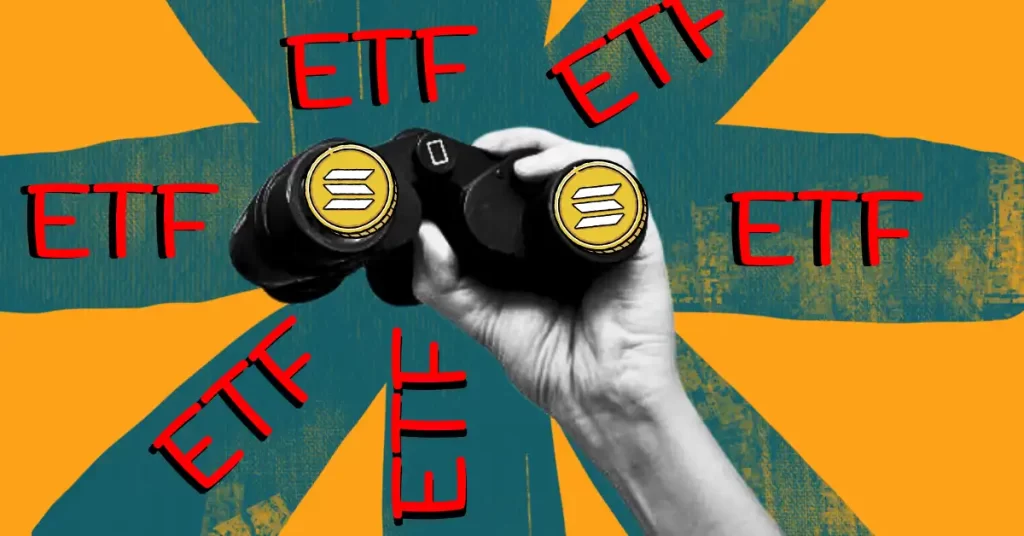
The post Analyzing the Effect of Approval of Ethereum ETF on Solana: Market Trends and Price Prediction appeared first on Coinpedia Fintech News The news …
Analyzing the Effect of Approval of Ethereum ETF on Solana: Market Trends and Price Prediction
Blockchain · Digital Currencies
Summary
The post Analyzing the Effect of Approval of Ethereum ETF on Solana: Market Trends and Price Prediction appeared first on Coinpedia Fintech News The news of the approval of Ethereum ETFs by the U.S. Securities and Exchange Commission has influenced the cryptocurrency market immensely, particularly affecting Solana. Within this regulatory change, market experts indicate the rapidly changing dynamics and what it means for Solana investors. Solana’s Potential for an ETF With the approval of the Ethereum ETF by the US SEC, the question of whether Solana might also have an ETF emerges. Borovik, an observer on social platform X, indicated that the same similarities exist between Ethereum and Solana, to imply possibly a future route for the ETF of Solana. Ethereum getting a spot ETF literally means that Solana can get one also– both held an ICO– They both do the same thing– they are both used in the same wayI bet Solana gets an ETF during Trumps term— borovik (@3orovik) May 23, 2024 Anthony Scaramucci, the cofounder of SkyBridge Capital, shares a similar view that a SOL ETF will be announced in the future, citing the importance of Solana in the crypto space. Regulatory Hurdles and Market Response While some experts are optimistic about the possibility of a SOL ETF, regulatory difficulties will have to be overcome. Solana, being an altcoin, is under the radar of the SEC as it is considered an unregistered security. While the SEC has allowed Bitcoin and Ethereum to be considered commodities, Solana has no such recognition. Its recent approval of the spot ETF of Ethereum would underscore this regulatory complexity and subsequently Solana’s short-term price movement. Solana’s Price Volatility Amid Market Dynamics Following the Ethereum ETF approval, Solana has seen significant price movements. Its price dipped to a 7-day low following Ethereum’s market dominance and as the market became cautious. Observers note that there exists a connection between regulatory acceptance of Ethereum and price volatility in Solana, which indicates that major cryptocurrencies are in a correlated response to regulatory shifts. Recent staking trends have been reflective of a more cautious approach from Solana investors and node validators. As Ethereum ETFs continue to attract the attention of institutions, Solana stakeholders pulled out substantial amounts of SOL from staking contracts, possibly fearful of market uncertainties. This amount of unstaking reflects investors’ fears over the bearish impact it could have on the price trajectory of Solana. Price Forecast and Market Outlook In spite of Solana’s bounce above key support levels, sentiment in the futures markets remains bearish. Short traders dominate the scene, betting that SOL price would fail to break past key resistance levels. With significant leverage SHORT positions in play, Solana will find it hard to sustain a price uptrend in the near term. Key resistance areas and psychological support levels are telling insights into Solana’s short-term price movements amidst evolving market dynamics.
HSBC today announced the inauguration of its new U.S. headquarters at The Spiral, a renowned office building in New York City’s Hudson Yards neighborhood,…
HSBC today announced the inauguration of its new U.S. headquarters at The Spiral, a renowned office building in New York City’s Hudson Yards neighborhood, marking its largest U.S. relocation to date.
On the latest episode of Hashing It Out, Avail’s co-founder explains the need to unify multiple networks in the Web3 space, not just ideologically but thr…
Hashing It Out: Navigating the next wave of Web3 with Avail’s Anurag Arjun
Digital Currencies
Summary
On the latest episode of Hashing It Out, Avail’s co-founder explains the need to unify multiple networks in the Web3 space, not just ideologically but through innovation.