Vitalik Buterin Proposes Solution to Ethereum’s Node Centralization
Summary
The post Vitalik Buterin Proposes Solution to Ethereum’s Node Centralization appeared first on Coinpedia Fintech News Ethereum is facing a big issue. Too many of its computer servers, known as nodes, are run by a few big companies. This goes against the idea of decentralization that blockchain aims for. Addressing this issue, Vitalik Buterin, Ethereum’s co-founder, took the spotlight at Korea Blockchain Week to outline potential solutions. Here’s what happened. Too Many Eggs in One Basket? Right now, big service providers like Amazon host more than 5900 of Ethereum’s nodes. This is risky because if Amazon has a problem, Ethereum could too. Buterin says it’s crucial to make it easier and cheaper for regular people to run these nodes. Vitalik Buterin's concerns about node centralization on Ethereum are valid and highlight a critical issue in the blockchain space. Centralization of nodes on services like AWS could potentially make the network more vulnerable to outages and censorship. The timeline of up to 20…— Crypto Simon (@TheCryptoSimon) September 5, 2023 Buterin introduced a revolutionary concept to tackle this issue—statelessness. Running an Ethereum node currently demands an extensive storage capacity of hundreds of gigabytes. Stateless clients aim to drastically reduce these resource requirements. This approach not only encourages wider individual participation but also bolsters Ethereum’s resilience against centralization risks. A Glimpse into ‘The Verge’ and ‘The Purge’ Buterin is known for his long-view approach, and he did not disappoint. Unveiling stages with names straight out of a sci-fi novel—“The Verge” and “The Purge”—he described how statelessness will be incrementally introduced into Ethereum’s ecosystem. While this solution is not imminent, its phased rollout demonstrates a commitment to thoroughness and rigor. But he warns it could take years, maybe even decades, to solve this completely. Read More: Ethereum’s On-Chain Activity Hits Yearly High as Market Remains Bearish Buterin was quick to clarify that tackling node centralization is just one piece of a larger puzzle. He stressed the need for improved documentation, simplified staking procedures, and robust security mechanisms—all aimed at creating a more inclusive and resilient network. Ethereum’s Scaling Issues As if confronting centralization weren’t enough, Buterin reiterated that scalability remains Ethereum’s most pressing issue. He cited zero-knowledge (ZK) rollups, a technology designed to move computations off-chain, as a pivotal element in resolving Ethereum’s throughput bottlenecks. To round off a week of compelling developments, Buterin also made some notable transfers of Ether and Maker tokens. These financial maneuvers have stirred speculation, adding yet another layer to the complex narrative surrounding Ethereum’s future. The road ahead While immediate solutions may be elusive, the groundwork laid at Korea Blockchain Week reflects a depth of understanding and a commitment to long-term viability. Ethereum, it appears, is positioning itself not as a mere participant but as a leader in the decentralization revolution. This Might Interest You: Unraveling Raoul Pal’s Approach to Investing in Ethereum and Beyond
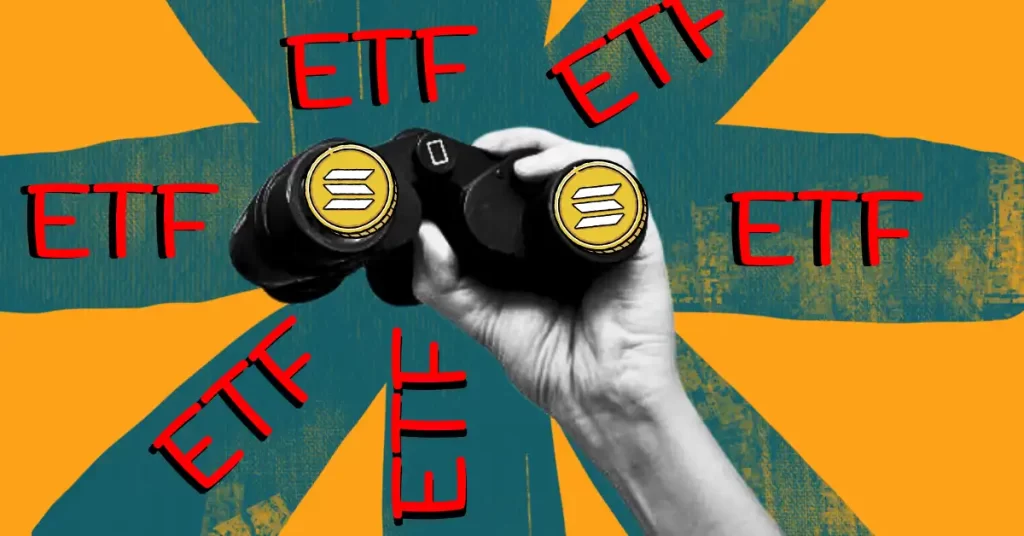
The post Analyzing the Effect of Approval of Ethereum ETF on Solana: Market Trends and Price Prediction appeared first on Coinpedia Fintech News The news …
Analyzing the Effect of Approval of Ethereum ETF on Solana: Market Trends and Price Prediction
Blockchain · Digital Currencies
Summary
The post Analyzing the Effect of Approval of Ethereum ETF on Solana: Market Trends and Price Prediction appeared first on Coinpedia Fintech News The news of the approval of Ethereum ETFs by the U.S. Securities and Exchange Commission has influenced the cryptocurrency market immensely, particularly affecting Solana. Within this regulatory change, market experts indicate the rapidly changing dynamics and what it means for Solana investors. Solana’s Potential for an ETF With the approval of the Ethereum ETF by the US SEC, the question of whether Solana might also have an ETF emerges. Borovik, an observer on social platform X, indicated that the same similarities exist between Ethereum and Solana, to imply possibly a future route for the ETF of Solana. Ethereum getting a spot ETF literally means that Solana can get one also– both held an ICO– They both do the same thing– they are both used in the same wayI bet Solana gets an ETF during Trumps term— borovik (@3orovik) May 23, 2024 Anthony Scaramucci, the cofounder of SkyBridge Capital, shares a similar view that a SOL ETF will be announced in the future, citing the importance of Solana in the crypto space. Regulatory Hurdles and Market Response While some experts are optimistic about the possibility of a SOL ETF, regulatory difficulties will have to be overcome. Solana, being an altcoin, is under the radar of the SEC as it is considered an unregistered security. While the SEC has allowed Bitcoin and Ethereum to be considered commodities, Solana has no such recognition. Its recent approval of the spot ETF of Ethereum would underscore this regulatory complexity and subsequently Solana’s short-term price movement. Solana’s Price Volatility Amid Market Dynamics Following the Ethereum ETF approval, Solana has seen significant price movements. Its price dipped to a 7-day low following Ethereum’s market dominance and as the market became cautious. Observers note that there exists a connection between regulatory acceptance of Ethereum and price volatility in Solana, which indicates that major cryptocurrencies are in a correlated response to regulatory shifts. Recent staking trends have been reflective of a more cautious approach from Solana investors and node validators. As Ethereum ETFs continue to attract the attention of institutions, Solana stakeholders pulled out substantial amounts of SOL from staking contracts, possibly fearful of market uncertainties. This amount of unstaking reflects investors’ fears over the bearish impact it could have on the price trajectory of Solana. Price Forecast and Market Outlook In spite of Solana’s bounce above key support levels, sentiment in the futures markets remains bearish. Short traders dominate the scene, betting that SOL price would fail to break past key resistance levels. With significant leverage SHORT positions in play, Solana will find it hard to sustain a price uptrend in the near term. Key resistance areas and psychological support levels are telling insights into Solana’s short-term price movements amidst evolving market dynamics.
HSBC today announced the inauguration of its new U.S. headquarters at The Spiral, a renowned office building in New York City’s Hudson Yards neighborhood,…
HSBC today announced the inauguration of its new U.S. headquarters at The Spiral, a renowned office building in New York City’s Hudson Yards neighborhood, marking its largest U.S. relocation to date.
On the latest episode of Hashing It Out, Avail’s co-founder explains the need to unify multiple networks in the Web3 space, not just ideologically but thr…
Hashing It Out: Navigating the next wave of Web3 with Avail’s Anurag Arjun
Digital Currencies
Summary
On the latest episode of Hashing It Out, Avail’s co-founder explains the need to unify multiple networks in the Web3 space, not just ideologically but through innovation.