Why is Quant Going Down? – a Look Into Why Bitcoin Spark and Polygon Are Gaining Ground
Summary
The post Why is Quant Going Down? – a Look Into Why Bitcoin Spark and Polygon Are Gaining Ground appeared first on Coinpedia Fintech News Blockchain technology has improved the financial sector by powering decentralized digital platforms such as Bitcoin, Ethereum, Quant, and Polygon. The technology has exponentially grown in user numbers in recent years with the launch of new and improved digital platforms that offer an antithesis to old-generation blockchains such as Bitcoin and Ethereum. Old-generation networks are associated with limited scalability, outdated consensus mechanisms, high transaction costs, and the need for interoperable features. Newer projects like Quant are performing differently than others like Solana and Bitcoin Spark are gaining momentum. What is Quant? Quant is a blockchain-powered utility platform founded in 2018 by a computer expert and cyber security professional called Gilbert Verdian. Quant was developed to make Web3 operations faster and cheaper by applying improved technology to reduce network slowdown when systems get busy. The network was also developed to provide efficiency in cross-network transfers. The Ethereum mainnet powers the network, and its native token is QNT. Quant’s limited social presence and lack of transparent metrics systems make obtaining data from the network hard, making investors prefer Polygon and Bitcoin Spark. What is Polygon? Polygon is an Ethereum sidechain or a layer-two scaling solution for the Ethereum mainnet. The sidechain provides a cheaper and faster platform compared to Ethereum. Polygon was formerly identified as the Matic network and has helped new users interact with decentralized applications without scalability concerns or congestion issues that were experienced on Ethereum before Ethereum’s major hard fork upgrade called “The Merge” that saw the network transform from a proof-of-work consensus mechanism to a proof-of-stake network validation mechanism. Why is Bitcoin Spark trending? Bitcoin Spark is pioneering the next generation of Bitcoin alternatives. The platform applies advanced blockchain-powered systems, including a new consensus mechanism that no other platform uses, making it a first market mover. The platform has become the most likely contender of the top Bitcoin alternatives today. Unlike other Bitcoin alternatives, Bitcoin Spark is on the verge of introducing a smart contract layer to its network that will allow community developers to advance their technological explorations in deploying decentralized applications (dApps). Unlike Polygon, an Ethereum sidechain, Bitcoin Spark has its native network, which will launch soon after the ongoing ICO event ends. The ICO is currently in the sixth phase, where each BTCS token, Bitcoin Spark’s native digital asset, is selling for $2.75 and has a bonus giveaway of 8% of the amount spent deposited on the user’s account after the purchase. Bitcoin Spark has already been audited, and the founders have been KYC verified by two independent auditing platforms. BTCS tokens exist as ERC-20 tokens powered by the Ethereum mainnet to offer potential users a chance to trade, buy, sell, and use them as they await the network’s first block. The ERC-20 tokens will act as a wrapped version of Bitcoin Spark’s main coin, which will be minted on the network post-launch. The existing BTCS tokens act as an IOU or bridgeable digital asset, making depositing and withdrawing on centralised exchanges faster upon mainnet release. The Bitcoin Spark network will integrate a proprietary bridging system for the IOU tokens, allowing users to bridge their BTCS tokens to and from other networks like BNB Smart Chain, Ethereum, and Polygon. Any assets that will accumulate in the renounced contracts powered by the bridging systems will be removed from the deployed network, and the network will recognize their supply to the tokens that have been deployed. If you missed Bitcoin, buy BTCS tokens and participate in the platform’s early development. Learn more about Bitcoin Spark on: Website: https://bitcoinspark.org/ Buy BTCS: https://network.bitcoinspark.org/register
18 million users of Coins.ph are expected to receive a faster, lower-cost and more accessible remittance option as a result of the new partnership with Ci…
USDC issuer partners with Philippines exchange to promote stablecoin
Digital Currencies · Money Transfer
Summary
18 million users of Coins.ph are expected to receive a faster, lower-cost and more accessible remittance option as a result of the new partnership with Circle.
At Sibos 2023, Grayson Clarke, Head of Market Planning and Marketing, LexisNexis® Risk Solutions, presents insights from the recent True Cost of Financial…
At Sibos 2023, Grayson Clarke, Head of Market Planning and Marketing, LexisNexis® Risk Solutions, presents insights from the recent True Cost of Financial Crime Compliance Study, conducted by Forrester Consulting, on how the evolving financial landscape is being shaped by an intricate network of regulations and sanctions, and the increasing use of AI.
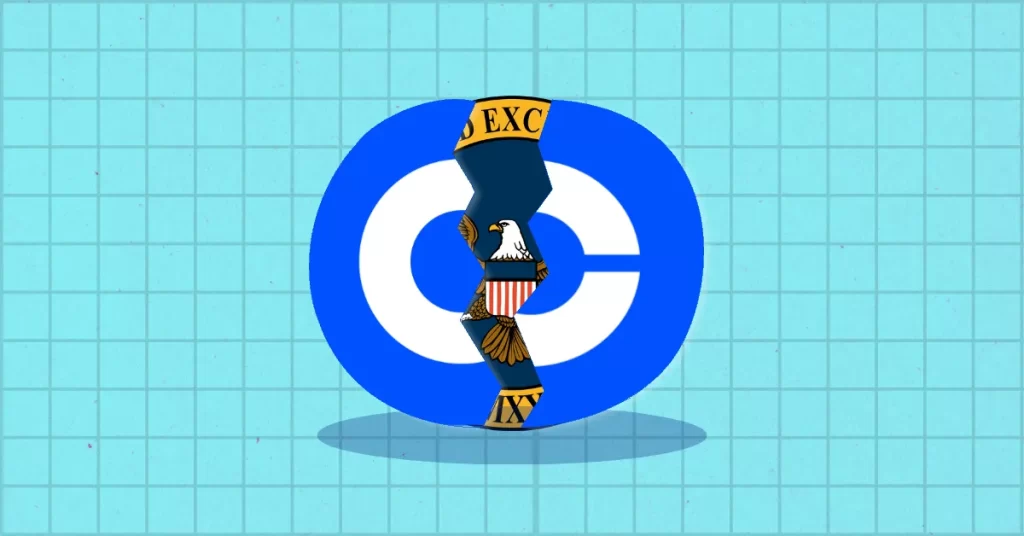
The post SEC Gains Amicus Curiae Support Against Coinbase in Legal Clash appeared first on Coinpedia Fintech News The U.S. SEC is making significant moves…
SEC Gains Amicus Curiae Support Against Coinbase in Legal Clash
Money Transfer · Digital Currencies
Summary
The post SEC Gains Amicus Curiae Support Against Coinbase in Legal Clash appeared first on Coinpedia Fintech News The U.S. SEC is making significant moves against both Coinbase and Ripple. While Ripple seems beyond immediate reach, the SEC focuses on Coinbase. They are actively seeking support from industry heavyweights in their case against the exchange. Following a failed attempt to convince a Judge to file an interlocutory appeal in the Ripple lawsuit, the SEC brought multiple amicus curiae against Coinbase. TradFi grey hairs file Amicus Curiae on behalf *drum roll* the SEC, in SEC vs. Coinbasehttps://t.co/ukeHcfcX8BNASAA landing page screenshot and story attached. PROTECT. pic.twitter.com/DczmmRVlm5— Mikko Ohtamaa (@moo9000) October 10, 2023 Multiple Amicus Curiae: SEC’s Dying Bet In the ongoing U.S. Securities and Exchange Commission v. Coinbase lawsuit, the SEC has enlisted various securities and legal entities to file amicus curiae against Coinbase. The American Securities Administrators Association (NASAA), New Finance Institute, and Administrative Law Scholars are all siding with the U.S. SEC. Having faced a setback in the Ripple lawsuit with Judge Analisa Torres, the U.S. Securities and Exchange Commission (SEC) is now working to bolster its position in the Coinbase lawsuit. The North American Securities Administrators Association (NASAA) has submitted an amicus brief, urging the court to reject Coinbase’s motion. Their arguments range from Congress’s broad definition of “security” for effective investment regulation to the assertion that Coinbase’s staking program qualifies as an investment contract. The New Finance Institute (NFI) has also supported the SEC, emphasizing that neither “investing” nor “contract” are prerequisites for identifying an “Investment Contract.” They argue that the SEC has the authority to regulate crypto and request the court to deny Coinbase’s motion. Additionally, Administrative Law Scholars Professors Todd Phillips and Beau Baumann have filed amicus briefs supporting the SEC, urging the court to deny Coinbase’s motion. Coinbase’s Stance On the opposing side, After John Deaton managed to get 1,500 users to support the case, it is evident that some experienced lawyers fraternity backs Coinbase. Currently, Coinbase enjoys the support of Republican Senator Cynthia Lummis, who, along with others, has filed an Amicus Brief urging the Judge to dismiss the case. Coinbase has countered these claims, asserting that the SEC lacks jurisdiction over the crypto industry and its actions go beyond the regulatory framework. Analyst Rebuffs Coinbase’s Dubious Claims Ali Martinez, a famous Crypto expert, took a sharp jab at Coinbase’s portrayal of the “digital asset industry” as a major player in the American economy, deeming it a dubious claim. He argued that, in reality, most digital assets are primarily used for speculative purposes and lack broad practical applications, such as being widely accepted for payments or satisfying government obligations like taxes. “The Court should decline to treat digital assets as somehow special.” This challenges Coinbase’s assertion about the industry’s significant role in economic and political contexts. It’s a heated back-and-forth in the ongoing legal saga!
Verifone, a leading global provider of payment solutions, announces that Mike Kohlsdorf has joined the company as CEO, succeeding Mike Pulli, who is stepp…
Verifone, a leading global provider of payment solutions, announces that Mike Kohlsdorf has joined the company as CEO, succeeding Mike Pulli, who is stepping down after five years with the organization.
New data from the Federal Trade Commission shows that scams originating on social media have accounted for $2.7 billion in reported losses since 2021, mor…
FTC reports that scams on social media have accounted for $2.7 billion in reported losses since 2021
Digital Currencies
Summary
New data from the Federal Trade Commission shows that scams originating on social media have accounted for $2.7 billion in reported losses since 2021, more than any other contact method.