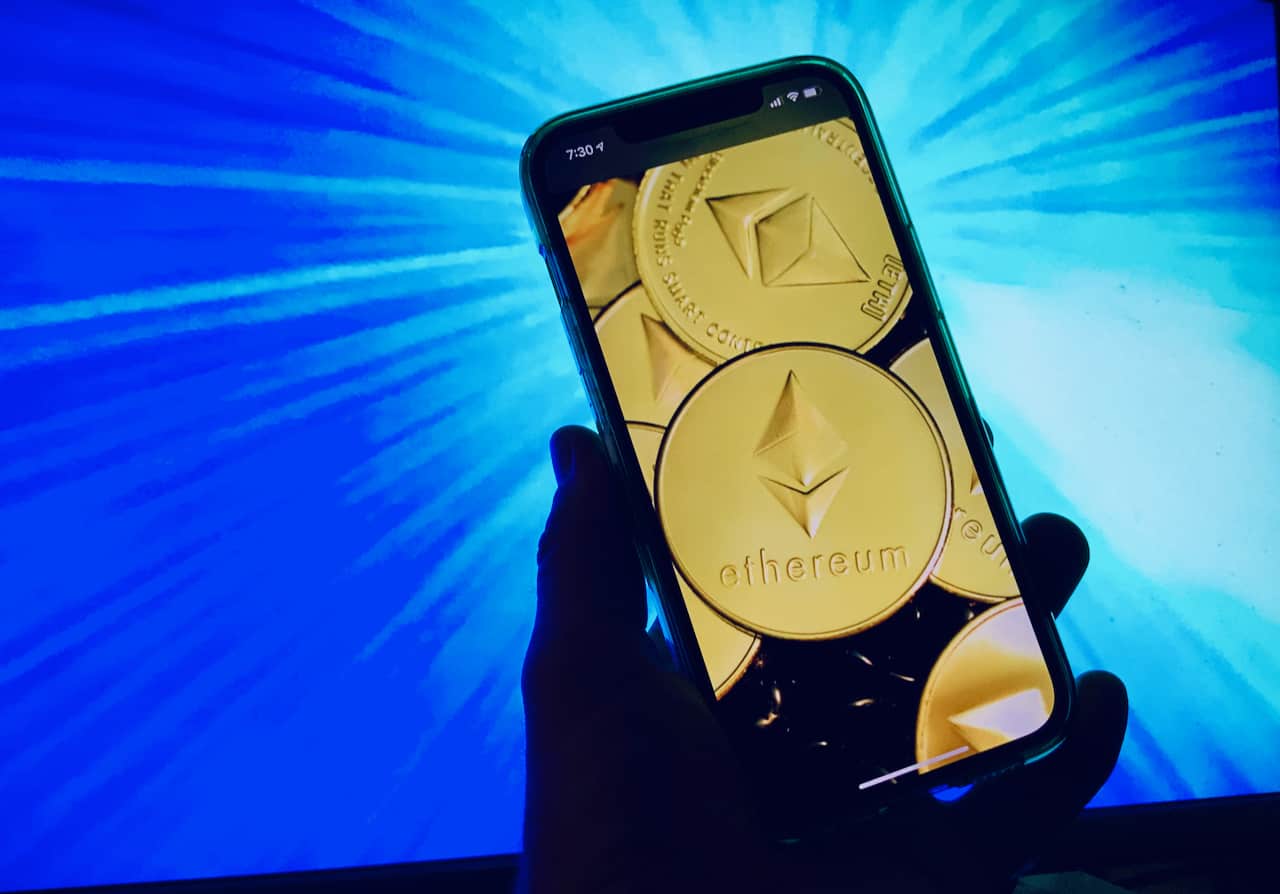
Why is Quant Going Down? – a Look Into Why Bitcoin Spark and Polygon Are Gaining Ground
Summary
The post Why is Quant Going Down? – a Look Into Why Bitcoin Spark and Polygon Are Gaining Ground appeared first on Coinpedia Fintech News Blockchain technology has improved the financial sector by powering decentralized digital platforms such as Bitcoin, Ethereum, Quant, and Polygon. The technology has exponentially grown in user numbers in recent years with the launch of new and improved digital platforms that offer an antithesis to old-generation blockchains such as Bitcoin and Ethereum. Old-generation networks are associated with limited scalability, outdated consensus mechanisms, high transaction costs, and the need for interoperable features. Newer projects like Quant are performing differently than others like Solana and Bitcoin Spark are gaining momentum. What is Quant? Quant is a blockchain-powered utility platform founded in 2018 by a computer expert and cyber security professional called Gilbert Verdian. Quant was developed to make Web3 operations faster and cheaper by applying improved technology to reduce network slowdown when systems get busy. The network was also developed to provide efficiency in cross-network transfers. The Ethereum mainnet powers the network, and its native token is QNT. Quant’s limited social presence and lack of transparent metrics systems make obtaining data from the network hard, making investors prefer Polygon and Bitcoin Spark. What is Polygon? Polygon is an Ethereum sidechain or a layer-two scaling solution for the Ethereum mainnet. The sidechain provides a cheaper and faster platform compared to Ethereum. Polygon was formerly identified as the Matic network and has helped new users interact with decentralized applications without scalability concerns or congestion issues that were experienced on Ethereum before Ethereum’s major hard fork upgrade called “The Merge” that saw the network transform from a proof-of-work consensus mechanism to a proof-of-stake network validation mechanism. Why is Bitcoin Spark trending? Bitcoin Spark is pioneering the next generation of Bitcoin alternatives. The platform applies advanced blockchain-powered systems, including a new consensus mechanism that no other platform uses, making it a first market mover. The platform has become the most likely contender of the top Bitcoin alternatives today. Unlike other Bitcoin alternatives, Bitcoin Spark is on the verge of introducing a smart contract layer to its network that will allow community developers to advance their technological explorations in deploying decentralized applications (dApps). Unlike Polygon, an Ethereum sidechain, Bitcoin Spark has its native network, which will launch soon after the ongoing ICO event ends. The ICO is currently in the sixth phase, where each BTCS token, Bitcoin Spark’s native digital asset, is selling for $2.75 and has a bonus giveaway of 8% of the amount spent deposited on the user’s account after the purchase. Bitcoin Spark has already been audited, and the founders have been KYC verified by two independent auditing platforms. BTCS tokens exist as ERC-20 tokens powered by the Ethereum mainnet to offer potential users a chance to trade, buy, sell, and use them as they await the network’s first block. The ERC-20 tokens will act as a wrapped version of Bitcoin Spark’s main coin, which will be minted on the network post-launch. The existing BTCS tokens act as an IOU or bridgeable digital asset, making depositing and withdrawing on centralised exchanges faster upon mainnet release. The Bitcoin Spark network will integrate a proprietary bridging system for the IOU tokens, allowing users to bridge their BTCS tokens to and from other networks like BNB Smart Chain, Ethereum, and Polygon. Any assets that will accumulate in the renounced contracts powered by the bridging systems will be removed from the deployed network, and the network will recognize their supply to the tokens that have been deployed. If you missed Bitcoin, buy BTCS tokens and participate in the platform’s early development. Learn more about Bitcoin Spark on: Website: https://bitcoinspark.org/ Buy BTCS: https://network.bitcoinspark.org/register
The Clearing House’s RTP network and The Fed's FedNow network are prepared to tackle interoperability eventually — but for now, its value remains minimal.
FedNow, RTP interoperability is inevitable — down the line
Digital Currencies
Summary
The Clearing House’s RTP network and The Fed's FedNow network are prepared to tackle interoperability eventually — but for now, its value remains minimal.
The post Solana Struggles Amid Intense Bearish Pressure at Resistance Lines: What’s Next for SOL Price appeared first on Coinpedia Fintech News Solana pri…
Solana Struggles Amid Intense Bearish Pressure at Resistance Lines: What’s Next for SOL Price
Blockchain · Digital Currencies
Summary
The post Solana Struggles Amid Intense Bearish Pressure at Resistance Lines: What’s Next for SOL Price appeared first on Coinpedia Fintech News Solana price has been declining steeply following the SEC’s approval of spot Ethereum ETFs. For example, the SOL/ETH pair, which is closely monitored, has dropped by 16.8% since May 17 following the U.S. Securities and Exchange Commission’s (SEC) request for Ether ETF applicants to revise their 19b-4 filings. Additionally, there’s a decline in activity in the SOL ecosystem, suggesting further bearish pressure on the edge. Analysts Expect SOL ETF By 2025 Solana might be losing its momentum to Ethereum following SEC’s approval of spot ETH ETF. However, analysts believe that Solana is not far from having its own ETF. Geoffrey Kendrick, an analyst at Standard Chartered, predicts that SOL and XRP ETFs could receive approval by 2025. Kendrick suggests that the recent approval of the ETH ETF implies that Ether and altcoins may not be classified as securities. Analysts from The Birb Nest have observed that discussions around a Solana ETF are surging on crypto Twitter and in media circles, indicating that it’s likely to happen. The total value locked (TVL) within the Solana ecosystem experienced a notable decline in May. As of May 23, there were 27.48 million SOL locked, down from the monthly peak of 29.4 million SOL. This decline in Solana’s TVL was particularly sharp after May 20, following reports on the potential approval of spot Ether ETFs. On that date, the TVL was recorded at 28.3 million SOL, suggesting that the news about the Ether ETFs might have triggered the withdrawals from the Solana ecosystem. Since the Ethereum ETF approval on May 20, Solana node validators started rapidly withdrawing funds. Initially holding 368.8 million SOL in staking contracts, they withdrew 3.5 million SOL by May 24, reducing the active staking to 365.3 million SOL. Also read: Analyzing the Effect of Approval of Ethereum ETF on Solana: Market Trends and Price Prediction With Solana’s current price at $167, these unstaked SOL are valued at approximately $580 million. Such significant withdrawals from a Proof-of-Stake (PoS) network generally lead to short-term price declines. What’s Next For SOL Price? Solana price failed to break above $190 as sellers strongly defended a surge above that level, resulting in a steep decline below immediate Fib channels. SOL price dropped below its EMA trend lines too; however, buyers defended further drops below $160. As of writing, SOL price trades at $166, declining over 4% in the last 24 hours. SOL price is struggling to surpass the EMA20 trend line, indicating continued bearish pressure at higher levels. The declining EMA trend lines and the RSI level heading toward the oversold region suggest a rising dominance in bearish positions. Should buyers push past the descending resistance line, the SOL/USDT pair might aim to retest the significant resistance at $192. A break above this level might send the SOL price toward $210.
The Securities and Exchange Commission (SEC) is poised to green-light Ethereum (Ether) ETFs after years of pushback. As of this writing, it was not clear …
Digital Currencies · Banking Infrastructure · Blockchain
Summary
The Securities and Exchange Commission (SEC) is poised to green-light Ethereum (Ether) ETFs after years of pushback. As of this writing, it was not clear as
Services: Binance, YouHodler, Digital Asset, Lolli, Ethereum, Coinbase, Bitcoin