Amazon Private Label Pullback May Not Be What It Seems
Riepilogo
As inflation ebbs, shoppers continue to trade down while cautiously increasing their spending. Many consumers have had to drastically change their shopping behavior to stretch their household budget further since inflation took hold of the economy in 2021. One strategy is to cut down on the quantity of goods purchased, while another, trading down, may involve leveraging discount merchants as well as private label goods. The accompanying chart from PYMNTS’ May “Consumer Inflation Sentiment” report notes that 58% are willing to “downgrade” for at least one retail product, and details which products consumers are targeting. The same “Inflation Sentiment” report reflected similar findings when it came to grocery products, although to a slightly lesser extent, with 47% of consumers willing to trade down on these items. Indeed, as the stigma around dollar stores and discounts fades, consumers have been increasingly willing to look past their former brand name loyalties for certain items and entertain private-label goods, also known as generics. In a November PYMNTS interview, Barbara Connors, vice president of commercial insights at 84.51°, the marketing insights subsidiary of grocery giant Kroger, detailed the drivers behind consumers making the private label switch. “Historically, the reasons why someone may continue to be brand loyal just may not hold anymore because people are being forced due to financial constraints to make tradeoffs that they wouldn’t want to make,” Connors said. Retailers with the capacity to do so have been quick to offer private-label items in order to retain their customer base. Given this shopper enthusiasm for private-label goods, it at first seemed strange that Amazon recently made headlines about scaling back dozens of the company’s private label brands. Over the past year, Amazon has eliminated all but three of what had been 30 clothing brands, and will phase out two of its three furniture brands. In a move partially attributed to a Federal Trade Commission (FTC) investigation and expected lawsuit, Amazon is also pulling back in order to streamline its offerings to consumers. As private-label sales only account for 1% of its business, Amazon seems to be doing double duty in trimming the unprofitable while shoring up its FTC defense. Fueling this notion was the news shortly after the pullback announcement that Amazon would be adding its private-label 365 by Whole Foods Market, currently offered only in its subsidiary Whole Foods’ brick-and-mortar locations, to its online marketplace. Ultimately, it seems that Amazon is following other retailers in offering consumers what they want — in this case, private-label goods. However, by cutting clutter, the eCommerce giant may be ahead of the profitability curve in being choosy in its offerings.The post Amazon Private Label Pullback May Not Be What It Seems first appeared on PYMNTS.com.
Jeffrey Brown, who's been Ally Financial's top executive for nearly nine years, plans to leave the company by early next year. His exit comes as deteriora…
The surprise exit of Ally's CEO comes as the auto market gets tougher
Servizi bancari · Prestiti · Denaro elettronico
Riepilogo
Jeffrey Brown, who's been Ally Financial's top executive for nearly nine years, plans to leave the company by early next year. His exit comes as deteriorating credit quality and rising interest rates are biting into Ally's profits.
As AI investment soars, financial institutions that share their AI strategies publicly are performing better than those keeping their efforts under wraps.…
By the numbers: JPMorgan Chase leads in AI strategy communication
Denaro elettronico
Riepilogo
As AI investment soars, financial institutions that share their AI strategies publicly are performing better than those keeping their efforts under wraps. A report released this month by research company Evident Insights found that banks with strong AI communication strategies outperform their peers in stock price performance. The survey uses four indicators including strategy, communication,
ZeroSync's Robin Linus has ignited excitement in the Bitcoin community by introducing the "BitVM" paper, proposing a straightforward method for incorporat…
The Protocol: Bitcoin Might Get Ethereum-Style Smart Contracts Under ‘BitVM’ Plan
Blockchain · Denaro elettronico · Ricerca e analisi
Riepilogo
ZeroSync's Robin Linus has ignited excitement in the Bitcoin community by introducing the "BitVM" paper, proposing a straightforward method for incorporating smart contracts into the original blockchain, a feature predominantly associated with Ethereum and its numerous derivatives.
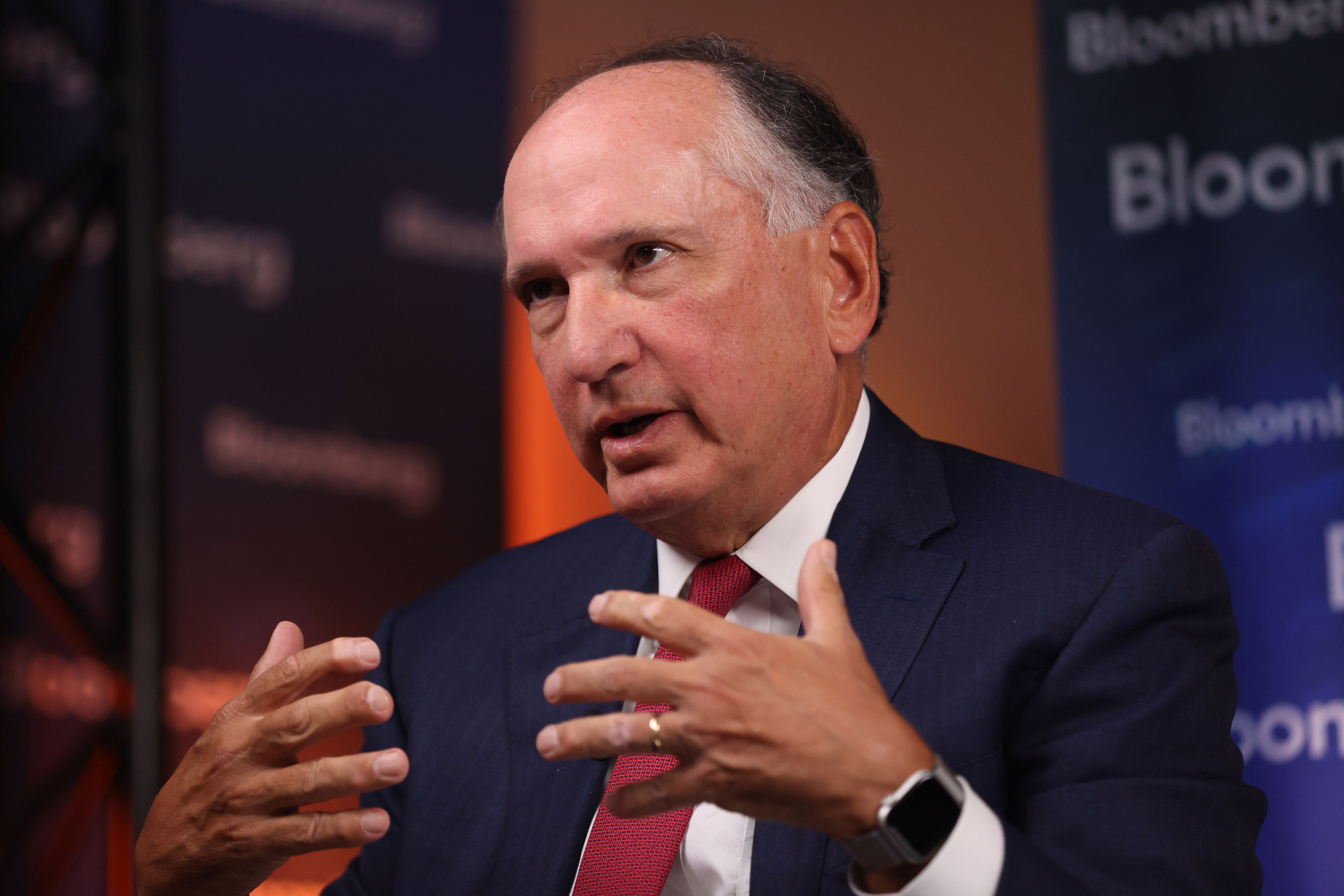
The proposals appear "somewhat bizarrely" to be a response to the problems at U.S. regional banks in March, according to Citigroup Chairman John C. Dugan.
Citigroup's Dugan says U.S. capital plan threatens bank lending
Denaro elettronico
Riepilogo
The proposals appear "somewhat bizarrely" to be a response to the problems at U.S. regional banks in March, according to Citigroup Chairman John C. Dugan.