Amazon Private Label Pullback May Not Be What It Seems
Riepilogo
As inflation ebbs, shoppers continue to trade down while cautiously increasing their spending. Many consumers have had to drastically change their shopping behavior to stretch their household budget further since inflation took hold of the economy in 2021. One strategy is to cut down on the quantity of goods purchased, while another, trading down, may involve leveraging discount merchants as well as private label goods. The accompanying chart from PYMNTS’ May “Consumer Inflation Sentiment” report notes that 58% are willing to “downgrade” for at least one retail product, and details which products consumers are targeting. The same “Inflation Sentiment” report reflected similar findings when it came to grocery products, although to a slightly lesser extent, with 47% of consumers willing to trade down on these items. Indeed, as the stigma around dollar stores and discounts fades, consumers have been increasingly willing to look past their former brand name loyalties for certain items and entertain private-label goods, also known as generics. In a November PYMNTS interview, Barbara Connors, vice president of commercial insights at 84.51°, the marketing insights subsidiary of grocery giant Kroger, detailed the drivers behind consumers making the private label switch. “Historically, the reasons why someone may continue to be brand loyal just may not hold anymore because people are being forced due to financial constraints to make tradeoffs that they wouldn’t want to make,” Connors said. Retailers with the capacity to do so have been quick to offer private-label items in order to retain their customer base. Given this shopper enthusiasm for private-label goods, it at first seemed strange that Amazon recently made headlines about scaling back dozens of the company’s private label brands. Over the past year, Amazon has eliminated all but three of what had been 30 clothing brands, and will phase out two of its three furniture brands. In a move partially attributed to a Federal Trade Commission (FTC) investigation and expected lawsuit, Amazon is also pulling back in order to streamline its offerings to consumers. As private-label sales only account for 1% of its business, Amazon seems to be doing double duty in trimming the unprofitable while shoring up its FTC defense. Fueling this notion was the news shortly after the pullback announcement that Amazon would be adding its private-label 365 by Whole Foods Market, currently offered only in its subsidiary Whole Foods’ brick-and-mortar locations, to its online marketplace. Ultimately, it seems that Amazon is following other retailers in offering consumers what they want — in this case, private-label goods. However, by cutting clutter, the eCommerce giant may be ahead of the profitability curve in being choosy in its offerings.The post Amazon Private Label Pullback May Not Be What It Seems first appeared on PYMNTS.com.
18 million users of Coins.ph are expected to receive a faster, lower-cost and more accessible remittance option as a result of the new partnership with Ci…
USDC issuer partners with Philippines exchange to promote stablecoin
Denaro elettronico · Trasferimento di denaro
Riepilogo
18 million users of Coins.ph are expected to receive a faster, lower-cost and more accessible remittance option as a result of the new partnership with Circle.
At Sibos 2023, Grayson Clarke, Head of Market Planning and Marketing, LexisNexis® Risk Solutions, presents insights from the recent True Cost of Financial…
At Sibos 2023, Grayson Clarke, Head of Market Planning and Marketing, LexisNexis® Risk Solutions, presents insights from the recent True Cost of Financial Crime Compliance Study, conducted by Forrester Consulting, on how the evolving financial landscape is being shaped by an intricate network of regulations and sanctions, and the increasing use of AI.
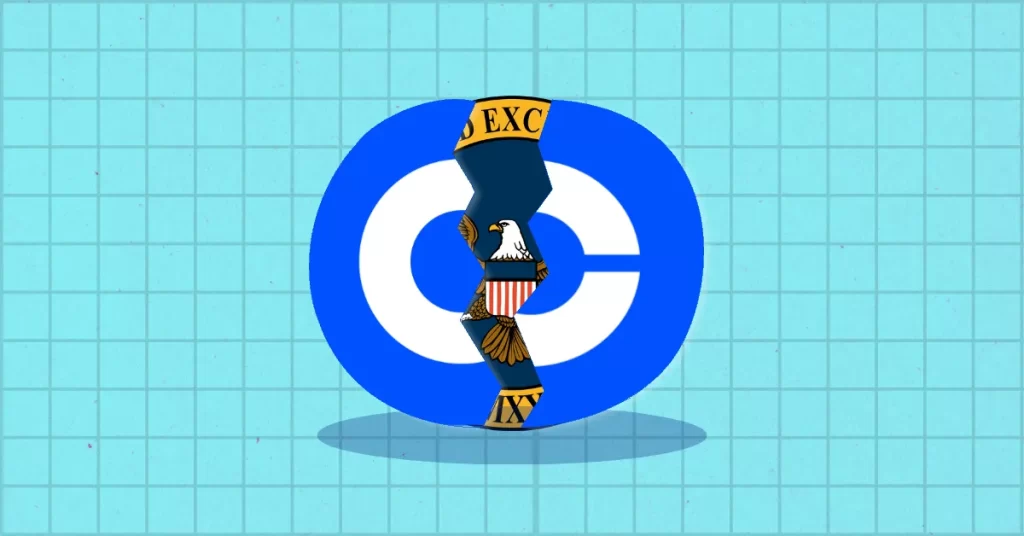
The post SEC Gains Amicus Curiae Support Against Coinbase in Legal Clash appeared first on Coinpedia Fintech News The U.S. SEC is making significant moves…
SEC Gains Amicus Curiae Support Against Coinbase in Legal Clash
Trasferimento di denaro · Denaro elettronico
Riepilogo
The post SEC Gains Amicus Curiae Support Against Coinbase in Legal Clash appeared first on Coinpedia Fintech News The U.S. SEC is making significant moves against both Coinbase and Ripple. While Ripple seems beyond immediate reach, the SEC focuses on Coinbase. They are actively seeking support from industry heavyweights in their case against the exchange. Following a failed attempt to convince a Judge to file an interlocutory appeal in the Ripple lawsuit, the SEC brought multiple amicus curiae against Coinbase. TradFi grey hairs file Amicus Curiae on behalf *drum roll* the SEC, in SEC vs. Coinbasehttps://t.co/ukeHcfcX8BNASAA landing page screenshot and story attached. PROTECT. pic.twitter.com/DczmmRVlm5— Mikko Ohtamaa (@moo9000) October 10, 2023 Multiple Amicus Curiae: SEC’s Dying Bet In the ongoing U.S. Securities and Exchange Commission v. Coinbase lawsuit, the SEC has enlisted various securities and legal entities to file amicus curiae against Coinbase. The American Securities Administrators Association (NASAA), New Finance Institute, and Administrative Law Scholars are all siding with the U.S. SEC. Having faced a setback in the Ripple lawsuit with Judge Analisa Torres, the U.S. Securities and Exchange Commission (SEC) is now working to bolster its position in the Coinbase lawsuit. The North American Securities Administrators Association (NASAA) has submitted an amicus brief, urging the court to reject Coinbase’s motion. Their arguments range from Congress’s broad definition of “security” for effective investment regulation to the assertion that Coinbase’s staking program qualifies as an investment contract. The New Finance Institute (NFI) has also supported the SEC, emphasizing that neither “investing” nor “contract” are prerequisites for identifying an “Investment Contract.” They argue that the SEC has the authority to regulate crypto and request the court to deny Coinbase’s motion. Additionally, Administrative Law Scholars Professors Todd Phillips and Beau Baumann have filed amicus briefs supporting the SEC, urging the court to deny Coinbase’s motion. Coinbase’s Stance On the opposing side, After John Deaton managed to get 1,500 users to support the case, it is evident that some experienced lawyers fraternity backs Coinbase. Currently, Coinbase enjoys the support of Republican Senator Cynthia Lummis, who, along with others, has filed an Amicus Brief urging the Judge to dismiss the case. Coinbase has countered these claims, asserting that the SEC lacks jurisdiction over the crypto industry and its actions go beyond the regulatory framework. Analyst Rebuffs Coinbase’s Dubious Claims Ali Martinez, a famous Crypto expert, took a sharp jab at Coinbase’s portrayal of the “digital asset industry” as a major player in the American economy, deeming it a dubious claim. He argued that, in reality, most digital assets are primarily used for speculative purposes and lack broad practical applications, such as being widely accepted for payments or satisfying government obligations like taxes. “The Court should decline to treat digital assets as somehow special.” This challenges Coinbase’s assertion about the industry’s significant role in economic and political contexts. It’s a heated back-and-forth in the ongoing legal saga!
Verifone, a leading global provider of payment solutions, announces that Mike Kohlsdorf has joined the company as CEO, succeeding Mike Pulli, who is stepp…
Verifone, a leading global provider of payment solutions, announces that Mike Kohlsdorf has joined the company as CEO, succeeding Mike Pulli, who is stepping down after five years with the organization.
New data from the Federal Trade Commission shows that scams originating on social media have accounted for $2.7 billion in reported losses since 2021, mor…
FTC reports that scams on social media have accounted for $2.7 billion in reported losses since 2021
Denaro elettronico
Riepilogo
New data from the Federal Trade Commission shows that scams originating on social media have accounted for $2.7 billion in reported losses since 2021, more than any other contact method.