Decoding Blackrock’s Bitcoin Influence: Mining Monopoly and ETF Secrets
Riepilogo
The post Decoding Blackrock’s Bitcoin Influence: Mining Monopoly and ETF Secrets appeared first on Coinpedia Fintech News As the world was glued to the news of the Securities and Exchange Commission (SEC) delaying the approval of six Bitcoin spot ETFs, a few significant developments were quietly unfolding behind the scenes. Events that could arguably signal a potential orchestrated move by Blackrock, the world’s largest asset manager, in the Bitcoin ecosystem. Last week the Blackrock attack on Bitcoin escalated!While everyone was distracted by the recent SEC delay of the 6 Bitcoin spot ETFS, 2 BIG events just got swept under the rug!Let's examine how these 3 events together, signal a potential Blackrock attack on Bitcoin is… pic.twitter.com/K5ELfGuWBT— Satoshi (@satoshimoneybtc) September 19, 2023 Blackrock’s Mining Monopoly Blackrock has secured majority shareholding in 4 out of the 5 largest Bitcoin miners by market capitalization. The stakes are: Though Bitcoin is not a Proof of Stake (POS) cryptocurrency, making Blackrock’s influence seemingly less harmful, there’s more to this than meets the eye. Bitcoin mining is a significant determinant of its governance and future changes. Blackrock’s ownership in these major mining companies could, hypothetically, offer a lever to influence Bitcoin’s network decisions, should the asset manager opt to exert its influence. Adding fuel to the fire is the fact that the two largest Bitcoin mining pools now require their users to go through the Know Your Customer (KYC) process. KYC, previously a requisite only for regulated exchanges, now extends its tentacles into the mining realm. This compliance shift could reduce the decentralization ethos that Bitcoin has held since its inception. Why it Matters The infusion of KYC into mining pools could potentially allow companies like Blackrock to access significant amounts of data related to Bitcoin transactions. This is an alarming trend given the increasing institutionalization of Bitcoin mining. Let’s not forget that the SEC has conveniently delayed its decision on six Bitcoin spot ETFs. Among the applicants? You guessed it—Blackrock. The other companies facing delays include Invesco Galaxy, WisdomTree, Valkyrie, Bitwise, and Fidelity. The delays raise eyebrows, not because of the delay itself—which is quite typical of the SEC—but due to the simultaneous backdoor moves made by Blackrock. Is the asset manager using this as a smoke screen for its actions in the mining space? Blackrock’s Mysterious ETF Wording On Page 24 of Blackrock’s original Bitcoin ETF filing, the company states that they are under no obligation to “choose the most economic chain in the event of a Bitcoin hard fork.” Why wouldn’t Blackrock commit to selecting the most valuable Bitcoin fork? Could they be planning to create a hard fork themselves, nudging their investors onto an uneconomic chain? While we’re not making any assertions about Blackrock’s intentions, we cannot ignore the possibility that they might be subtly laying the groundwork for something more extensive!
The post Ripple vs. SEC: Another Win For Ripple As Judge Torres DENIED SEC’s Motion to File an Interlocutory Appeal. appeared first on Coinpedia Fintech N…
Ripple vs. SEC: Another Win For Ripple As Judge Torres DENIED SEC’s Motion to File an Interlocutory Appeal.
Servizi per le banche · Trasferimento di denaro · Denaro elettronico
Riepilogo
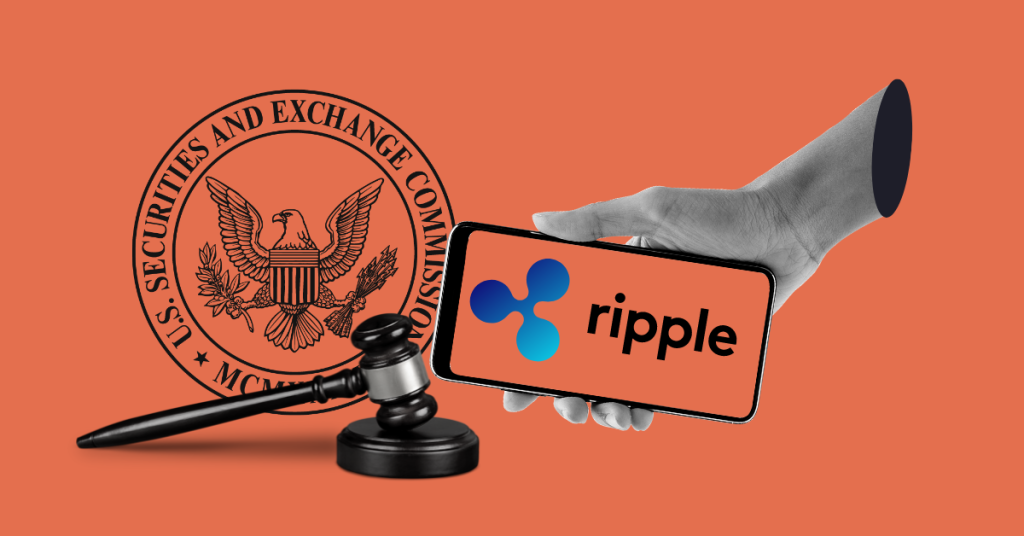
The post Ripple vs. SEC: Another Win For Ripple As Judge Torres DENIED SEC’s Motion to File an Interlocutory Appeal. appeared first on Coinpedia Fintech News The U.S. Securities and Exchange Commission (SEC) experienced a setback in its legal battle against Ripple, a prominent digital payment protocol and cryptocurrency (XRP). The SEC’s motion to appeal a previous loss was denied by District Judge Analisa Torres, sparking various reactions within the crypto community and impacting XRP’s market position. Let’s delve into the details of this case and explore its implications in a simplified manner. The Denied Motion: A Closer Look On August 18th, the SEC filed a pre-motion for an interlocutory appeal against a court judgment. Initially, Judge Analisa Torres granted permission for the SEC to file the appeal. However, the request was ultimately denied by Judge Torres. She ruled that the SEC had failed to provide sufficient evidence to justify the appeal, stating that it would not “materially advance the ultimate termination of the litigation.” #XRPCommunity #SECGov v. #Ripple #XRP BREAKING: Judge Torres has DENIED the SEC’s Motion to File an Interlocutory Appeal. https://t.co/czEIz93Vfn— James K. Filan (@FilanLaw) October 3, 2023 The Howey Test Controversy One of the central points of contention was the SEC’s claim that the court had improperly applied the Howey test to the case. In her rejection of the appeal, Judge Torres emphasized that the Howey test was irrelevant to this particular case. She cited a 2009 lawsuit to support her argument, stating that the circumstances surrounding the Howey test did not warrant consideration for an interlocutory appeal. Judge Torres’s decision to deny the SEC’s motion to appeal was grounded in the absence of substantial grounds for differences of opinion on controlling legal questions. This means the SEC failed to demonstrate a significant legal dispute or ambiguity that warranted an appeal. While this is a setback for the SEC, the case is far from over, with a trial date set for April 2024 to resolve the remaining issues. Ripple’s lawyer, John Deaton, correctly anticipated the outcome, believing that the SEC’s motion for an appeal would be rejected. He speculated that this would allow Judge Torres to clarify her reasoning further and make the case “appeal-proof.” Indeed, Judge Torres reinforced her reasoning and upheld the rejection of the SEC’s appeal. Following the announcement of the denied appeal, XRP price experienced a notable rally, increasing by about 5%. While the denied motion is a positive development for Ripple and its supporters, the journey through the legal corridors is not concluded. The upcoming trial in 2024 will further explore unresolved issues and could still swing in favor of either party.
The regulator has asked a federal judge to deny Coinbase’s motion to dismiss its lawsuit, claiming the exchange knew the cryptocurrencies it sold were sec…
SEC asks judge to reject Coinbase’s motion to dismiss lawsuit
Denaro elettronico
Riepilogo
The regulator has asked a federal judge to deny Coinbase’s motion to dismiss its lawsuit, claiming the exchange knew the cryptocurrencies it sold were securities under the Howey test.
M&T Bank, Truist Financial and Eastern Bankshares are among the banks that have sold all or part of their insurance subsidiaries over the last year. T…
Banks' insurance units are fetching top dollar, but selling brings risk
Investimenti · Denaro elettronico
Riepilogo
M&T Bank, Truist Financial and Eastern Bankshares are among the banks that have sold all or part of their insurance subsidiaries over the last year. Though the price is right, analysts warn that when interest rates decline, sellers will be without a key source of fee income.
HSBC, Nationwide, Tesco Bank, Newday and Ovo have joined with Experian to launch a one-stop portal for disabled consumers to tell multiple service provide…
Banks join with Experian to launch 'tell-it-once' platform for disabled consumers
Servizi bancari
Riepilogo
HSBC, Nationwide, Tesco Bank, Newday and Ovo have joined with Experian to launch a one-stop portal for disabled consumers to tell multiple service providers how they need to be contacted and what support they need to access their services.
Saga, the British brand focussed on providing products and services to the over 50s, has teamed up with cash deposit platform Flagstone on a savings platf…
Saga partners Flagstone on savings platform for over-50s
Servizi bancari
Riepilogo
Saga, the British brand focussed on providing products and services to the over 50s, has teamed up with cash deposit platform Flagstone on a savings platform.