Facial Recognition Debate Gathers Steam Despite Popularity Among Gen Z Consumers
Riepilogo
As the use of facial recognition software continues to expand around the world, concerns about privacy and human rights violations have reignited the debate surrounding this technology. On Friday (Oct. 6), a bipartisan group of 65 British lawmakers called for an immediate ban on live facial recognition surveillance on U.K. streets by both the police and private companies, Reuters reported. The use of the technology in the United Kingdom has faced consistent criticism from organizations advocating for civil liberties, including Amnesty International, and faces a proposed ban in the European Union under the EU’s landmark artificial intelligence (AI) regulation. On one hand, law enforcement officials have expressed optimism about the transformative potential of facial recognition technology in criminal investigations, but privacy advocates are concerned about privacy, human rights and the lack of sufficient regulation. The U.K.’s call for a ban on facial recognition comes at a time when other governments are taking steps to address concerns about biometrics. For example, China’s Cyberspace Administration (CAC) has introduced draft regulations calling for limits on facial recognition, proposing instead the use of non-biometric means to identify people. “The use of face recognition technology to process face information shall obtain the individual’s individual consent or obtain written consent in accordance with the law,” the proposal noted, per an Aug. 8 PYMNTS report. “If there are non-biometric verification technologies for achieving a similar purpose or business requirements, those non-biometric verification methods should be preferred.” In May, the Federal Trade Commission (FTC) issued a policy statement warning that the technology could lead to discrimination and violations of privacy. “In recent years, biometric surveillance has grown more sophisticated and pervasive, posing new threats to privacy and civil rights,” Samuel Levine, director of the FTC’s Bureau of Consumer Protection, said. “Today’s policy statement makes clear that companies must comply with the law regardless of the technology they are using.” Young Consumers Drive Biometric Adoption Meanwhile, most U.S. consumers seem unfazed by the intensifying debate surrounding AI facial recognition and continue to embrace biometrics tools as their most preferred way to authenticate payments. In fact, out of 60% of consumers who completed online purchases in a given period, 51% used biometric authentication to validate their transactions, eliminating the need to remember passwords or enter credit card information. This is one of the key findings in “Tracking the Digital Payments Takeover: Biometric Authentication in the Age of Mobile,” a PYMNTS Intelligence and AWS collaboration. The study also reveals that facial recognition and fingerprint scans are the most popular biometric methods, with approximately 28% and 49% of consumers, respectively, adopting them. Moreover, nearly 60% of facial recognition users use the method more than once weekly. Another interesting finding from the research is the contrast in biometric authentication adoption across different generations. While 84% of baby boomers and seniors have not used biometric authentication methods in the past 30 days, three out of four Gen Z and millennial consumers have incorporated biometrics into their routines. Among these younger generations, facial recognition is particularly popular among Gen Z consumers (51%) while millennials are more likely to prefer fingerprint scans, with 42.1% using them. Ultimately, the widespread adoption of biometric authentication tools by consumers signals a shift toward more convenient and secure payment methods. However, the balance between convenience and safeguarding individual rights and data will be a critical point of discussion in the evolving landscape of digital payments and biometrics. The coming years will likely bring further developments and changes as technology advances and society grapples with the implications of these innovations.The post Facial Recognition Debate Gathers Steam Despite Popularity Among Gen Z Consumers first appeared on PYMNTS.com.
The Clearing House’s RTP network and The Fed's FedNow network are prepared to tackle interoperability eventually — but for now, its value remains minimal.
FedNow, RTP interoperability is inevitable — down the line
Denaro elettronico
Riepilogo
The Clearing House’s RTP network and The Fed's FedNow network are prepared to tackle interoperability eventually — but for now, its value remains minimal.
The post Solana Struggles Amid Intense Bearish Pressure at Resistance Lines: What’s Next for SOL Price appeared first on Coinpedia Fintech News Solana pri…
Solana Struggles Amid Intense Bearish Pressure at Resistance Lines: What’s Next for SOL Price
Blockchain · Denaro elettronico
Riepilogo
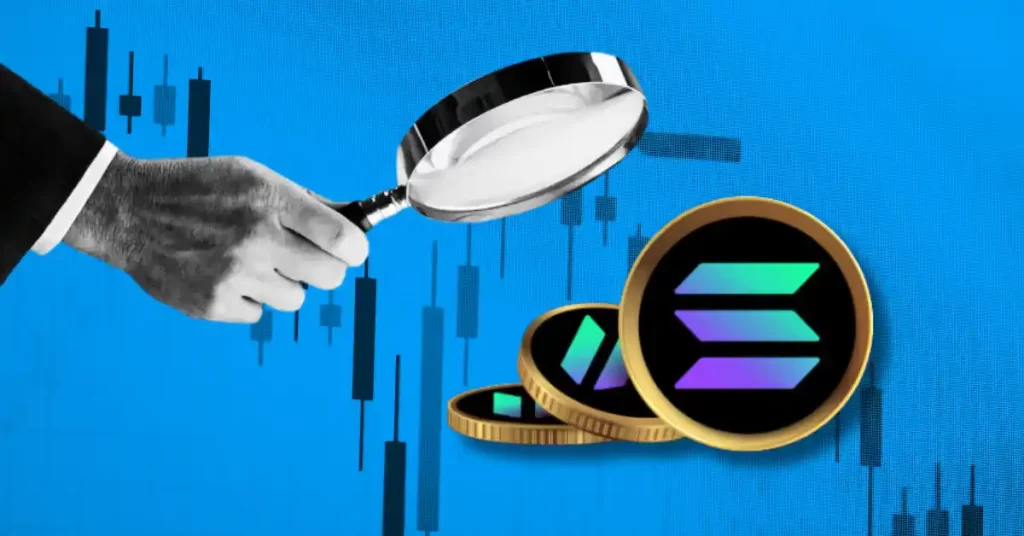
The post Solana Struggles Amid Intense Bearish Pressure at Resistance Lines: What’s Next for SOL Price appeared first on Coinpedia Fintech News Solana price has been declining steeply following the SEC’s approval of spot Ethereum ETFs. For example, the SOL/ETH pair, which is closely monitored, has dropped by 16.8% since May 17 following the U.S. Securities and Exchange Commission’s (SEC) request for Ether ETF applicants to revise their 19b-4 filings. Additionally, there’s a decline in activity in the SOL ecosystem, suggesting further bearish pressure on the edge. Analysts Expect SOL ETF By 2025 Solana might be losing its momentum to Ethereum following SEC’s approval of spot ETH ETF. However, analysts believe that Solana is not far from having its own ETF. Geoffrey Kendrick, an analyst at Standard Chartered, predicts that SOL and XRP ETFs could receive approval by 2025. Kendrick suggests that the recent approval of the ETH ETF implies that Ether and altcoins may not be classified as securities. Analysts from The Birb Nest have observed that discussions around a Solana ETF are surging on crypto Twitter and in media circles, indicating that it’s likely to happen. The total value locked (TVL) within the Solana ecosystem experienced a notable decline in May. As of May 23, there were 27.48 million SOL locked, down from the monthly peak of 29.4 million SOL. This decline in Solana’s TVL was particularly sharp after May 20, following reports on the potential approval of spot Ether ETFs. On that date, the TVL was recorded at 28.3 million SOL, suggesting that the news about the Ether ETFs might have triggered the withdrawals from the Solana ecosystem. Since the Ethereum ETF approval on May 20, Solana node validators started rapidly withdrawing funds. Initially holding 368.8 million SOL in staking contracts, they withdrew 3.5 million SOL by May 24, reducing the active staking to 365.3 million SOL. Also read: Analyzing the Effect of Approval of Ethereum ETF on Solana: Market Trends and Price Prediction With Solana’s current price at $167, these unstaked SOL are valued at approximately $580 million. Such significant withdrawals from a Proof-of-Stake (PoS) network generally lead to short-term price declines. What’s Next For SOL Price? Solana price failed to break above $190 as sellers strongly defended a surge above that level, resulting in a steep decline below immediate Fib channels. SOL price dropped below its EMA trend lines too; however, buyers defended further drops below $160. As of writing, SOL price trades at $166, declining over 4% in the last 24 hours. SOL price is struggling to surpass the EMA20 trend line, indicating continued bearish pressure at higher levels. The declining EMA trend lines and the RSI level heading toward the oversold region suggest a rising dominance in bearish positions. Should buyers push past the descending resistance line, the SOL/USDT pair might aim to retest the significant resistance at $192. A break above this level might send the SOL price toward $210.
The Securities and Exchange Commission (SEC) is poised to green-light Ethereum (Ether) ETFs after years of pushback. As of this writing, it was not clear …
Denaro elettronico · Servizi per le banche · Blockchain
Riepilogo
The Securities and Exchange Commission (SEC) is poised to green-light Ethereum (Ether) ETFs after years of pushback. As of this writing, it was not clear as
Servizi: Binance, YouHodler, Digital Asset, Lolli, Ethereum, Coinbase, Bitcoin