Google and Microsoft Spar Over Training Rights to AI Data
Riepilogo
Training data is the key competitive moat when it comes to generative artificial intelligence (AI). The winner-take-most dynamics of digital tech’s operational ecosystem create network effects that frequently play out across, and are captured by, huge platforms where products and services become more valuable with a larger user network. With generative AI added into the mix, those large user networks are creating positive feedback loops by way of activatable, platform-native public data that can be fed into increasingly data-hungry AI models. Microsoft CEO Satya Nadella said Monday (Oct. 2), per Reuters, while testifying during the U.S. Justice Department’s antitrust fight against Google, that Big Tech companies are competing for vast troves of content needed to train their AI models. Without naming Microsoft competitor and Google parent Alphabet, he complained other companies are locking up exclusive deals in a way that is “problematic.” While the data landscape is becoming increasingly competitive and expensive as tech firms large and small alike ramp up their efforts to build differentiated content libraries, John Schmidtlein, Google’s lead lawyer, argued that Microsoft’s data deficit is due to a series of strategic errors and an inferior search product, according to the report. Schmidtlein noted that even when Microsoft pre-installed its Bing search engine on Windows devices, it still failed to gain more than a 20% market share, with users consistently switching to Google, the report said. Adding to Microsoft’s inability to gain a foothold in the search market was the company’s failure to prepare for the mobile revolution, Schmidtlein said, as well as its failure to appropriately invest in resources like servers and engineers to build a market-leading search product. Google’s dominance in search and position as the internet’s first stop for users also provides it a competitive advantage when it comes to building out its AI models. Read also: Does Meta’s 3.59 Billion Users Give It Competitive AI Moat? Data Deficits, Distribution Rights and the Future of AI Generative AI models are typically opaque black boxes trained on publicly available web data and further refined using licensed content. An analysis by The Washington Post in April of just one data set used for training AI found that nearly the entire 30-year history of the internet has been scraped by tech companies looking to add to the billions, even trillions, of parameters their models are trained on. The Atlantic reported Aug. 19 that a dataset known as “Books3,” which included more than 191,000 books — many of them pirated — was used to train generative AI models later published by Meta, Bloomberg and others. Today’s neural networks would not have had their breakthroughs without these digital landfills that pockmark the internet. Increasingly, every activity that takes place on the internet will in some way eventually benefit an AI model by being integrated into its vast sea of training fodder. Once a piece of data has been fed into a model, it is nearly impossible to extricate that information or un-teach the AI, Fortune reported Aug. 30. See also: Peeking Under the Hood of AI’s High-Octane Technical Needs The latest generation of Meta’s AI products announced Wednesday (Sept. 27) were trained using public posts on the company’s own Facebook and Instagram platforms. Using public data on wholly-owned products is becoming a popular way for tech platforms to build out their own distinct AI content libraries, and more companies are updating their privacy policies to allow for user data to be collected to train AI models. “The algorithm is only as good as the data that it’s trained on,” Erik Duhaime, co-founder and CEO of healthcare AI startup Centaur Labs, told PYMNTS in an interview published in May. Companies including X (formerly Twitter), Microsoft, Instacart, Meta, Zoom and more are apparently of the mind that their data is best. Elon Musk-owned X’s latest privacy agreement informed users that their biometric data, job and education history, will be used to train AI and machine learning models, Bloomberg reported Aug. 30. “We may use the information we collect and publicly available information to help train our machine learning or artificial intelligence models for the purposes outlined in this policy,” the company’s updated policy stated. Musk has threatened to sue Microsoft over the “illegal” use of data from X. Meanwhile, per a Sept. 28 Reuters report, Meta said it purposefully excluded public LinkedIn data from its training set because of privacy concerns. LinkedIn is owned by Microsoft. “A lot of people are using OpenAI’s [application programming interfaces (APIs)] to test and sort of play with [generative AI] technology,” Taylor Lowe, CEO and co-founder of AI developer platform Metal, told PYMNTS in an interview published in July. “This won’t last forever … and enterprises are right to push for data privacy, up to and including running the whole stack on their own network.” For all PYMNTS AI coverage, subscribe to the daily AI Newsletter.The post Google and Microsoft Spar Over Training Rights to AI Data first appeared on PYMNTS.com.
In "This Is How They Tell Me the World Ends," Nicole Perlroth, a former New York Times reporter, offers a detailed picture of how the zero-day exploit tra…
In "This Is How They Tell Me the World Ends," Nicole Perlroth, a former New York Times reporter, offers a detailed picture of how the zero-day exploit trade developed and affects critical infrastructure.
The post First Bitcoin ETF, Now Ethereum ETF, Whose Next SOL, XRP? appeared first on Coinpedia Fintech News On January 11, the U.S. Securities and Exchang…
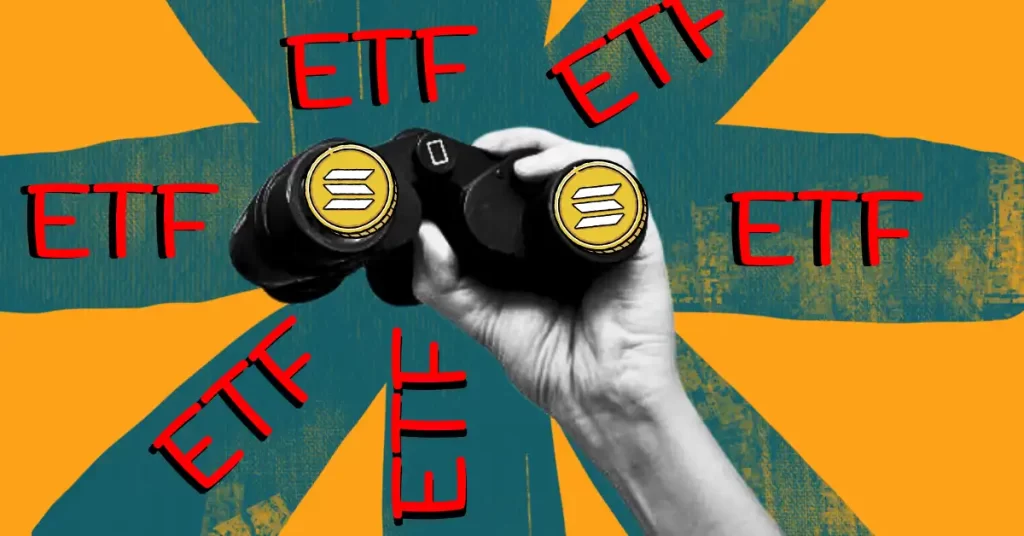
First Bitcoin ETF, Now Ethereum ETF, Whose Next SOL, XRP?
Denaro elettronico · Blockchain · Servizi per le banche
Riepilogo
The post First Bitcoin ETF, Now Ethereum ETF, Whose Next SOL, XRP? appeared first on Coinpedia Fintech News On January 11, the U.S. Securities and Exchange Commission (SEC) approved the first Spot Bitcoin ETF. Four months later, the SEC approved another spot ETF, this time for Ethereum. This highlights the SEC’s evolving stance toward crypto adoption. Meanwhile, Crypto analysts at Standard Chartered weighed in on the potential ETF launch for other altcoins. Solana & XRP ETFs On The Line With Ethereum ETFs now on the market, attention is shifting towards other potential candidates for ETF approval. Geoffrey Kendrick, Head of Forex and Digital Assets Research at Standard Chartered Bank, suggests that Solana (SOL) and XRP ETFs could be approved as early as 2025. JUST IN: Standard Chartered analyst Geoffrey Kendrick said that cryptocurrency ETFs such as SOL and XRP may be approved in 2025, and the approval of the ETH ETF means that ETH and similar cryptocurrencies will not be classified as securities. pic.twitter.com/RECYwTnVRr— SolanaFloor (@SolanaFloor) May 24, 2024 Kendrick further highlights that the SEC’s treatment of Ethereum could set a precedent for other cryptocurrencies. He points out that if Ethereum is not considered a security, other coins with similar characteristics, such as Solana and XRP, might also evade this classification. Kendrick notes that the recent approval of Ethereum ETFs implies that ETH-like coins, which share similar technological foundations, may not be classified as securities by the SEC. The Future of Crypto ETFs Crypto analyst The Birb Nest observes that the narrative around a Solana ETF is gaining momentum on crypto Twitter and among media outlets. He suggests that while regulation will take time, the anticipation of a Solana ETF is growing. In the meantime, market participants are encouraged to drive a “full-blown meme mania” around Solana, similar to the hype seen with meme tokens like Dogecoin (DOGE) and Shiba Inu (SHIB). They will try to push the narrative that $SOL is another ETF.This will probably happen, but they definitely need more time and they need to introduce a legitimate #crypto regulatory framework.It will take time, but before they do that in the meantime we can unleash a… https://t.co/kHDZ1SMTwx— THE ₿IRB NEST (@TheBirbNest) May 24, 2024 BTC+ETH dominance will rise’ However, Kendrick predicts that Bitcoin and Ethereum will continue to dominate the market. He expects a strong inflow of investments into spot Bitcoin ETFs, projecting a potential BTC price target of $150,000 by the end of the year. This expected increase in Bitcoin and Ethereum dominance suggests that they will remain key players in the evolving landscape of cryptocurrency ETFs. As the SEC continues to pave the way for more crypto ETFs, the future looks promising for digital assets like Solana and XRP.
The post Ondo Hits New Highs Above $1; Will the Price Cross the Final Barrier to Reach $1.5? appeared first on Coinpedia Fintech News Bullish clouds are h…
Ondo Hits New Highs Above $1; Will the Price Cross the Final Barrier to Reach $1.5?
Denaro elettronico
Riepilogo
The post Ondo Hits New Highs Above $1; Will the Price Cross the Final Barrier to Reach $1.5? appeared first on Coinpedia Fintech News Bullish clouds are hovering over the crypto space as traders have become optimistic, followed by the approval of the spot Ethereum ETF. The traders became more sure of the next price action when the ETH price surged magnificently but fell short of a few dollars in reaching $4000. In the meantime, some altcoins have been maintaining a steep upswing while some are recording new ATH like Ondo, which has surged over 15% in the past 24 hours. After such a massive rally, many may expect a bearish pullback, but from a larger perspective, the token appears to be preparing for a fresh upswing, targeting another 40% upswing. The SEC approving the spot ETH ETF has catalysed the ongoing bullish upswing which has also led to the speculations of an altseason in a short while. ONDO price shot up by over 20% to reach $1.16 after consolidating below $1 for a few days. With this, the accumulated bullish momentum may assist a continued upswing for the rest of the month. As seen in the above chart, the ONDO price has been maintaining a strong bullish trend since the beginning. Meanwhile, the price is facing some hindrances in rising above the average bands of the rising parallel channel, but the bulls may lift the levels very soon. The RSI is in an incremental stage and may surge to reach within the overbought levels. This may offer the required push, but the price may refrain from reaching the upper resistance level of $1.5. Besides, the volume is also slowly piling up, which is offering the bulls the required momentum. Hence, the Ondo price is expected to maintain an elevated trend until the end of the month and discover new highs. Nevertheless, the price could rise and hit the upper resistance levels at $1.5 in the first few days of June, which will be a decisive phase for the token. If bulls hold their dominance, then a breakout could occur; otherwise, a rejection may cause the price to test lower support levels until it finds a strong base to trigger a rebound.