Next-Level Care: Generative AI Poised for $22B Growth in Healthcare
Riepilogo
The generative artificial intelligence (AI) market for healthcare is valued at more than $1 billion as of 2022, and it is projected to swell to nearly $22 billion by 2032. Technology giants, venture capitalists and private equity firms will play a significant role in that market, acting as investors, partners and innovators. Meanwhile, healthcare companies — including providers, payers, pharmaceutical companies and others — recognize generative AI’s potential to transform health and medicine and are teaming up with tech giants and startups to introduce cutting-edge AI technology to all aspects of care — from research to treatment to billing. The “Generative AI Tracker®” delves into the current state and future potential of generative AI in healthcare. It explores various use cases, examines issues and challenges, and offers examples of emerging regulations. This edition highlights select startups addressing complex healthcare challenges, including drug discovery, patient care and clinical decisions. Generative AI Companies Stand Poised to Transform the Care Continuum Healthcare-focused companies and startups are turning to generative AI innovations to tackle complex drug discovery, diagnostic testing and patient care challenges. They are securing investments, emerging from stealth mode and announcing new clients. In some instances, they are also being acquired, following a pattern commonly seen when technology becomes more established. To learn more, visit the Tracker’s Companies of Note section. Generative AI Can Improve Medical Research, Drug Development and Patient Care Large language models (LLMs), the core of generative AI, offer many applications beyond drug discovery, promising to reshape other aspects of healthcare, including provider-patient interactions and care delivery. The U.S. Department of Health and Human Services (HHS) maintains a growing list of complex and detailed AI use cases deployed or in development within the federal government. To learn more, visit the Tracker’s Innovation and Use Cases section. Generative AI’s Technology Is Not Fully Optimized for Healthcare Generative AI faces many growing pains as it seeks its footing. In a recent survey, management consulting firm Bain & Company revealed that the main barriers to generative AI in healthcare are a lack of resources, expertise and regulation, with data access and quality and organizational resistance close behind. The recurring theme across industry studies is that generative AI in healthcare is nascent and needs time to prove its efficacy and to earn public trust. To learn more, visit the Tracker’s Issues and Challenges section. About the Tracker The “Generative AI Tracker®,” a collaboration with AI-ID, delves into the current state and future potential of generative AI in healthcare. This edition examines the role that generative AI can play in transforming critical aspects of healthcare, from research to treatment.The post Next-Level Care: Generative AI Poised for $22B Growth in Healthcare first appeared on PYMNTS.com.
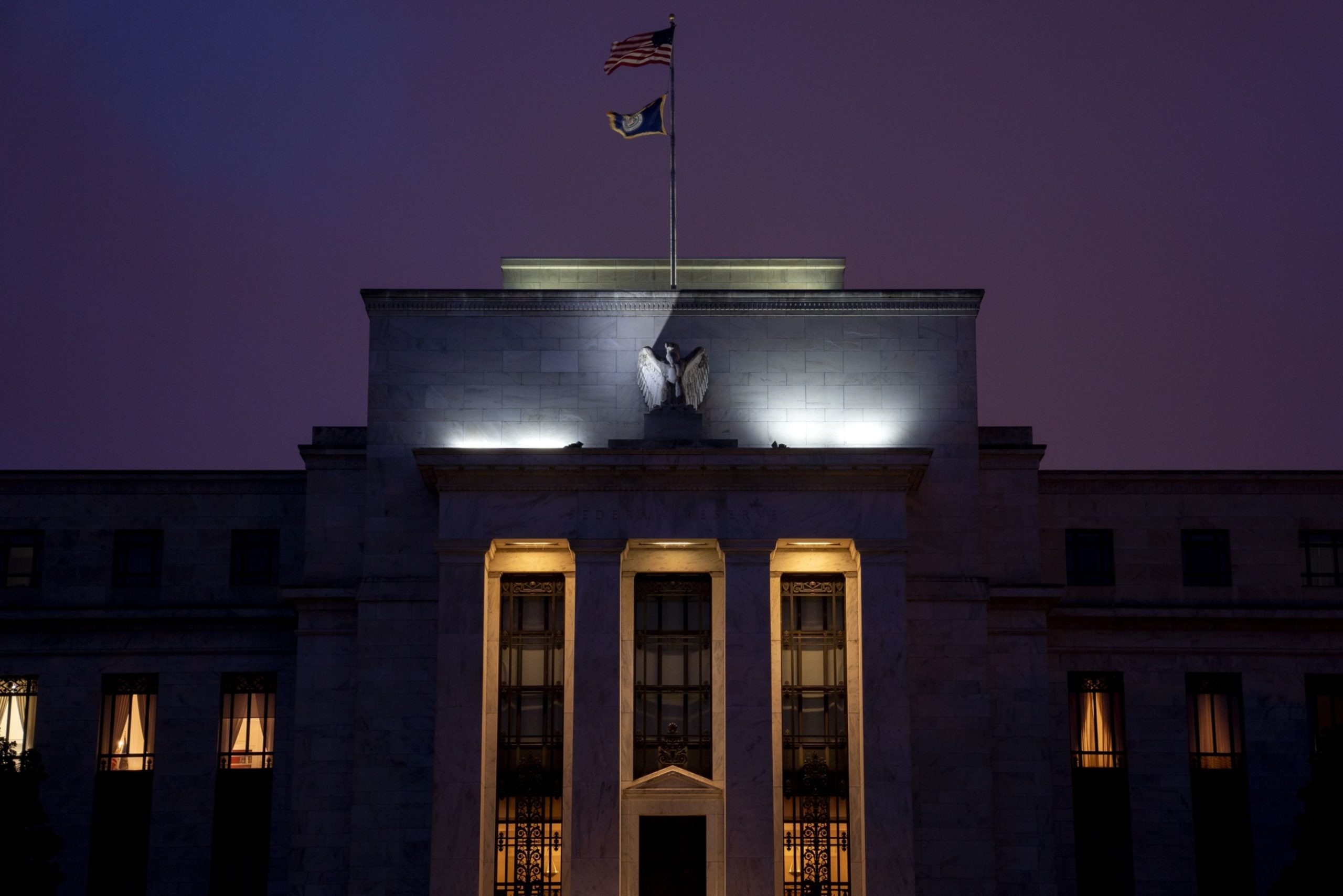
The Clearing House’s RTP network and The Fed's FedNow network are prepared to tackle interoperability eventually — but for now, its value remains minimal.
FedNow, RTP interoperability is inevitable — down the line
Denaro elettronico
Riepilogo
The Clearing House’s RTP network and The Fed's FedNow network are prepared to tackle interoperability eventually — but for now, its value remains minimal.
The post Solana Struggles Amid Intense Bearish Pressure at Resistance Lines: What’s Next for SOL Price appeared first on Coinpedia Fintech News Solana pri…
Solana Struggles Amid Intense Bearish Pressure at Resistance Lines: What’s Next for SOL Price
Blockchain · Denaro elettronico
Riepilogo
The post Solana Struggles Amid Intense Bearish Pressure at Resistance Lines: What’s Next for SOL Price appeared first on Coinpedia Fintech News Solana price has been declining steeply following the SEC’s approval of spot Ethereum ETFs. For example, the SOL/ETH pair, which is closely monitored, has dropped by 16.8% since May 17 following the U.S. Securities and Exchange Commission’s (SEC) request for Ether ETF applicants to revise their 19b-4 filings. Additionally, there’s a decline in activity in the SOL ecosystem, suggesting further bearish pressure on the edge. Analysts Expect SOL ETF By 2025 Solana might be losing its momentum to Ethereum following SEC’s approval of spot ETH ETF. However, analysts believe that Solana is not far from having its own ETF. Geoffrey Kendrick, an analyst at Standard Chartered, predicts that SOL and XRP ETFs could receive approval by 2025. Kendrick suggests that the recent approval of the ETH ETF implies that Ether and altcoins may not be classified as securities. Analysts from The Birb Nest have observed that discussions around a Solana ETF are surging on crypto Twitter and in media circles, indicating that it’s likely to happen. The total value locked (TVL) within the Solana ecosystem experienced a notable decline in May. As of May 23, there were 27.48 million SOL locked, down from the monthly peak of 29.4 million SOL. This decline in Solana’s TVL was particularly sharp after May 20, following reports on the potential approval of spot Ether ETFs. On that date, the TVL was recorded at 28.3 million SOL, suggesting that the news about the Ether ETFs might have triggered the withdrawals from the Solana ecosystem. Since the Ethereum ETF approval on May 20, Solana node validators started rapidly withdrawing funds. Initially holding 368.8 million SOL in staking contracts, they withdrew 3.5 million SOL by May 24, reducing the active staking to 365.3 million SOL. Also read: Analyzing the Effect of Approval of Ethereum ETF on Solana: Market Trends and Price Prediction With Solana’s current price at $167, these unstaked SOL are valued at approximately $580 million. Such significant withdrawals from a Proof-of-Stake (PoS) network generally lead to short-term price declines. What’s Next For SOL Price? Solana price failed to break above $190 as sellers strongly defended a surge above that level, resulting in a steep decline below immediate Fib channels. SOL price dropped below its EMA trend lines too; however, buyers defended further drops below $160. As of writing, SOL price trades at $166, declining over 4% in the last 24 hours. SOL price is struggling to surpass the EMA20 trend line, indicating continued bearish pressure at higher levels. The declining EMA trend lines and the RSI level heading toward the oversold region suggest a rising dominance in bearish positions. Should buyers push past the descending resistance line, the SOL/USDT pair might aim to retest the significant resistance at $192. A break above this level might send the SOL price toward $210.
The Securities and Exchange Commission (SEC) is poised to green-light Ethereum (Ether) ETFs after years of pushback. As of this writing, it was not clear …
Denaro elettronico · Servizi per le banche · Blockchain
Riepilogo
The Securities and Exchange Commission (SEC) is poised to green-light Ethereum (Ether) ETFs after years of pushback. As of this writing, it was not clear as
Servizi: Binance, YouHodler, Digital Asset, Lolli, Ethereum, Coinbase, Bitcoin