Sam Bankman-Fried Criminal Trials – Complete Details on Recent Hearings
Riepilogo
The post Sam Bankman-Fried Criminal Trials – Complete Details on Recent Hearings appeared first on Coinpedia Fintech News Sam Bankman-Fried, co-founder of the cryptocurrency exchange FTX, began facing trial on October 3rd, a case that has drawn widespread attention due to its high-profile nature. With Bankman-Fried confronting seven charges related to conspiracy and fraud following the collapse of FTX, the trial has become a focal point in legal discussions within the cryptocurrency sector. This article delves into the pivotal assertions made by the Department of Justice (DOJ) and Bankman-Fried’s legal team during the initial trial phases. Oct 04: Day 2: Witness Testimonies On the second day of the trial, the jury heard testimonies from two witnesses: Mark Julliard, a former FTX client, and Adam Yedidia, a former employee of both Alameda Research and FTX. Mark Julliard’s Testimony: Julliard revealed that he had significant investments in FTX, totaling nearly $100,000 in Bitcoin, and had trusted the exchange due to its marketing efforts and notable venture capital support. However, he was unaware that FTX was using client funds for crypto trading with Alameda Research. Adam Yedidia’s Testimony: Yedidia’s testimony revolved around his educational background at MIT, where he first met Bankman-Fried and his professional experiences with the FTX founder. He worked briefly at Alameda 2017 as a trader and later returned to work for FTX in 2021 as a developer. Yedidia’s testimony also highlighted FTX’s marketing campaigns, portraying the exchange as safe and trusted. The trial will resume on Oct. 5. Oct 03: Day 1: Opening Statements and Initial Arguments Jury Selection: The trial began with the crucial process of jury selection on October 3rd. The selection aimed to identify an impartial and fair group of jurors who would play a pivotal role in determining the outcome of this case. Jurors were questioned about their preconceptions regarding cryptocurrency, Sam Bankman-Fried, and FTX. The court even inquired about their thoughts on topics such as Attention Deficit Hyperactive Disorder (ADHD), which could potentially influence Bankman-Fried’s body language during the trial. Opening Statements: Following the jury selection process, both the prosecution (DOJ) and the defense had the opportunity to present their opening statements to the 12-person jury. These initial statements set the stage for the arguments unfolding during the trial. The DOJ’s Stance: The Department of Justice took a firm stance in its opening statement, portraying Sam Bankman-Fried as a deliberate deceiver who had enriched himself by misleading investors and expanding his cryptocurrency empire. They alleged that Bankman-Fried had lied to FTX customers and investors while using Alameda as a partner to “steal customers’ funds.” Key DOJ Arguments: The DOJ’s arguments primarily revolve around allegations that Bankman-Fried intentionally misled FTX customers, investors, and lenders regarding the safety of their funds. They contend that he used Alameda to misappropriate funds and influence political figures in Washington. The Defense’s Counterarguments: In response to these allegations, Bankman-Fried’s defense presented a different narrative. They portrayed their client as a young entrepreneur who had made business decisions that did not yield the desired results. The defense denied the existence of secret transactions between Alameda and FTX or any backdoor used to steal customer funds. They argued that all transactions were legitimate and made in good faith, especially during the challenging period of the cryptocurrency market downturn and FTX’s subsequent collapse in November 2022. Binance’s Role: The defense highlighted the role of Binance in the bank run that led to FTX’s collapse. They argued that Bankman-Fried believed FTX was allowed to loan funds to Alameda as part of a business relationship with the market maker, emphasizing that there was no secret transaction conduit between the two companies. Witnesses and Credibility: The prosecution and defense discussed key witnesses, including Caroline Ellison, Gary Wang, and Nishad Singh, who are expected to provide insider details about Bankman-Fried’s role in FTX’s operations and alleged crimes. However, the defense raised concerns about their credibility, as they had cooperated with the government as part of their cooperation agreements. “No Theft” Defense: The defense firmly asserted, “There was no theft,” emphasizing that being the CEO of a company that filed for bankruptcy is not a crime. They maintained that FTX margin traders knew the risks associated with their transactions. The Sam Bankman-Fried trial is poised to be a significant event in the cryptocurrency world. As the prosecution and defense present their arguments and witnesses testify, the outcome will have implications for the future of crypto regulation. Regardless of the verdict, this trial underscores the importance of transparency and accountability in the cryptocurrency industry. The proceedings will continue for several weeks, with the crypto community eagerly awaiting the final verdict.
The Clearing House’s RTP network and The Fed's FedNow network are prepared to tackle interoperability eventually — but for now, its value remains minimal.
FedNow, RTP interoperability is inevitable — down the line
Denaro elettronico
Riepilogo
The Clearing House’s RTP network and The Fed's FedNow network are prepared to tackle interoperability eventually — but for now, its value remains minimal.
The post Solana Struggles Amid Intense Bearish Pressure at Resistance Lines: What’s Next for SOL Price appeared first on Coinpedia Fintech News Solana pri…
Solana Struggles Amid Intense Bearish Pressure at Resistance Lines: What’s Next for SOL Price
Blockchain · Denaro elettronico
Riepilogo
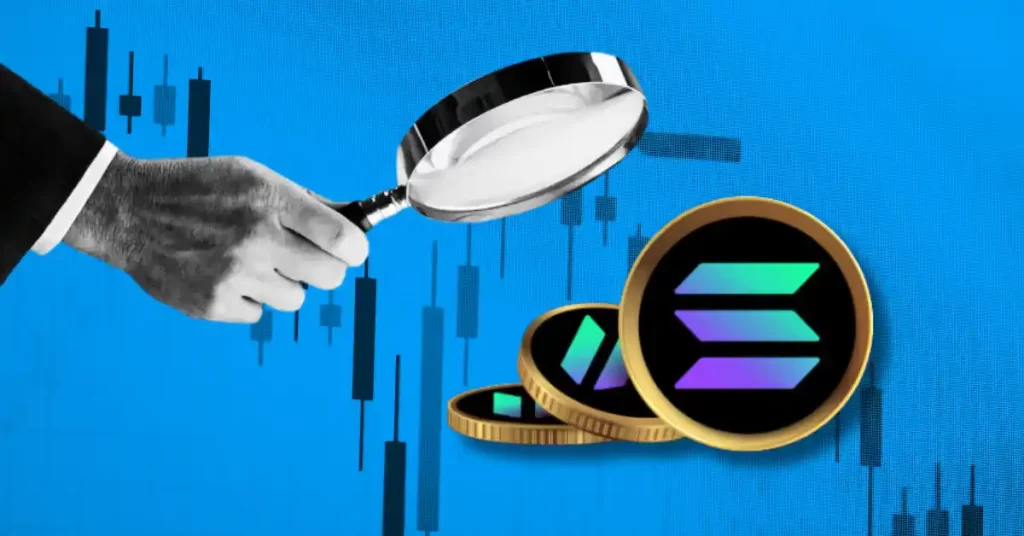
The post Solana Struggles Amid Intense Bearish Pressure at Resistance Lines: What’s Next for SOL Price appeared first on Coinpedia Fintech News Solana price has been declining steeply following the SEC’s approval of spot Ethereum ETFs. For example, the SOL/ETH pair, which is closely monitored, has dropped by 16.8% since May 17 following the U.S. Securities and Exchange Commission’s (SEC) request for Ether ETF applicants to revise their 19b-4 filings. Additionally, there’s a decline in activity in the SOL ecosystem, suggesting further bearish pressure on the edge. Analysts Expect SOL ETF By 2025 Solana might be losing its momentum to Ethereum following SEC’s approval of spot ETH ETF. However, analysts believe that Solana is not far from having its own ETF. Geoffrey Kendrick, an analyst at Standard Chartered, predicts that SOL and XRP ETFs could receive approval by 2025. Kendrick suggests that the recent approval of the ETH ETF implies that Ether and altcoins may not be classified as securities. Analysts from The Birb Nest have observed that discussions around a Solana ETF are surging on crypto Twitter and in media circles, indicating that it’s likely to happen. The total value locked (TVL) within the Solana ecosystem experienced a notable decline in May. As of May 23, there were 27.48 million SOL locked, down from the monthly peak of 29.4 million SOL. This decline in Solana’s TVL was particularly sharp after May 20, following reports on the potential approval of spot Ether ETFs. On that date, the TVL was recorded at 28.3 million SOL, suggesting that the news about the Ether ETFs might have triggered the withdrawals from the Solana ecosystem. Since the Ethereum ETF approval on May 20, Solana node validators started rapidly withdrawing funds. Initially holding 368.8 million SOL in staking contracts, they withdrew 3.5 million SOL by May 24, reducing the active staking to 365.3 million SOL. Also read: Analyzing the Effect of Approval of Ethereum ETF on Solana: Market Trends and Price Prediction With Solana’s current price at $167, these unstaked SOL are valued at approximately $580 million. Such significant withdrawals from a Proof-of-Stake (PoS) network generally lead to short-term price declines. What’s Next For SOL Price? Solana price failed to break above $190 as sellers strongly defended a surge above that level, resulting in a steep decline below immediate Fib channels. SOL price dropped below its EMA trend lines too; however, buyers defended further drops below $160. As of writing, SOL price trades at $166, declining over 4% in the last 24 hours. SOL price is struggling to surpass the EMA20 trend line, indicating continued bearish pressure at higher levels. The declining EMA trend lines and the RSI level heading toward the oversold region suggest a rising dominance in bearish positions. Should buyers push past the descending resistance line, the SOL/USDT pair might aim to retest the significant resistance at $192. A break above this level might send the SOL price toward $210.
The Securities and Exchange Commission (SEC) is poised to green-light Ethereum (Ether) ETFs after years of pushback. As of this writing, it was not clear …
Denaro elettronico · Servizi per le banche · Blockchain
Riepilogo
The Securities and Exchange Commission (SEC) is poised to green-light Ethereum (Ether) ETFs after years of pushback. As of this writing, it was not clear as
Servizi: Binance, YouHodler, Digital Asset, Lolli, Ethereum, Coinbase, Bitcoin