Of all the takes I’ve heard about open banking over the past week, here is a great one I did not hear courtesy of The Finanser’s Chris Skinner: open banking is bad branding. The core issue is that banking and finance is being ripped open by technologies to ensure better service, data enrichment, machine learning, more knowledge … but to achieve this, the service is no longer delivered by one company: a bank. It is delivered by multiple service providers through apps, APIs and analytics. That’s what Open Banking is all about. It just has the wrong name. We don’t want Open Banking. We want Closed Banking. A typically heterodox take from Skinner and a prompt I would have loved to put to our open banking panelists at FinovateFall last week. As it turned out, our conversation revolved around other issues – from the role of regulation to the differences in the evolution of open banking between countries and regions. But the same issues raised by Skinner this week were not far away. See for yourself in our brief summary of the top takeaways from our FinovateFall discussion. User Experience Matters One area of major agreement on the panel was that user experience was an undervalued aspect of the appeal (or lack thereof) of open banking. Imran Haider, Director of Product, Intuit Data Exchange, noted that the user experience for a customer connecting to their bank via an open banking flow can vary significantly. He cited the occurrence of everything from cumbersome flows to basic performance issues as obstacles to wider acceptance of open banking. “If we really want to unlock the power of customer permissioned data sharing,” Haider said, “then we need better standards and approaches on the UX side.” Location Shapes the Market Appreciating the way open banking is evolving differently across geographies was another key takeaway from our conversation on open banking. Florencia Ardissone, Head of Product, Customer Insights & ChaseNet Analytics, JP Morgan Chase, led with this insight. In places like the U.K., Europe, and Australia, open banking has evolved courtesy of a highly-engaged regulatory authority. By contrast, in countries like India, market forces have tended to lead, with the drive for greater financial inclusion often fueling innovation. As such, we should expect the evolution of open banking in the U.S. – however slow and sluggish – to develop based on the unique features of the U.S. banking system – including the massive number of players. Open Banking Demands Identity Management Skinner’s skepticism about consumer appetites for “open” banking is also a great way to understand another key takeaway from our Open Banking conversation: the idea that open banking is integrally linked to identity management. Sasha Dobrolioubov, Head of Partnerships at Persona, made the point that it critical that those financial institutions involved in open banking – the banks, the fintechs – need to have a “strong identity presence” to foster trust between would-be open banking consumers and providers. Regulation Defines the Opportunity The funny thing about the evolution of Open Banking in the U.S. is that has taken both the route of market-driven innovation as well as the path laid by regulators, particularly the CFPB. Kevin Jacques, Partner at Cota Capital, noted that the access to account data component of open banking evolved ahead of regulations. Jacques cited innovators – and Finovate alums – like Plaid, MX, and Finicity as examples. That said, with pending CFPB regulations potentially limiting and restricting collection of account data based on a narrower view on consumer consent, innovation in this aspect of open banking is likely to be impacted. Photo by Amina Filkins The post Top Takeaways on Open Banking from FinovateFall appeared first on Finovate.
18 million users of Coins.ph are expected to receive a faster, lower-cost and more accessible remittance option as a result of the new partnership with Ci…
USDC issuer partners with Philippines exchange to promote stablecoin
Denaro elettronico · Trasferimento di denaro
Riepilogo
18 million users of Coins.ph are expected to receive a faster, lower-cost and more accessible remittance option as a result of the new partnership with Circle.
At Sibos 2023, Grayson Clarke, Head of Market Planning and Marketing, LexisNexis® Risk Solutions, presents insights from the recent True Cost of Financial…
At Sibos 2023, Grayson Clarke, Head of Market Planning and Marketing, LexisNexis® Risk Solutions, presents insights from the recent True Cost of Financial Crime Compliance Study, conducted by Forrester Consulting, on how the evolving financial landscape is being shaped by an intricate network of regulations and sanctions, and the increasing use of AI.
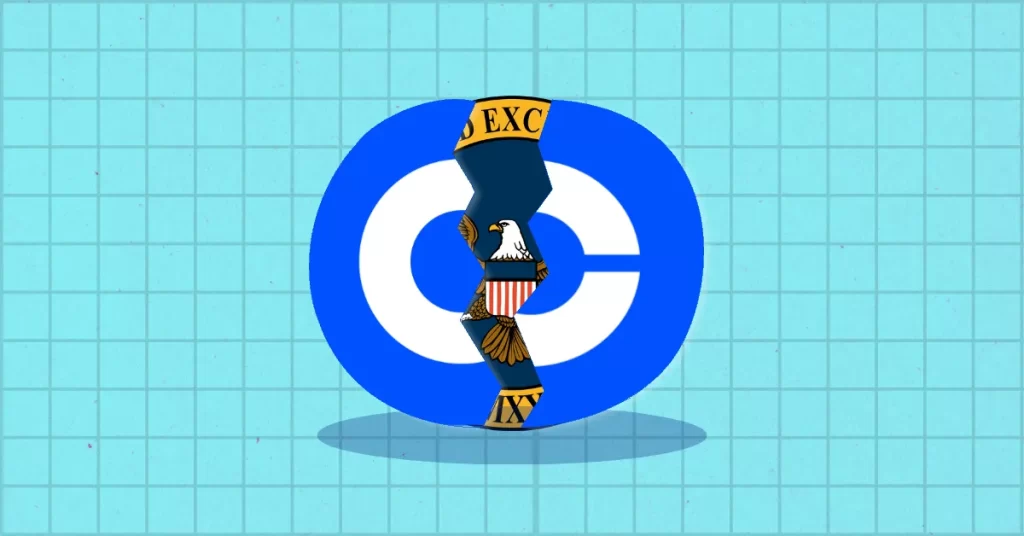
The post SEC Gains Amicus Curiae Support Against Coinbase in Legal Clash appeared first on Coinpedia Fintech News The U.S. SEC is making significant moves…
SEC Gains Amicus Curiae Support Against Coinbase in Legal Clash
Trasferimento di denaro · Denaro elettronico
Riepilogo
The post SEC Gains Amicus Curiae Support Against Coinbase in Legal Clash appeared first on Coinpedia Fintech News The U.S. SEC is making significant moves against both Coinbase and Ripple. While Ripple seems beyond immediate reach, the SEC focuses on Coinbase. They are actively seeking support from industry heavyweights in their case against the exchange. Following a failed attempt to convince a Judge to file an interlocutory appeal in the Ripple lawsuit, the SEC brought multiple amicus curiae against Coinbase. TradFi grey hairs file Amicus Curiae on behalf *drum roll* the SEC, in SEC vs. Coinbasehttps://t.co/ukeHcfcX8BNASAA landing page screenshot and story attached. PROTECT. pic.twitter.com/DczmmRVlm5— Mikko Ohtamaa (@moo9000) October 10, 2023 Multiple Amicus Curiae: SEC’s Dying Bet In the ongoing U.S. Securities and Exchange Commission v. Coinbase lawsuit, the SEC has enlisted various securities and legal entities to file amicus curiae against Coinbase. The American Securities Administrators Association (NASAA), New Finance Institute, and Administrative Law Scholars are all siding with the U.S. SEC. Having faced a setback in the Ripple lawsuit with Judge Analisa Torres, the U.S. Securities and Exchange Commission (SEC) is now working to bolster its position in the Coinbase lawsuit. The North American Securities Administrators Association (NASAA) has submitted an amicus brief, urging the court to reject Coinbase’s motion. Their arguments range from Congress’s broad definition of “security” for effective investment regulation to the assertion that Coinbase’s staking program qualifies as an investment contract. The New Finance Institute (NFI) has also supported the SEC, emphasizing that neither “investing” nor “contract” are prerequisites for identifying an “Investment Contract.” They argue that the SEC has the authority to regulate crypto and request the court to deny Coinbase’s motion. Additionally, Administrative Law Scholars Professors Todd Phillips and Beau Baumann have filed amicus briefs supporting the SEC, urging the court to deny Coinbase’s motion. Coinbase’s Stance On the opposing side, After John Deaton managed to get 1,500 users to support the case, it is evident that some experienced lawyers fraternity backs Coinbase. Currently, Coinbase enjoys the support of Republican Senator Cynthia Lummis, who, along with others, has filed an Amicus Brief urging the Judge to dismiss the case. Coinbase has countered these claims, asserting that the SEC lacks jurisdiction over the crypto industry and its actions go beyond the regulatory framework. Analyst Rebuffs Coinbase’s Dubious Claims Ali Martinez, a famous Crypto expert, took a sharp jab at Coinbase’s portrayal of the “digital asset industry” as a major player in the American economy, deeming it a dubious claim. He argued that, in reality, most digital assets are primarily used for speculative purposes and lack broad practical applications, such as being widely accepted for payments or satisfying government obligations like taxes. “The Court should decline to treat digital assets as somehow special.” This challenges Coinbase’s assertion about the industry’s significant role in economic and political contexts. It’s a heated back-and-forth in the ongoing legal saga!
Verifone, a leading global provider of payment solutions, announces that Mike Kohlsdorf has joined the company as CEO, succeeding Mike Pulli, who is stepp…
Verifone, a leading global provider of payment solutions, announces that Mike Kohlsdorf has joined the company as CEO, succeeding Mike Pulli, who is stepping down after five years with the organization.
New data from the Federal Trade Commission shows that scams originating on social media have accounted for $2.7 billion in reported losses since 2021, mor…
FTC reports that scams on social media have accounted for $2.7 billion in reported losses since 2021
Denaro elettronico
Riepilogo
New data from the Federal Trade Commission shows that scams originating on social media have accounted for $2.7 billion in reported losses since 2021, more than any other contact method.