Of all the takes I’ve heard about open banking over the past week, here is a great one I did not hear courtesy of The Finanser’s Chris Skinner: open banking is bad branding. The core issue is that banking and finance is being ripped open by technologies to ensure better service, data enrichment, machine learning, more knowledge … but to achieve this, the service is no longer delivered by one company: a bank. It is delivered by multiple service providers through apps, APIs and analytics. That’s what Open Banking is all about. It just has the wrong name. We don’t want Open Banking. We want Closed Banking. A typically heterodox take from Skinner and a prompt I would have loved to put to our open banking panelists at FinovateFall last week. As it turned out, our conversation revolved around other issues – from the role of regulation to the differences in the evolution of open banking between countries and regions. But the same issues raised by Skinner this week were not far away. See for yourself in our brief summary of the top takeaways from our FinovateFall discussion. User Experience Matters One area of major agreement on the panel was that user experience was an undervalued aspect of the appeal (or lack thereof) of open banking. Imran Haider, Director of Product, Intuit Data Exchange, noted that the user experience for a customer connecting to their bank via an open banking flow can vary significantly. He cited the occurrence of everything from cumbersome flows to basic performance issues as obstacles to wider acceptance of open banking. “If we really want to unlock the power of customer permissioned data sharing,” Haider said, “then we need better standards and approaches on the UX side.” Location Shapes the Market Appreciating the way open banking is evolving differently across geographies was another key takeaway from our conversation on open banking. Florencia Ardissone, Head of Product, Customer Insights & ChaseNet Analytics, JP Morgan Chase, led with this insight. In places like the U.K., Europe, and Australia, open banking has evolved courtesy of a highly-engaged regulatory authority. By contrast, in countries like India, market forces have tended to lead, with the drive for greater financial inclusion often fueling innovation. As such, we should expect the evolution of open banking in the U.S. – however slow and sluggish – to develop based on the unique features of the U.S. banking system – including the massive number of players. Open Banking Demands Identity Management Skinner’s skepticism about consumer appetites for “open” banking is also a great way to understand another key takeaway from our Open Banking conversation: the idea that open banking is integrally linked to identity management. Sasha Dobrolioubov, Head of Partnerships at Persona, made the point that it critical that those financial institutions involved in open banking – the banks, the fintechs – need to have a “strong identity presence” to foster trust between would-be open banking consumers and providers. Regulation Defines the Opportunity The funny thing about the evolution of Open Banking in the U.S. is that has taken both the route of market-driven innovation as well as the path laid by regulators, particularly the CFPB. Kevin Jacques, Partner at Cota Capital, noted that the access to account data component of open banking evolved ahead of regulations. Jacques cited innovators – and Finovate alums – like Plaid, MX, and Finicity as examples. That said, with pending CFPB regulations potentially limiting and restricting collection of account data based on a narrower view on consumer consent, innovation in this aspect of open banking is likely to be impacted. Photo by Amina Filkins The post Top Takeaways on Open Banking from FinovateFall appeared first on Finovate.
The wall street, also regarded as the market controllers, have witnessed shake off as trading volume of the renowned organizations such as TSLA and PYPL p…
Wall Street Investors Shaking Fear off, As Trading Volumes of TSLA, PYPL and BTCS Surge
Blockchain · Denaro elettronico · Pagamenti
Riepilogo
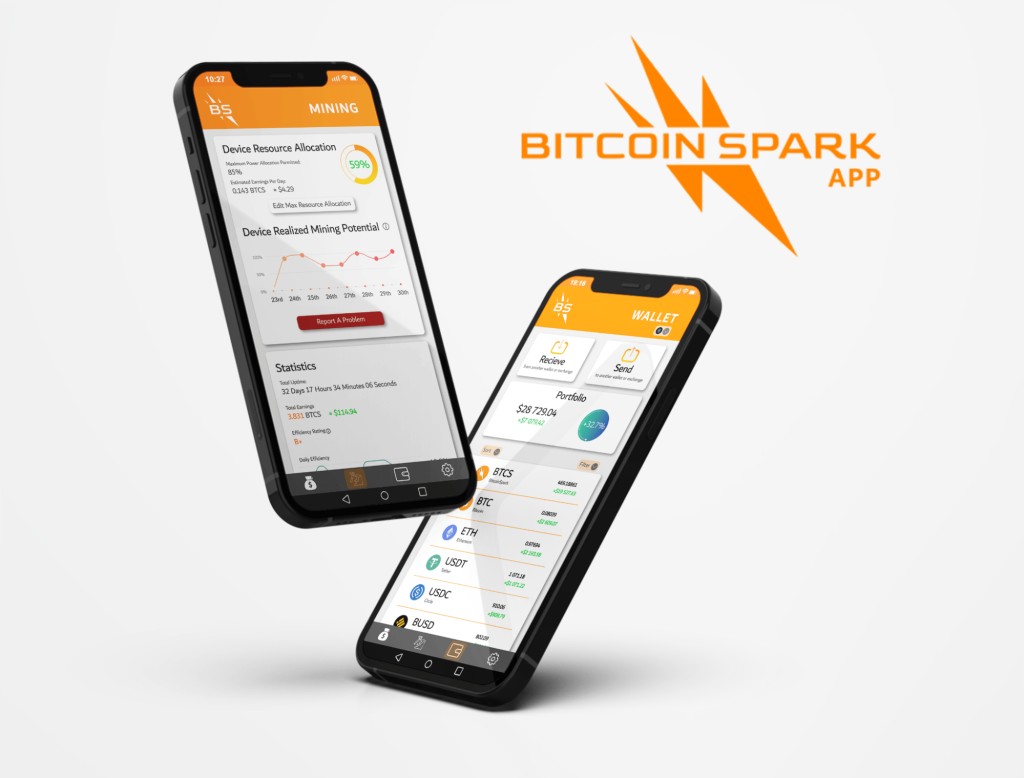
The wall street, also regarded as the market controllers, have witnessed shake off as trading volume of the renowned organizations such as TSLA and PYPL plummet. The market move is somewhat linked to the ongoing cryptocurrency winter season. The bear market has caused some of the prominent digital currencies such as Bitcioin and Ethereum to slightly drop in price. Bitcoin Spark, considered as the new entrant in the ecosphere has amazed a lot of individuals in the distributed ledger technology. The platform has made crypto whales from Bitcoin and Ethereum to join the bandwagon. Tesla Stock Price Performance Tesla, the famous vehicle firm situated in the United States of America, has plummeted amid the crypto winter. The automobile company is also facing racial allegations as blacks depict that they aren’t given equal treatment. Moreover Elon Musk, CEO and founder of Tesa believes that the platform will slightly surge as some stocks are currently at their lowest value. Paypal Stock Price Performance Paypal, one of the most influential global transfers has also experienced a plummet period. Stock analysts and enthusiasts believe that not only Paypal but other large companies have had slight decreases in their price. This has been pegged to slower growth rate, higher costs, and the changing or transition of economic atmosphere. Therefore, these analysts believe that there will be a continued temporary decline of profit and margin comprehension. Bitcoin Spark’s Price Continues to Surge In the current evolving universe of financial technology, the distributed ledger has showcased imminent signs of development with various pertinent inaugurations. Some of the inaugurations include Bitcoin Spark. Bitcoin Spark is a cutting edge technology that aims to cause exponential improvements in the decentralized ledger technology. Despite being in its early presale phases, the project has managed to amass many retail and individual investors. The project has also managed to maintain transparency and accountability through successfully passing audits conducted by Vital Block, Contract Wolf and Cognitos. The firms have conducted an audit on the platform’s KYC and smart contract operation. Moreover, Bitcoin Spark has a comprehensive roadmap that entails information of its development or progress from the first phase of the initial coin offering towards the last stage. Popular cryptocurrencies like Bitcoin and Ethereum have their shortcomings that limit them from acquiring their desired potential. Bitcoin is the most disadvantaged as it can conduct 7 transactions per second, lacks smart contracts to facilitate automatic transactions, has mining juggernauts, and the transaction costs are high. The new digital platform aims in improving or dolving these problems through the following ways. Mining centralization will be evicted with a new validation mechanism called proof-of-process. Proof-of-process will also enhance non-linear reward allocation to miners and stakers through advanced algorithms. Individuals who would like to partake in mining, would have to acquire a smart electrical device that connects to the internet with speeds up to 50Mb/s. In addition, transaction costs will be reduced by increasing the number of nodes and decreasing the time utilized in constructing a single block. Moreover, the platform has a smart contract layer that enables blockchain developers to create their own decentralized platform. A more interesting fact is that the platform’s smart contract is compatible with high level and low level programming languages. Learn more about Bitcoin Spark on: Website: https://bitcoinspark.org/ Buy BTCS: https://network.bitcoinspark.org/register Disclosure: This is a sponsored press release. Please do your research before buying any cryptocurrency or investing in any projects. Read the full disclosure here. Photo by Jason Briscoe on Unsplash The post Wall Street Investors Shaking Fear off, As Trading Volumes of TSLA, PYPL and BTCS Surge appeared first on The Merkle News.
Finance firms are often more complex and more regulated than their peers, making the pool of candidates smaller and succession harder, while changes at th…
Finance CEOs who have stuck it out for 11 years eye exit
Servizi bancari
Riepilogo
Finance firms are often more complex and more regulated than their peers, making the pool of candidates smaller and succession harder, while changes at the top can hurt stock prices.
Federal Reserve Bank of Cleveland President Loretta Mester said Friday's jobs report didn't change her view that the labor market remains strong, and that…
Fed's Mester says further rate hikes will depend on incoming data
Denaro elettronico
Riepilogo
Federal Reserve Bank of Cleveland President Loretta Mester said Friday's jobs report didn't change her view that the labor market remains strong, and that further interest-rate hikes will depend on additional incoming data.
The post Top Altcoins To Watch Next Week: Litecoin (LTC), Solana (SOL), and Polygon (MATIC) May Lead An ‘Uptober’ Revival appeared first on Coinpedia Fint…
Top Altcoins To Watch Next Week: Litecoin (LTC), Solana (SOL), and Polygon (MATIC) May Lead An ‘Uptober’ Revival
Denaro elettronico · Prestiti
Riepilogo
The post Top Altcoins To Watch Next Week: Litecoin (LTC), Solana (SOL), and Polygon (MATIC) May Lead An ‘Uptober’ Revival appeared first on Coinpedia Fintech News October began bullish for the crypto market, with Bitcoin price tapping the $28K level. However, just as ‘Uptober’ was getting started, it experienced a halt as large and long-term holders began booking their profits. Although this momentarily faded the revival of the ‘Uptober’ trend, the market has since rebounded significantly due to increased buying demand near dips. As a result, several altcoins, including Litecoin (LTC), Solana (SOL), and Polygon (MATIC), are set to record further gains in the coming week. Investors Remain Confused Between Bitcoin And Altcoins As Bitcoin exhibits volatility around the $28K mark, a surge in FOMO (Fear of Missing Out) emerges among investors. However, its rejection near resistance levels prompts the market to redirect funds towards altcoins. Subsequently, when BTC prices experience a dip, presenting a more affordable buying opportunity, it lures investors to shift their capital from altcoins back to Bitcoin for long-term holding. This has brought a mixed response within the market. Furthermore, the altcoin season index has experienced a rise, moving from 33 to 41. While this level is still notably distant from the altcoin season index’s entry of 75, it indicates that the market is gradually tilting towards altcoins to ignite the ‘Uptober’ trend truly. Litecoin (LTC) Price Analysis Litecoin price is attempting to break through its confined zone to trigger a fresh surge, but sellers are making moves to suppress a sudden surge. If bulls break the resistance zone of $68-$70, the next goal will be to break past the resistance at $85 next week. Achieving this could indicate the beginning of a fresh uptrend, potentially taking the LTC price above $100 a few days later. On the bearish side, if the price declines from EMA lines and drops below the confined zone, it may imply that bulls are taking their profits. This could result in the LTC price testing the support of $58. Solana (SOL) Price Analysis SOL price is attempting to surge above $25, but the long tail on the chart shows bearish attempts to dominate the surge. Solana might ascend and surpass its neckline next week. If this happens, the price might aim for a surge to $27 and potentially further to a target of $32. A critical support level to monitor is the 50-day EMA, priced at $22. Should the price fall below this mark, it would indicate a weakening bullish momentum. This could pave the way for a potential decline to $20. Polygon (MATIC) Price Analysis Bulls are validating a clear move for the MATIC price, but sellers are strengthening the resistance. The bulls aim to continue the surge and push the price beyond the immediate resistance at $0.6. Should they succeed, MATIC’s price might reach the $0.7 level. However, if the price drops below the 100-day EMA ($0.54), it will signal bearish activity at higher prices. MATIC could revisit the vital support of $0.49, where bullish buying is anticipated.
Join our community of 50,000+ subscribers and stay informed on the latest trends and news in the FinTech & AI world with the weekly newsletter provide…
Metro Bank UK: 2023’s Next Bank Collapse? | Samsung’s Trackable Card Unveiled | UBS Tests Tokenized Fund on Public Blockchain
Blockchain · Prestiti
Riepilogo
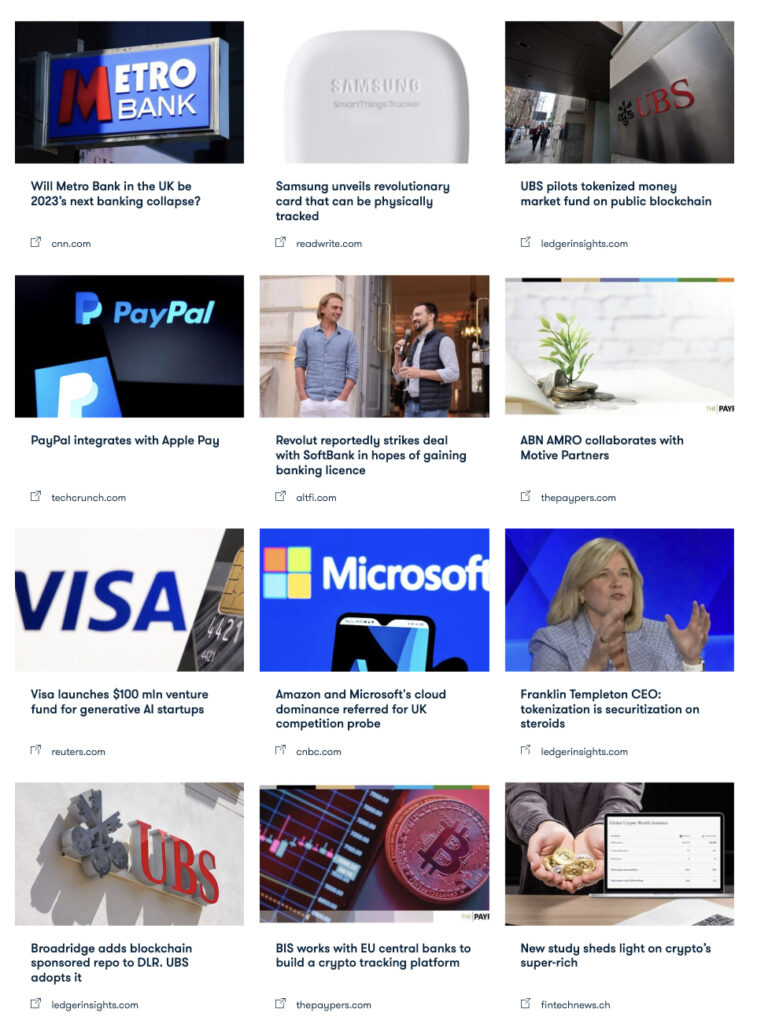
Join our community of 50,000+ subscribers and stay informed on the latest trends and news in the FinTech & AI world with the weekly newsletter provided by Bussmann Advisory. Gain insights into disruptive technologies, industry updates, and success stories from our portfolio companies. This week’s must-know stories: Metro Bank’s Financial Struggles: Will Metro Bank in the UK be 2023’s next banking collapse? UK’s Metro Bank shares plummeted by 31% following reports of its urgent need to raise funds to stabilize its finances. The bank is in discussions to raise £250 million in equity and £350 million in debt. Since its establishment in 2010 as a challenger to major UK banks, Metro Bank’s shares have dropped nearly 66% since mid-September. This decline was exacerbated when UK regulators denied its request to modify capital requirements calculations for its residential mortgages. The bank’s challenges have been ongoing, with significant losses reported in recent years and fines imposed for understating the risk of certain loans. Source Samsung’s IoT-Trackable Credit Card: Samsung unveils revolutionary card that can be physically tracked Samsung has unveiled a unique credit card in South Korea that can be tracked using its SmartThings Find service. This integration offers users real-time card location via Bluetooth Low Energy technology, enhancing security and aiding in locating misplaced cards. Currently exclusive to South Korea, this card reflects the growing integration of IoT in everyday payment tools. Source UBS’s Tokenized Fund on Ethereum: UBS pilots tokenized money market fund on public blockchain UBS Asset Management has piloted a tokenized money market fund on the Ethereum public blockchain as part of the Monetary Authority of Singapore’s Project Guardian. Tokenizing funds can enhance liquidity and market access. UBS executed fund subscriptions and redemptions using smart contracts and aims to expand its tokenization efforts with more partners. Source Plus, 9 more exclusive stories to help you stay ahead of the curve! Subscribe now to empower your FinTech journey with the essential insights and connections you need to succeed. Don’t miss out – join our vibrant community today! More information on www.bussmannadvisory.com. The latest edition of the FinTech Ecosystem Newsletter is here: Unlock the Future of Finance: Empower Your Team with Cutting-Edge FinTech & AI Insights! Don’t miss out on the chance to empower your team with crucial knowledge about disruptive technologies, FinTech, AI and Digital Assets! As trusted advisors to CEOs, CxOs, and Boards, we help you to tackle scale-up challenges and seize digital opportunities. We offer expert advisory services for executive teams and customized in-person or virtual courses on relevant topics. Elevate your organization’s understanding of the future of finance – contact us at info@bussmannadvisory.com for more details and let’s transform your business together. Please note that this newsletter reflects Bussmann Advisory’s and Oliver Bussmann’s personal views and not those of any organization we are involved with. This newsletter is for educational purposes only and none of its content should be construed as investment or financial advice of any kind. The post Metro Bank UK: 2023’s Next Bank Collapse? | Samsung’s Trackable Card Unveiled | UBS Tests Tokenized Fund on Public Blockchain appeared first on Bussmann Advisory AG.