Vitalik Buterin Proposes Solution to Ethereum’s Node Centralization
Riepilogo
The post Vitalik Buterin Proposes Solution to Ethereum’s Node Centralization appeared first on Coinpedia Fintech News Ethereum is facing a big issue. Too many of its computer servers, known as nodes, are run by a few big companies. This goes against the idea of decentralization that blockchain aims for. Addressing this issue, Vitalik Buterin, Ethereum’s co-founder, took the spotlight at Korea Blockchain Week to outline potential solutions. Here’s what happened. Too Many Eggs in One Basket? Right now, big service providers like Amazon host more than 5900 of Ethereum’s nodes. This is risky because if Amazon has a problem, Ethereum could too. Buterin says it’s crucial to make it easier and cheaper for regular people to run these nodes. Vitalik Buterin's concerns about node centralization on Ethereum are valid and highlight a critical issue in the blockchain space. Centralization of nodes on services like AWS could potentially make the network more vulnerable to outages and censorship. The timeline of up to 20…— Crypto Simon (@TheCryptoSimon) September 5, 2023 Buterin introduced a revolutionary concept to tackle this issue—statelessness. Running an Ethereum node currently demands an extensive storage capacity of hundreds of gigabytes. Stateless clients aim to drastically reduce these resource requirements. This approach not only encourages wider individual participation but also bolsters Ethereum’s resilience against centralization risks. A Glimpse into ‘The Verge’ and ‘The Purge’ Buterin is known for his long-view approach, and he did not disappoint. Unveiling stages with names straight out of a sci-fi novel—“The Verge” and “The Purge”—he described how statelessness will be incrementally introduced into Ethereum’s ecosystem. While this solution is not imminent, its phased rollout demonstrates a commitment to thoroughness and rigor. But he warns it could take years, maybe even decades, to solve this completely. Read More: Ethereum’s On-Chain Activity Hits Yearly High as Market Remains Bearish Buterin was quick to clarify that tackling node centralization is just one piece of a larger puzzle. He stressed the need for improved documentation, simplified staking procedures, and robust security mechanisms—all aimed at creating a more inclusive and resilient network. Ethereum’s Scaling Issues As if confronting centralization weren’t enough, Buterin reiterated that scalability remains Ethereum’s most pressing issue. He cited zero-knowledge (ZK) rollups, a technology designed to move computations off-chain, as a pivotal element in resolving Ethereum’s throughput bottlenecks. To round off a week of compelling developments, Buterin also made some notable transfers of Ether and Maker tokens. These financial maneuvers have stirred speculation, adding yet another layer to the complex narrative surrounding Ethereum’s future. The road ahead While immediate solutions may be elusive, the groundwork laid at Korea Blockchain Week reflects a depth of understanding and a commitment to long-term viability. Ethereum, it appears, is positioning itself not as a mere participant but as a leader in the decentralization revolution. This Might Interest You: Unraveling Raoul Pal’s Approach to Investing in Ethereum and Beyond
18 million users of Coins.ph are expected to receive a faster, lower-cost and more accessible remittance option as a result of the new partnership with Ci…
USDC issuer partners with Philippines exchange to promote stablecoin
Denaro elettronico · Trasferimento di denaro
Riepilogo
18 million users of Coins.ph are expected to receive a faster, lower-cost and more accessible remittance option as a result of the new partnership with Circle.
At Sibos 2023, Grayson Clarke, Head of Market Planning and Marketing, LexisNexis® Risk Solutions, presents insights from the recent True Cost of Financial…
At Sibos 2023, Grayson Clarke, Head of Market Planning and Marketing, LexisNexis® Risk Solutions, presents insights from the recent True Cost of Financial Crime Compliance Study, conducted by Forrester Consulting, on how the evolving financial landscape is being shaped by an intricate network of regulations and sanctions, and the increasing use of AI.
The post SEC Gains Amicus Curiae Support Against Coinbase in Legal Clash appeared first on Coinpedia Fintech News The U.S. SEC is making significant moves…
SEC Gains Amicus Curiae Support Against Coinbase in Legal Clash
Trasferimento di denaro · Denaro elettronico
Riepilogo
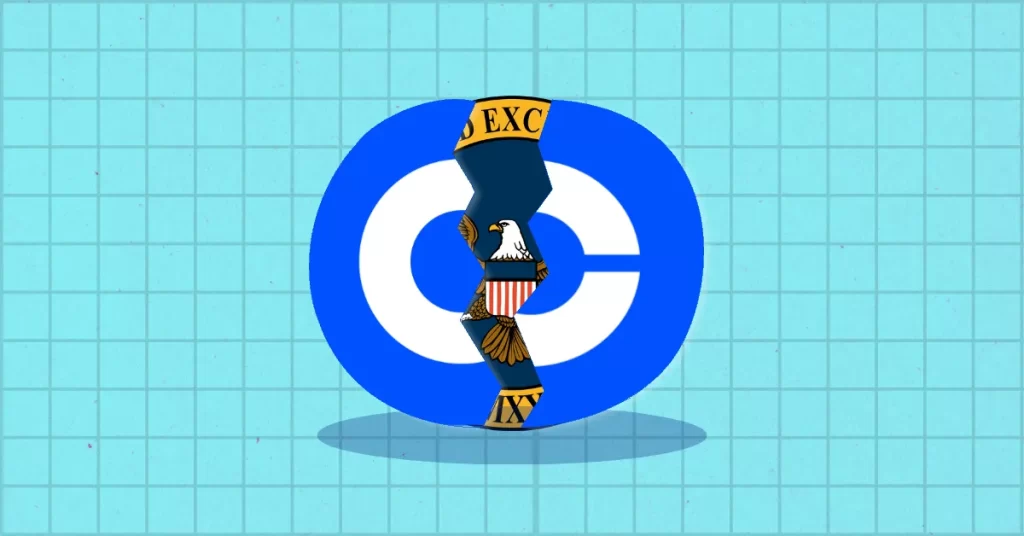
The post SEC Gains Amicus Curiae Support Against Coinbase in Legal Clash appeared first on Coinpedia Fintech News The U.S. SEC is making significant moves against both Coinbase and Ripple. While Ripple seems beyond immediate reach, the SEC focuses on Coinbase. They are actively seeking support from industry heavyweights in their case against the exchange. Following a failed attempt to convince a Judge to file an interlocutory appeal in the Ripple lawsuit, the SEC brought multiple amicus curiae against Coinbase. TradFi grey hairs file Amicus Curiae on behalf *drum roll* the SEC, in SEC vs. Coinbasehttps://t.co/ukeHcfcX8BNASAA landing page screenshot and story attached. PROTECT. pic.twitter.com/DczmmRVlm5— Mikko Ohtamaa (@moo9000) October 10, 2023 Multiple Amicus Curiae: SEC’s Dying Bet In the ongoing U.S. Securities and Exchange Commission v. Coinbase lawsuit, the SEC has enlisted various securities and legal entities to file amicus curiae against Coinbase. The American Securities Administrators Association (NASAA), New Finance Institute, and Administrative Law Scholars are all siding with the U.S. SEC. Having faced a setback in the Ripple lawsuit with Judge Analisa Torres, the U.S. Securities and Exchange Commission (SEC) is now working to bolster its position in the Coinbase lawsuit. The North American Securities Administrators Association (NASAA) has submitted an amicus brief, urging the court to reject Coinbase’s motion. Their arguments range from Congress’s broad definition of “security” for effective investment regulation to the assertion that Coinbase’s staking program qualifies as an investment contract. The New Finance Institute (NFI) has also supported the SEC, emphasizing that neither “investing” nor “contract” are prerequisites for identifying an “Investment Contract.” They argue that the SEC has the authority to regulate crypto and request the court to deny Coinbase’s motion. Additionally, Administrative Law Scholars Professors Todd Phillips and Beau Baumann have filed amicus briefs supporting the SEC, urging the court to deny Coinbase’s motion. Coinbase’s Stance On the opposing side, After John Deaton managed to get 1,500 users to support the case, it is evident that some experienced lawyers fraternity backs Coinbase. Currently, Coinbase enjoys the support of Republican Senator Cynthia Lummis, who, along with others, has filed an Amicus Brief urging the Judge to dismiss the case. Coinbase has countered these claims, asserting that the SEC lacks jurisdiction over the crypto industry and its actions go beyond the regulatory framework. Analyst Rebuffs Coinbase’s Dubious Claims Ali Martinez, a famous Crypto expert, took a sharp jab at Coinbase’s portrayal of the “digital asset industry” as a major player in the American economy, deeming it a dubious claim. He argued that, in reality, most digital assets are primarily used for speculative purposes and lack broad practical applications, such as being widely accepted for payments or satisfying government obligations like taxes. “The Court should decline to treat digital assets as somehow special.” This challenges Coinbase’s assertion about the industry’s significant role in economic and political contexts. It’s a heated back-and-forth in the ongoing legal saga!
Verifone, a leading global provider of payment solutions, announces that Mike Kohlsdorf has joined the company as CEO, succeeding Mike Pulli, who is stepp…
Verifone, a leading global provider of payment solutions, announces that Mike Kohlsdorf has joined the company as CEO, succeeding Mike Pulli, who is stepping down after five years with the organization.
New data from the Federal Trade Commission shows that scams originating on social media have accounted for $2.7 billion in reported losses since 2021, mor…
FTC reports that scams on social media have accounted for $2.7 billion in reported losses since 2021
Denaro elettronico
Riepilogo
New data from the Federal Trade Commission shows that scams originating on social media have accounted for $2.7 billion in reported losses since 2021, more than any other contact method.