Decoding Ethereum’s Decline: Are Foundation Sales a Red Flag?
Summary
The post Decoding Ethereum’s Decline: Are Foundation Sales a Red Flag? appeared first on Coinpedia Fintech News Ethereum, the second-largest cryptocurrency, is making headlines due to the recent actions by the Ethereum Foundation and Ethereum co-founder Vitalik Buterin. Ethereum, like many other cryptocurrencies, has been experiencing a downward trend, largely influenced by events like the Stars Arena hack, which saw nearly 3 million in crypto theft, and recent geopolitical tensions affecting the broader crypto market. According to a video by Cheeky Crypto, one of the events that has caught the crypto world’s attention is the Ethereum Foundation’s sale of millions of ETH tokens. Earlier this week, the foundation transferred a substantial amount of ETH to Uniswap, selling 1,700 ETH for $2.73 million USDC at $1,611 per coin. This sale was followed by a further 1.45% drop in the ETH price, bringing it down to $1,590. Vitalik Buterin, the co-founder of Ethereum, has also been selling off a significant amount of his ETH holdings, worth around $1.6 million on the Bitstamp exchange. This is not the first time Buterin has offloaded his ETH holdings, with approximately 4,400 ETH transferred over the past two months. Looking closer at Ethereum’s on-chain analytics, the data reveals concerning trends. Wallets across various size categories, from 100,000 to 100 ETH, have shown an aggressive selloff over the past year. Wallets holding more than 10,000 ETH have seen nearly 10% or more declines, indicating a lack of confidence in Ethereum’s future. Furthermore, Ethereum’s recent price drops have liquidated many positions. In the last 24 hours, $11.6 million worth of positions have been liquidated, with 73.3% being long and 26.6% being short positions. OKX is the exchange with the most liquidations, totaling $5.4 million. It’s unclear why the Ethereum Foundation and Vitalik Buterin are divesting their holdings, but many in the crypto community are left wondering if there’s a deeper issue affecting Ethereum’s future.
For the in-store shopping experience, digital is a key feature in the aisles, combining wallets, loyalty — and by extension, better inventory management. …
Family Dollar App Update Underscores Consumer Demand for Digital Experience in the Aisles
Payments
Summary
For the in-store shopping experience, digital is a key feature in the aisles, combining wallets, loyalty — and by extension, better inventory management. As reported in recent days, Family Dollar has announced new features to its app that that will debut next month. Among the features: Consumers will be able to more seamlessly manage coupons via a redesigned wallet feature, explore weekly ads and find products as they shop. And as has been noted, future updates, slated for early next year, will include in-app eCommerce and personalization capabilities. In addition, there will also be a mobile app rolled out for the sister Dollar Tree brand stores. The shift toward integrating digital offers and rewards more fully into the in-store setting has been spotlighted by PYMNTS in past research. And as discussed here, we found that 42% of grocery shoppers cited the availability of loyalty programs with rewards as something that would help them stay loyal to certain merchants. Coupons and Rewards Keep Consumers Coming Back In the report “Big Retail’s Innovation Mandate: Convenience and Personalization,” created in collaboration with ACI Worldwide, 77% of retailers said digital rewards and coupons were proving essential to keeping consumers engaged. The accompanying chart shows that mobile apps are critical, too — and 80% of merchants said consumers would switch to other providers if apps were not in place. The fact that more than three-quarters of merchants recognized the need to deliver alternative payment methods — a designation that would include digital wallets — speaks volumes, too, to linking apps and coupons and a means to pay for it all. During the most recent conference call with analysts to discuss earnings, Dollar Tree CEO Rick Dreiling took note of continued efforts “drive sales productivity and increase operating efficiency like simplifying the truck unloading process and improving in-stock levels. You heard me say many times that retail is all about growing units, growing transactions, and growing sales per square foot. When these retail fundamentals move in the right direction, everything else follows.” With personalization on the horizon, with smarter search functions in the actual brick-and-mortar channel amid the omnichannel continuum, there ability is there, we’d add, to fine-tune inventory management. The discount stores across the Family Dollar and Dollar Tree footprints, as management laid out during the most recent call, have seen increased sales of private brands — with unit sales up 4% and comps growing by 15%. “In the past year, we have added nearly 5 million new customers across both segments, with 2.6 million of these customers having a household income over $125,000,” said the CEO — a stat that gives further evidence of the appeal of coupons and rewards across all demographics. The discount retailer is hardly alone in its bid to refresh its app. Walmart, as reported earlier this year, redesigned its mobile app and homepage and has sought to craft personalized shopping experiences that unite digital and in-store capabilities. For all PYMNTS retail coverage, subscribe to the daily Retail Newsletter.The post Family Dollar App Update Underscores Consumer Demand for Digital Experience in the Aisles first appeared on PYMNTS.com.
The CFPB announced plans to introduce considerable changes to the Fair Credit Reporting Act (FCRA) that would have far-reaching consequences for data brok…
CFPB proposes sweeping changes for the handling of consumer data
Digital Currencies
Summary
The CFPB announced plans to introduce considerable changes to the Fair Credit Reporting Act (FCRA) that would have far-reaching consequences for data brokers, furnishers and end users.
During the Securities and Exchange Commission's meeting of the Investor Advisory Committee (IAC) yesterday (September 21, 2023), a representative from the
Angel Capital Association Provides Compelling Information to Broaden Definition of an Accredited Investor, Countering SEC’s Ambition to Exclude More Investors
Investments · Banking · Digital Currencies
Summary
During the Securities and Exchange Commission's meeting of the Investor Advisory Committee (IAC) yesterday (September 21, 2023), a representative from the
The post Crypto vs. SEC: XRP Lawyer Accuses SEC of Fraud Amid Cryptocurrency Regulation Battle appeared first on Coinpedia Fintech News In a recent interv…
Crypto vs. SEC: XRP Lawyer Accuses SEC of Fraud Amid Cryptocurrency Regulation Battle
Blockchain · Money Transfer · Digital Currencies
Summary
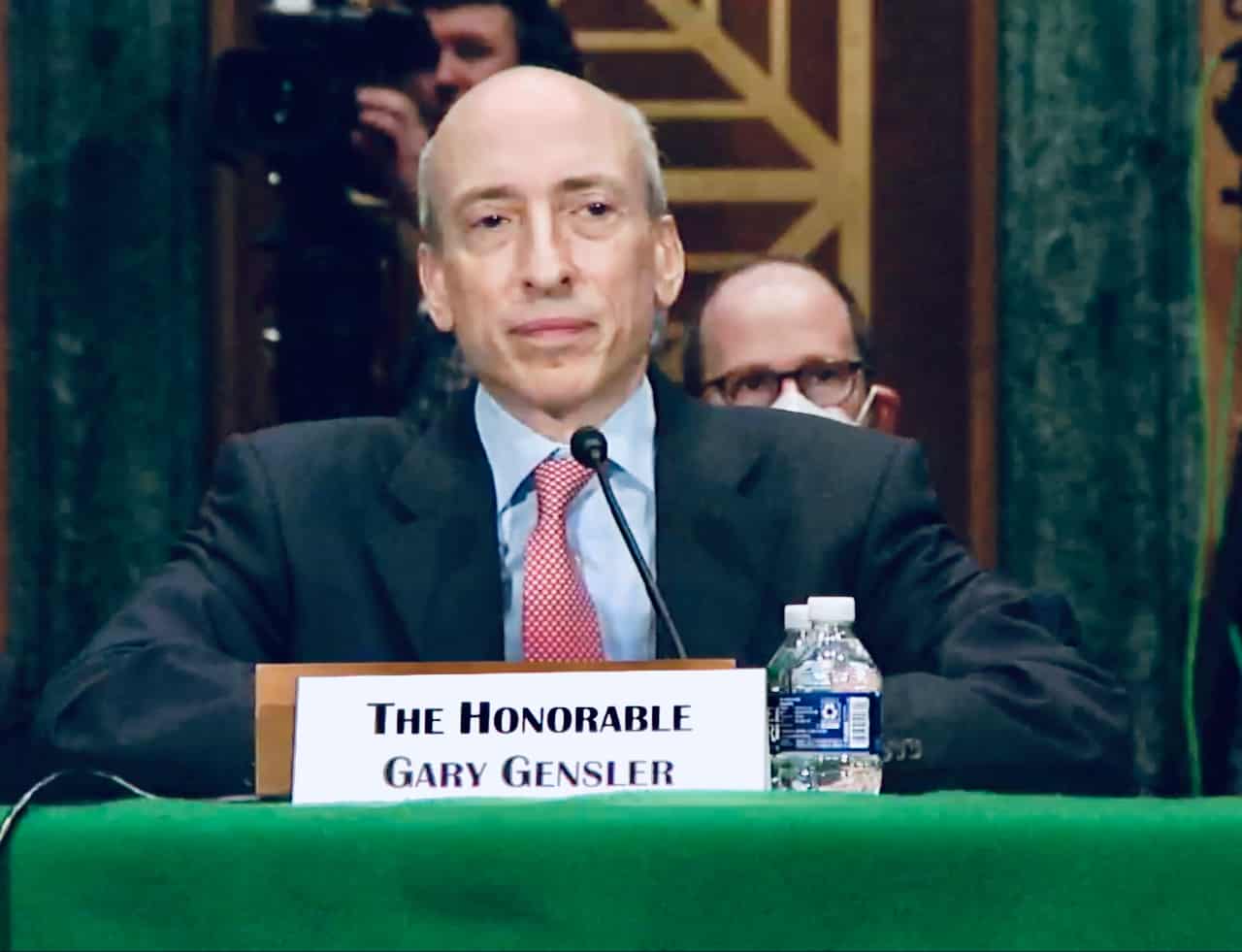
The post Crypto vs. SEC: XRP Lawyer Accuses SEC of Fraud Amid Cryptocurrency Regulation Battle appeared first on Coinpedia Fintech News In a recent interview held by Bloomberg, SEC chairperson Gary Gensler was found to disrespect the decision of the Court by advocating his view of applying security laws to cryptocurrencies. Stuart Alderoty, the Chief Legal Officer of Ripple, condemned his statements in a tweet. Ripple has been fighting consistently to bring legislative clarity to cryptocurrency regulation. However, Gary Gensler, although a member of a 5-man committee, personally believes that applying security laws on cryptocurrency will protect the interest of the investing public. Gensler says in his interview, “Investors still benefit from disclosure and get to choose based on that disclosure. Investors benefit from laws against fraud and manipulation and other conflicts in the market.” A Fierce Clash of Opinions Broke Out Soon After John Deaton, XRP lawyer, the public representative of 75,000 XRP holders, took to X and alleged SEC fraud and public manipulation. He states what investors need protection from is the SEC’s anti-crypto regulations. According to Steven Nerayoff, an early Ethereum consultant, a $19.2 trillion loss in US household wealth occurred during the housing crisis owing to fraud and manipulation by regulated institutions. Federal courts in the Grayscale trial branded the US SEC’s assertions “arbitrary and capricious,” while Judge Netburn in the Ripple trial described the SEC’s conflicting viewpoints as “hypocrisy.” On September 2, XRP lawyer John E. Deaton stated that federal judges and both chambers of the US Congress are noting the hypocrisy of the US SEC. He finds it noteworthy that Coinbase chief legal officer Paul Grewal used the word “hypocrisy” in his remarks on Ripple’s filing of an interlocutory appeal with the SEC. The SEC incorrectly argued with the “question of law” threshold for interlocutory appeal and neglected to confront its authority. According to Stuart Alderoty, the SEC’s interlocutory appeal filing is disingenuous and has no effect.
The post Bitcoin Pressures Bears As UTXO In Profit Hits 1-Month High! Is The BTC Price Poised For A Reversal? appeared first on Coinpedia Fintech News Bit…
Bitcoin Pressures Bears As UTXO In Profit Hits 1-Month High! Is The BTC Price Poised For A Reversal?
Digital Currencies
Summary
The post Bitcoin Pressures Bears As UTXO In Profit Hits 1-Month High! Is The BTC Price Poised For A Reversal? appeared first on Coinpedia Fintech News Bitcoin’s price failed to meet buyers’ demand in recent hours as it dropped heavily below the resistance level of $27,000. At present, the market leans bearish, with whale investors shifting to a selling sentiment and a decrease in open interest from traders. Yet, despite this sell-off trend, some crucial on-chain metrics hint at a potential bullish rebound. Bears Might Be Trapped Soon BTC’s value faced a significant drop after struggling to maintain its position around $27K. Coinglass data shows a massive $14 million in long positions were liquidated in a few hours as the BTC price dipped from $27K. Despite the rising sell-off momentum, a specific on-chain indicator offers a positive hope that could offset Bitcoin’s declining trend. Data from Glassnode indicates that the number of BTC UTXOs in profit has hit a one-month high at 124,578,285.643. UTXO stands for the unspent portion of Bitcoin after a transaction is completed. When this number is profitable, it signifies that the value of these remaining Bitcoins is greater than when they were last transacted or used. As more investors are in a gainful state with less motivation to offload, the likelihood of a sudden bearish downturn declines, thereby trapping the bears. Yet, traders are showing hesitancy in initiating future positions in Bitcoin due to its mixed price movements. Data suggests that the open interest (OI) for Bitcoin is on a downward trend, dropping by more than $600 million within a day. A decline in open interest can have a deep influence on Bitcoin’s value. In the short term, this could cause price swings, and over an extended period, it might hint at a more conservative or downward sentiment unless balanced by other favorable market signals. What’s Next For BTC Price? Bitcoin is encountering significant resistance at the 50-day EMA priced at $26,711, suggesting that bearish traders are attempting to prevent its recovery. However, bulls are aggressively defending a decline below the $26,500, suggesting increase in buying demand near the level. As of writing, BTC price trades at $26,605, surging over 0.25% from yesterday’s rate. The declining exponential moving averages combined with the relative strength index (RSI) trading below the midline, signals that the bears have the upper hand. However, a surge above the 20-day EMA could strengthen the chances of Bitcoin surpassing the crucial $27,000 mark, pushing the price to a value of $28,137. On the bearish side, if Bitcoin’s price dips and breaches the $26,200 level, it would imply that bearish sentiments are dominating the current levels. If the price drops and settles below $26,000, this could trigger intensified selling, potentially driving the price down to the support level of $24,944.
During the last year of beta testing, the crypto and NFT-focused game’s community has grown to over 350,000 people on Discord and over a quarter million o…
Web3 Adventure Game Big Time Poised to Kickoff Its ‘Player-Owned Economy’
Blockchain · Digital Currencies
Summary
During the last year of beta testing, the crypto and NFT-focused game’s community has grown to over 350,000 people on Discord and over a quarter million on X (formerly Twitter).
The move to create data consortia and proprietary information networks is creating exactly the kind of information silos that money launderers exploit tod…
A new trend in regtech is a gift to money laundering criminals
Payments · Blockchain
Summary
The move to create data consortia and proprietary information networks is creating exactly the kind of information silos that money launderers exploit today.
The post Binance Aims to Replicate Ripple’s Legal Success Against SEC appeared first on Coinpedia Fintech News Binance, the leading cryptocurrency exchang…
Binance Aims to Replicate Ripple’s Legal Success Against SEC
Money Transfer · Digital Currencies
Summary
The post Binance Aims to Replicate Ripple’s Legal Success Against SEC appeared first on Coinpedia Fintech News Binance, the leading cryptocurrency exchange, is harnessing the momentum from Ripple’s recent victory in court. They strive to have their own case with the U.S. Securities and Exchange Commission (SEC) thrown out. The crypto giant’s recent motion seeks to benefit from the legal precedent set by Ripple’s win, wherein the court ruled that the latter’s XRP sales on secondary markets didn’t classify as securities transactions. Ripple’s Triumph: A New Defense Blueprint In a recent court filing, Binance spotlighted Ripple’s recent court success, highlighting the ruling from Judge Torres. According to Binance, this case is the sole judicial instance that mirrors the transactions that purportedly took place on Binance’s U.S. platform. The significant conclusion in the Ripple saga was that sales of XRP in secondary markets – such as those through blind bid or ask trades – weren’t investment contracts. A Question of Precedence In challenging the charges, Binance underscores that the SEC’s attempt to draw parallels with previous initial coin offerings (ICOs) doesn’t hold water. They stress that there have been numerous instances where courts remained undecided on whether tokens sold by traders were actually securities transactions. This critical question is at the heart of Binance’s argument. By leaning on the Ripple case’s outcome, Binance pushes the narrative that cryptocurrency trades on its platform shouldn’t be labeled as securities transactions by the SEC. This perspective is fortified by a part of Binance’s legal memorandum, which essentially states that, like in the Ripple scenario, there was no defining relationship between trading parties that could morph a simple digital asset sale into an investment contract sale. Binance’s latest attempt to challenge the SEC illustrates how significant court rulings can shape subsequent legal battles in our industry. As Ripple’s mini victory casts its shadow, many eyes will be on this case to see if Binance can achieve its favorable outcome.