Decoding Ethereum’s Decline: Are Foundation Sales a Red Flag?
Summary
The post Decoding Ethereum’s Decline: Are Foundation Sales a Red Flag? appeared first on Coinpedia Fintech News Ethereum, the second-largest cryptocurrency, is making headlines due to the recent actions by the Ethereum Foundation and Ethereum co-founder Vitalik Buterin. Ethereum, like many other cryptocurrencies, has been experiencing a downward trend, largely influenced by events like the Stars Arena hack, which saw nearly 3 million in crypto theft, and recent geopolitical tensions affecting the broader crypto market. According to a video by Cheeky Crypto, one of the events that has caught the crypto world’s attention is the Ethereum Foundation’s sale of millions of ETH tokens. Earlier this week, the foundation transferred a substantial amount of ETH to Uniswap, selling 1,700 ETH for $2.73 million USDC at $1,611 per coin. This sale was followed by a further 1.45% drop in the ETH price, bringing it down to $1,590. Vitalik Buterin, the co-founder of Ethereum, has also been selling off a significant amount of his ETH holdings, worth around $1.6 million on the Bitstamp exchange. This is not the first time Buterin has offloaded his ETH holdings, with approximately 4,400 ETH transferred over the past two months. Looking closer at Ethereum’s on-chain analytics, the data reveals concerning trends. Wallets across various size categories, from 100,000 to 100 ETH, have shown an aggressive selloff over the past year. Wallets holding more than 10,000 ETH have seen nearly 10% or more declines, indicating a lack of confidence in Ethereum’s future. Furthermore, Ethereum’s recent price drops have liquidated many positions. In the last 24 hours, $11.6 million worth of positions have been liquidated, with 73.3% being long and 26.6% being short positions. OKX is the exchange with the most liquidations, totaling $5.4 million. It’s unclear why the Ethereum Foundation and Vitalik Buterin are divesting their holdings, but many in the crypto community are left wondering if there’s a deeper issue affecting Ethereum’s future.
The post Top Securities Expert Explains SEC “Had to Appeal” Ripple Situation, Decodes Binance Next Move appeared first on Coinpedia Fintech News The compl…
Top Securities Expert Explains SEC “Had to Appeal” Ripple Situation, Decodes Binance Next Move
Money Transfer · Digital Currencies
Summary
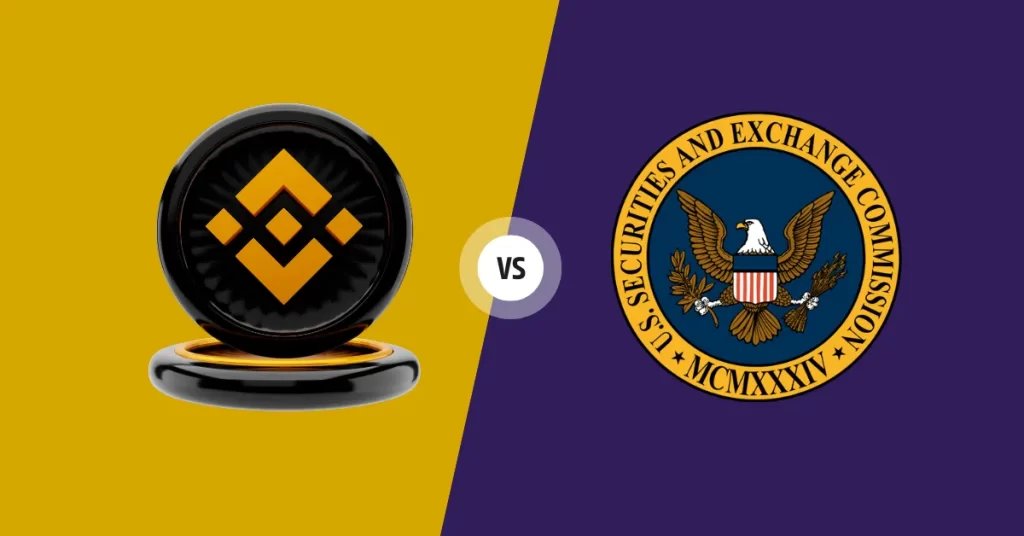
The post Top Securities Expert Explains SEC “Had to Appeal” Ripple Situation, Decodes Binance Next Move appeared first on Coinpedia Fintech News The complex web of legal battles involving the U.S. Securities and Exchange Commission (SEC) with Ripple Labs, Coinbase, and Binance have become focal points for the crypto community. In a heated debate, Marc Fagel and Deaton opened up on how SEC will be in a bad position if they are denied the interlocutory appeal. The possible outcome will shock you; read on. Marc Fagel opens Up on SEC’s Stance on Interlocutory Appeal. The former SEC official, Marc Fagel, shared insights into why the SEC is keen on appealing the Ripple ruling. The experienced former official noted two important facts; the first is obvious as the decision greatly threatens the SEC’s broader regulatory program against exchanges. Second, he noted that if the concerns were only limited to issuers of securities-related assets and tokens, the SEC might have pursued a different strategy. However, the nature of the ruling necessitated an appeal. Looking at the SEC’s position and Gary Gensler’s hearing going in parallel, this appeal is an ego war for the SEC. Yes, that's why they had to appeal. If the concern were just other issuers of securities/tokens like Ripple, maybe the SEC could try to argue around it; but since the decision threatens its broader program against crypto exchanges, I could see why they'd take a run at an appeal.— Marc Fagel (@Marc_Fagel) September 22, 2023 Binance Pushes for Dismissal Binance quickly took advantage of the situation; pro-xrp lawyer Bill Morgan reported that Binance had taken a strategic step in its legal battle with the SEC. Based on Ripple’s summary judgment, Binance filed a motion to dismiss the SEC’s case. Moreover, Binance’s legal team cited the Ripple ruling as a precedent, emphasizing that Ripple’s sales of XRP were characterized as blind bid/ask transactions, not investment contracts. Hence, it is quite evident how important the Ripple ruling is for Binance. Attorney Morgan highlighted the significance of the Ripple ruling for other crypto-related companies. He questioned whether Binance’s recent argument played a role in the SEC’s decision to pursue an interlocutory appeal. Fagel, an expert in securities litigation, confirmed this view, indicating that the Ripple ruling challenges the SEC’s overarching regulatory framework for exchanges. SEC’s Parallel Concerns To be precise, the SEC echoes the same concerns and implications of the Ripple ruling. In its pursuit of an interlocutory appeal, the SEC focuses that the court’s decision on programmatic sales could have a far-reaching impact on its pending litigations against Coinbase and Binance. John Deaton’s Has Some Strong Intuition All eyes are on the court’s ruling on the SEC’s pending request for an interlocutory appeal. Speculation abounds within the crypto space about the likely outcome. John Deaton, founder of Crypto-Law.US, anticipates that the court will deny the SEC’s request, potentially leading the regulator to file a full appeal next year. Meanwhile, XRP’s market performance has demonstrated relative stability amid these legal proceedings. The digital asset trades slightly above the $0.50 support level, with a 24-hour trading range between $0.5130 and $0.4913. The market appears to be closely monitoring developments while maintaining a cautious stance.
The company's scale has helped it become a force in many payment niches, but that wasn't enough to make its PYUSD coin an immediate threat to Tether's USD…
Payments · Digital Currencies · Blockchain · Business Tools · Banking · Banking Infrastructure
Summary
The company's scale has helped it become a force in many payment niches, but that wasn't enough to make its PYUSD coin an immediate threat to Tether's USDT and Circle's USDC.
The post Crypto Pioneer Arthur Hayes Suggests Massive Chinese Capital Outflows – How is it Benefiting Bitcoin? appeared first on Coinpedia Fintech News Cr…
Crypto Pioneer Arthur Hayes Suggests Massive Chinese Capital Outflows – How is it Benefiting Bitcoin?
Digital Currencies
Summary
The post Crypto Pioneer Arthur Hayes Suggests Massive Chinese Capital Outflows – How is it Benefiting Bitcoin? appeared first on Coinpedia Fintech News Crypto veteran Arthur Hayes has recently shared a thought-provoking perspective on the X platform (formerly Twitter). The former CEO of BitMEX anticipates that billions of dollars could flow from China into Bitcoin amidst the ongoing devaluation of the Chinese yuan. Arthur Hayes Analyzing China’s Capital Outflows and Its Yuan Devaluation Hayes, who currently manages a crypto-focused investment fund called Maelstrom, has drawn attention to a potential capital Outflow from China, raising concerns as it worsens pressure on the Chinese yuan (CNY). Hayes’ analysis spotlights the devaluation of the yuan, which has seen a staggering 15% drop against the U.S. dollar since the beginning of the year. This depreciation has sparked discussions about whether China might consider investing billions in Bitcoin and other assets to hedge against economic instability. To better understand the potential scale of capital flight, Hayes consulted Chinese researcher Andrew Collie. Collie suggested closely monitoring the gap between China’s international net export earnings and its official foreign reserves. Meanwhile, data reveals that while China’s foreign reserves have increased by around $32.407 billion this year, total net exports have surged by $553.25 billion, potentially indicating that approximately $520.85 billion has exited China. Where Could the Money Leaving China Go? And How It Might Impact Bitcoin Hayes speculates where these capital outflows might be headed, including significant investments in assets like gold, paying off offshore USD debts held by Chinese banks and enterprises, or affluent individuals transferring their wealth abroad in response to economic uncertainties. Hayes implies that some of these capital outflows could potentially find their way into the cryptocurrency markets, particularly benefiting Bitcoin. Hayes also highlights the interplay between the weakening Japanese yen (JPY) and the CNY. He suggests that the CNY must continue to depreciate to maintain its competitiveness compared to Japan’s exports.
The post Bloomberg Analyst Warns of Significant Downside Risk for Bitcoin Amid Rising Interest Rates appeared first on Coinpedia Fintech News In the crypt…
Bloomberg Analyst Warns of Significant Downside Risk for Bitcoin Amid Rising Interest Rates
Digital Currencies
Summary
The post Bloomberg Analyst Warns of Significant Downside Risk for Bitcoin Amid Rising Interest Rates appeared first on Coinpedia Fintech News In the cryptocurrency world, Bloomberg analyst Mike McGlone raises cautionary flags about the future of Bitcoin, warning that the cryptocurrency may be facing a significant “800-pound gorilla” downside risk. He highlights a significant downside risk that the cryptocurrency is currently facing. McGlone’s Warning Regarding Bitcoin and Rising Interest Rates In a recent interview on macroeconomic trends, senior macro strategist Mike McGlone from Bloomberg Intelligence expressed his concerns about the current state of Bitcoin. McGlone highlighted that Bitcoin’s low-interest rates had given rise to a new era characterized by increasing interest rates—a factor that could significantly impact its future trajectory. McGlone even suggests that Bitcoin is currently experiencing a “reversion” process, which is influenced by the Federal Reserve’s tightening of monetary policy. This shift holds potential consequences for the value of Bitcoin. When interest rates rise, it can have consequences in various assets. For instance, riskier investments like Bitcoin may experience a decline in value. This happens because investors seek safer alternatives with more attractive returns, such as government bonds. According to McGlone’s analysis, this could potentially result in Bitcoin losing over 5% of its current value. Moreover, McGlone draws a comparison between Bitcoin’s trajectory and that of traditional assets. He specifically highlights the excessive price surge that Bitcoin has recently experienced. Additionally, he points out the resemblance to Amazon’s stock and other high-risk assets, suggesting a potential shift in Bitcoin’s future behavior. Analyst McGlone Reveals Bitcoin’s Possible Price Trajectory Mike McGlone expressed his concerns regarding the downside risk of Bitcoin. Additionally, he outlined potential price targets for the cryptocurrency in the upcoming months. McGlone suggested that breaking below the $25,250 support level in Bitcoin may trigger a deeper bearish trend. This could potentially push the price down to $24,170 or lower. McGlone pointed out the potential upside of a sustained break above the $31,000 resistance level. Such a breakthrough could pave the way for an optimistic trend, possibly pushing the value to new all-time highs beyond $35,000 throughout the year.
The post BTC Price: Here’s How Bitcoin Price Can Surge Above $29K in October appeared first on Coinpedia Fintech News Bitcoin (BTC) has been facing signif…
BTC Price: Here’s How Bitcoin Price Can Surge Above $29K in October
Digital Currencies · Lending
Summary
The post BTC Price: Here’s How Bitcoin Price Can Surge Above $29K in October appeared first on Coinpedia Fintech News Bitcoin (BTC) has been facing significant challenges recently as its price dipped below the $27,000 mark due to the Fed’s interest rate pause and the Bank of England’s rate cut. While it managed to hold above a crucial support level of $26.5k on Friday, the cryptocurrency market eagerly awaits a bullish catalyst to reverse the current bearish trend. BTC Price Analysis #BTC Historically, October tends to be a very positive month for BitcoinBut given how similar 2023 has been to 2019…It's surprising how little attention has been given to the possibility of seeing a 2019-like October price reaction next monthIn October 2019, $BTC… pic.twitter.com/vQavMMHgCn— Rekt Capital (@rektcapital) September 22, 2023 Crypto analysts at Rekt Capital have closely monitored Bitcoin’s price action and identified some interesting patterns. They suggest that Bitcoin might be gearing up for a price movement similar to what occurred in 2019. Their analysis notes that historically, September of the pre-halving year tends to be bearish for the crypto market, while October has often shown bullish tendencies. Rekt Capital argues that there’s a high probability of Bitcoin experiencing a 10 percent breakout towards the $29.2k mark in October 2023. They state, “If Bitcoin rallies +10% this coming October 2023, that would see the price revisit $29,200. In such a scenario, BTC could form a long upside wick beyond the Lower High resistance (yellow) before potentially rejecting again to confirm this current move as a relief rally.” Bitcoin Halving Prediction #BTC My plan is to dollar cost average for the remainder of the Pre-Halving period in preparation for the parabola after the Halving$BTC #Crypto #Bitcoin pic.twitter.com/9O7smoHNpR— Rekt Capital (@rektcapital) September 22, 2023 Looking beyond the short-term price movements, Rekt Capital also considers the upcoming fourth Bitcoin halving, approximately 220 days away. They highlight that extreme scenarios like a return to the all-time high (ATH) or a new bear market low are unlikely. As a result, they suggest that dollar-cost averaging (DCA) may be the best strategy for investors as they prepare for the potential upcoming parabolic move. In summary, Bitcoin’s price remains uncertain in the short term, but Rekt Capital’s analysis suggests a possible bullish breakout in October 2023. However, they advise a cautious approach and recommend DCA as a prudent strategy given the upcoming halving event.
The post Interlocutory Appeal in Spotlight: Bill Morgan Sheds Light on What’s at Stake in SEC vs. Binance appeared first on Coinpedia Fintech News In the …
Interlocutory Appeal in Spotlight: Bill Morgan Sheds Light on What’s at Stake in SEC vs. Binance
Digital Currencies · Money Transfer
Summary
The post Interlocutory Appeal in Spotlight: Bill Morgan Sheds Light on What’s at Stake in SEC vs. Binance appeared first on Coinpedia Fintech News In the latest twist to the ongoing SEC vs. Binance case, Australian lawyer Bill Morgan took to Twitter, highlighting the importance of the SEC’s recent move to certify an interlocutory appeal. Responding to public comments on social media, Bill Morgan clarified his view that the SEC may use the interlocutory appeal to “bolster its argument that the issue she [Judge Torres] decided is arising in other matters.” He suggests that the SEC’s motive behind the interlocutory appeal is to emphasize that Judge Torres’ rulings have broader implications that could significantly impact other cases. That is how I see it and the SEC may use it and try to get knowledge of it before Judge Torres to bolster its argument that the issue she decided is arising in other matters and it is even more important that she permit the interlocutory appeal https://t.co/u1uuEZVJ4J— bill morgan (@Belisarius2020) September 22, 2023 Why the Interlocutory Appeal Matters Even More Morgan’s comments gain added weight when considering Judge Torres’ earlier ruling in the SEC vs. Ripple Labs case. Torres held that ‘blind bid/ask transactions’ do not fall under the definition of “investment contracts.” If Torres’ interpretation carries over into the Binance case, the SEC’s interlocutory appeal would take on even greater significance. This is because it would challenge the Binance ruling and potentially the foundational logic behind the SEC’s approach to crypto regulation. Also Read – Here’s How SEC vs. Binance Case Could Set New Precedents for Crypto Regulation Ripple’s Firm Stance Against SEC’s Appeal Simultaneously, Ripple Labs has strongly opposed the SEC’s latest attempt to certify an interlocutory appeal in its own ongoing legal battle. This dual resistance from both Ripple and Binance adds an intriguing dynamic to how interlocutory appeals could shape individual cases and set new precedents for cryptocurrency regulation. The stakes of the interlocutory appeal are high. Should Judge Torres grant it, the ripple effect could be far-reaching. Morgan’s reply hints that Torres’ decision may be a key consideration for the SEC, even as they contend with differing opinions from trial court judges across various circuits. The Crypto Community Waits Bill Morgan’s insights into the SEC’s push for an interlocutory appeal have spotlighted an often-overlooked but critical aspect of crypto litigation. As both the Binance and Ripple cases progress, the focus is shifting toward how such appeals could influence individual cases and the broader regulatory framework governing cryptocurrencies.
Banks including Goldman Sachs Group Inc. and JPMorgan Chase & Co. sold $8.64 billion of debt to fund the partial leveraged buyout of Worldpay Inc., bo…
Bankers boost size of Worldpay buyout debt on investor demand
Digital Currencies
Summary
Banks including Goldman Sachs Group Inc. and JPMorgan Chase & Co. sold $8.64 billion of debt to fund the partial leveraged buyout of Worldpay Inc., boosting the size of the offering in a sign of growing investor demand for LBO debt.